



- Positive Grid Reactor vs. Boss Katana: specs compared
- Price and availability
- Onboard controls and presets
- Companion apps and connectivity
- Sound engines: Positive Grid Amp Intelligence vs. Boss Tube Logic
- Rear panels: inputs and outputs
- Which one should you buy?
- Positive Grid Reactor and Boss Katana amps on Andertons TV
Boss Katana amps have dominated the digital guitar amplifier market for almost a decade now, and for good reason. They sound killer, they’re super versatile, packed with effects and plenty affordable. Plus, they’re loud enough to gig with and a doddle to use. And with the latest third-gen models, you get even more tones, modern USB-C connectivity, built-in impulse response tech and loads of other great features geared towards today’s players.
So, it’s going to take something pretty special to knock the mighty Katana off its perch. The new Positive Grid Reactor amps range, though, might just be up to the task. Powered by a sound engine called ‘Amp Intelligence’, these amplifiers are designed to deliver tone the way you imagine it — quite literally. You can build a complete signal chain in seconds just by describing a sound, uploading a photo or playing a reference clip via the companion app. It’s seriously smart stuff.
If you’re in the market for a new amp, you’ve come to the right place. That’s because we’ve put the Reactor up against the Katana to help you decide which one’s right for you. To keep things fair, we’ve focused on the 50W and 100W combos from each range, as the Reactor lineup isn’t quite as extensive as the Katana series (at least not yet).
Positive Grid Reactor vs. Boss Katana: specs compared
Before we dive into this Positive Grid Reactor review and its showdown with the Boss Katana, let’s kick things off with a quick comparison table to see how they stack up on paper:
| Specifications | Positive Grid Reactor 50 | Positive Grid Reactor 100 | Boss Katana-50 Gen 3 | Boss Katana-100 Gen 3 |
|---|---|---|---|---|
| Power amp rating | 50W | 100W | 50W | 100W |
| Power control | 50W, 25W, 1W | 100W, 25W, 1W | 50W, 25W, 0.5W | 100W, 25W, 0.5W |
| Speaker | 12" custom | 12" custom | 12" custom | 12" custom |
| Sound engine | Amp Intelligence | Amp Intelligence | Tube Logic | Tube Logic |
| Amp types | 6 (Clean, Warm, Grit, Crunch, Hi-Gain, Extreme), 24 factory amps | 6 (Clean, Warm, Grit, Crunch, Hi-Gain, Extreme), 24 factory amps | 6 (Acoustic, Clean, Pushed, Crunch, Lead, Brown), 12 via Variation button | 6 (Acoustic, Clean, Pushed, Crunch, Lead, Brown), 12 via Variation button |
| Effects blocks | 6 | 6 | 5 | 5 |
| Total effects | 27 | 27 | 60+ | 60+ |
| Simultaneous effects | 8 (Gate, Wah/Volume, Compressor, Overdrive, Mod, Delay, EQ, Reverb) | 8 (Gate, Wah/Volume, Compressor, Overdrive, Mod, Delay, EQ, Reverb) | 5 (Booster, Mod, FX, Delay, Reverb) | 5 (Booster, Mod, FX, Delay, Reverb) |
| FX loop | Yes | Yes | No | Yes |
| Onboard presets | 8 | 8 | 4 | 8 |
| Footswitchable | Yes | Yes | Yes | Yes |
| Built-in tuner | Yes | Yes | No | No |
| Power amp in | Yes | Yes | Yes | Yes |
| MIDI in | Yes | Yes | No | No |
| USB audio | Yes (via USB-C port) | Yes (via USB-C port) | Yes (via USB-C port) | Yes (via USB-C port) |
| Line out | Yes | Yes | No | Yes |
| Cab simulation | Yes | Yes | Yes | Yes |
| Headphone out | Yes | Yes | Yes | Yes |
| Companion app | Positive Grid Reactor app | Positive Grid Reactor app | Boss Tone Studio app | Boss Tone Studio app |
| Bluetooth audio | Yes (built-in Bluetooth 5.0) | Yes (built-in Bluetooth 5.0) | Yes (requires optional adaptor) | Yes (requires optional adaptor) |
| Wi-Fi + OTA updates | Yes | Yes | No | No |
| Dimensions | 18.11 x 9.45 x 16.46 inches (460 x 240 x 418 mm) | 20.87 x 9.88 x 18.5 inches (530 x 251 x 470 mm) | 18.56 x 9.38 x 15.69 inches (470 x 238 x 398 mm) | 20.88 x 9.81 x 17.5 inches (530 x 248 x 484 mm) |
| Weight | 10.7 kg (23.59 lb) | 13.9 kg (30.64 lb) | 11.6 kg (25.10 lb) | 14.8 kg (32.11 lb) |
Price and availability
The Boss Katana Gen 3 amp range landed in May 2024. And at the time of writing, you can pick up the Katana-50 Gen 3 for £269 and the Katana-100 Gen 3 for £399. The Positive Grid Reactor 50 and Reactor 100 arrived on 2 June 2026, priced at £299 and £379 respectively.
In other words, they’re very close in price. That means your decision should more come down to features and tones rather than cost, which is exactly what we’re diving into next…
Onboard controls and presets
The beauty of the Boss Katana is just how easy it is to use and how quickly you can dial in a great sound. That’s a big part of why it’s become a modern classic, and right out of the box, crafting a killer tone is as simple as working your way from left to right across the top panel.
First, you choose from six amp characters that range from a glassy clean to a balls-out, EVH-inspired “brown” sound. Hit the Variation button just above the amp selector for a slightly different flavour of each, then dial in your gain, tweak your EQ and add some cool effects from the five onboard blocks — whether that’s a slapback delay or a thick ‘n’ chewy chorus (or both, or all five blocks at once). You can also switch between full power (ideal for gigs) and lower wattages for home practice.
The Positive Grid Reactor’s top panel is laid out in a very similar way. There are six amp categories that cover a comparable range of voices, but instead of a variation button, you get two switches labelled Push/Smooth and Heat. These let you shape the feel and response of the amp by adding bite, mellowing things out or shifting from a tight attack to something looser and more elastic under the fingers.
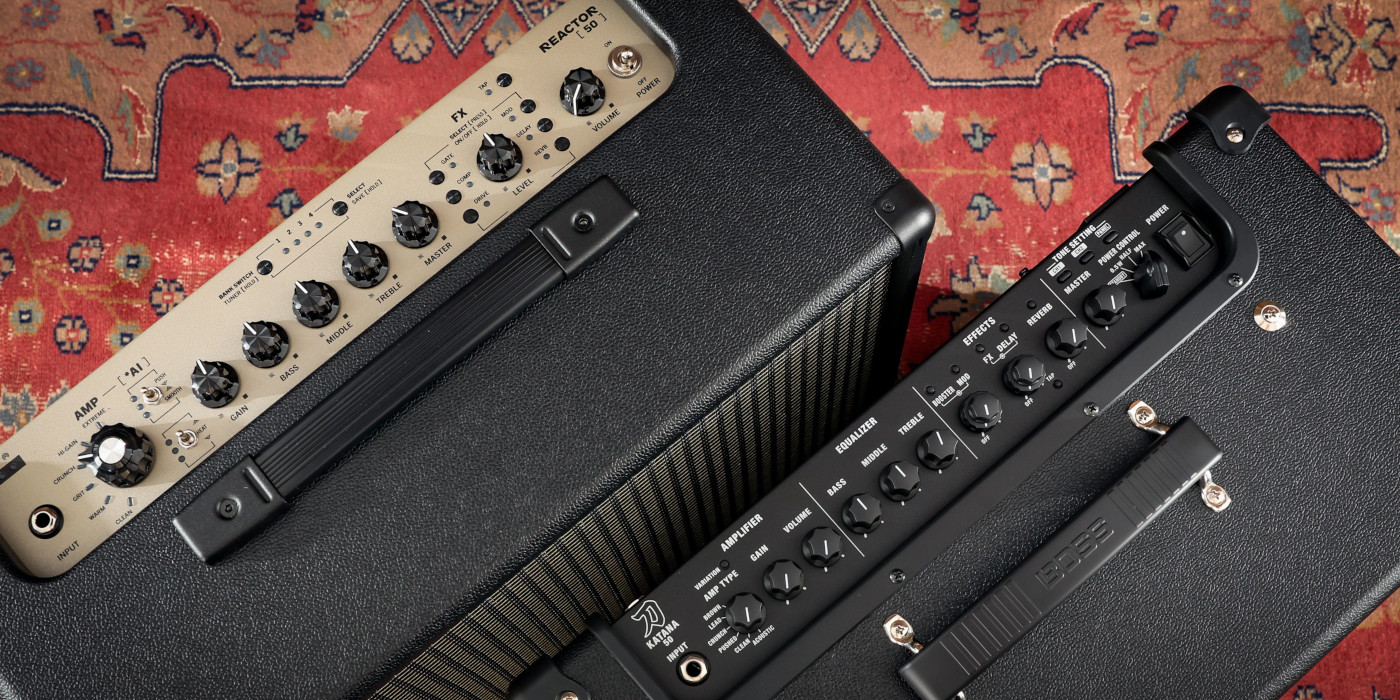
Positive Grid’s Reactor amp also has an FX section with six types that can all be run simultaneously, which is one more than the Katana. And it features a power selector too, although in this case, it’s located on the rear panel.
When it comes to saving your tones, the Katana-50 Gen 3 provides four preset slots (two banks of two), while the 100-watt model doubles that to eight (two banks of four). The Reactor 50 and 100 both offer eight presets in total, split across two banks.
Companion apps and connectivity
Even without firing up their companion apps, it’s clear that both the Boss Katana Gen 3 and Positive Grid Reactor have a huge range of tones on tap from the onboard controls alone. Basically, you can get a lot out of them without ever needing to dive deeper. But to unlock their full potential, it’s well worth downloading the apps.
Boss Tone Studio app
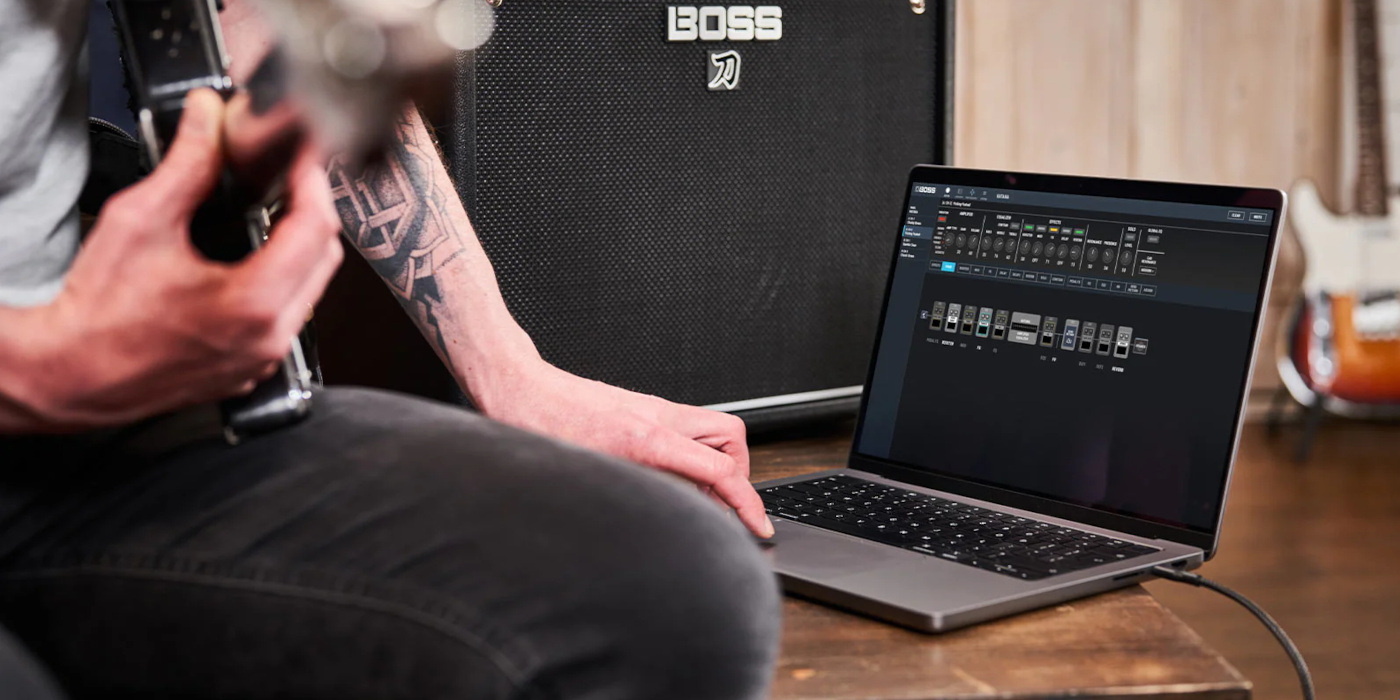
For the Katana Gen 3, Boss Tone Studio is the key. You can install it on your computer and connect via USB, or use the mobile version and go wireless over Bluetooth. However, to get Bluetooth up and running, you’ll need to add the optional Boss BT-Dual Bluetooth audio MIDI adaptor.
Once you’re in, Boss Tone Studio lets you play with over 60 effects, full signal chain reordering and detailed parameters that aren’t available from the amp itself. You can also organise custom setups for gigs, tweak cab and mic simulations for recording, plus access Boss Tone Exchange. This is where you can download pro-created presets and share your own with the wider Katana community.
Positive Grid Reactor app
The Reactor app is what really transforms Positive Grid’s latest amp into a game-changing bit of kit. After downloading it onto your phone, it’ll pair with your amp automatically over Bluetooth with no adaptor needed. This is a big plus for the Reactor amp, as it means you won’t have to fork out an extra 40-odd quid for an accessory.
Once connected, the app’s main Tone Page acts as a drag-and-drop workspace for your current sound. You can reorder your chain, expand up to eight effects blocks and manage an unlimited number of presets, which can be assigned to the amp or uploaded to ToneCloud — Positive Grid’s own sharing platform.
But the real magic happens in the Amp Intelligence-powered Creator Hub, which lets you craft tones from scratch in three clever ways:
- Describe it: Prompt with voice or text to describe a sound, artist or vibe you want and let the amp build a signal chain for you.
- Use a photo: Snap a photo of an amp or pedalboard and the Positive Grid Reactor app will analyse the image to turn it into a playable rig.
- Use a song: Upload or record audio and Reactor recreates the guitar sound to match with four preset options generated.
There’s also a ‘Fix My Tone’ feature, which lets you refine your sound using simple, natural language. Just ask for things like “more warmth”, “less gain” or “add some space”, and the Reactor will adjust your tone accordingly.
Sound engines: Positive Grid Amp Intelligence vs. Boss Tube Logic
The Reactor’s tone-building tech is incredibly smart, but how does it actually sound? Well, Positive Grid’s Amp Intelligence engine has analysed over 200 amp designs at circuit level, from gain stages and transformers to bias points and harmonic response. In simple terms, it’s learned what makes the world’s best electric guitar amps tick, then uses that knowledge to craft tones that behave like the real thing. That means the sounds feel dynamic, responsive and alive, reacting naturally to how you play.
Boss takes a slightly different approach with its proprietary Tube Logic tech. It recreates the complex behaviour of valve amp circuitry at a component level, with a focus on feel just as much as tone. It captures things like natural compression, sag and changing harmonics as you dig in or back off. Basically, all the nuances that make valve amps so satisfying to play!
Crucially, the Katana pairs this digital modelling with an analogue Class AB power amp stage, which interacts with the speaker in a more traditional way. The idea is to give you a playing experience that’s as close as possible to a real valve amp, even though it’s a solid-state design underneath.
Rear panels: inputs and outputs
That’s most of the under-the-hood stuff covered. But what about hooking these amps up to other gear, like your computer for recording or a PA when playing live?
Thankfully, Positive Grid and Boss have thought of pretty much everything here. The 50W and 100W versions of the Reactor and Katana Gen 3 combos all feature USB-C connectivity, so you can plug straight into your computer and record into your DAW with no need for an interface to act as your go-between. They also include headphone outputs, which means you can have a late-night jam sesh without keeping the rest of the house up.
When it comes to performing live, you’re in safe hands too. The Positive Grid Reactor 50 and 100 both have line outputs with cab simulation, making life easier for the sound engineer at your next gig. The Boss Katana-100 Gen 3 also includes a line out, although the smaller 50W model doesn’t. That said, you can still use its headphone output with a standard 1/4″ cable to connect to front of house.
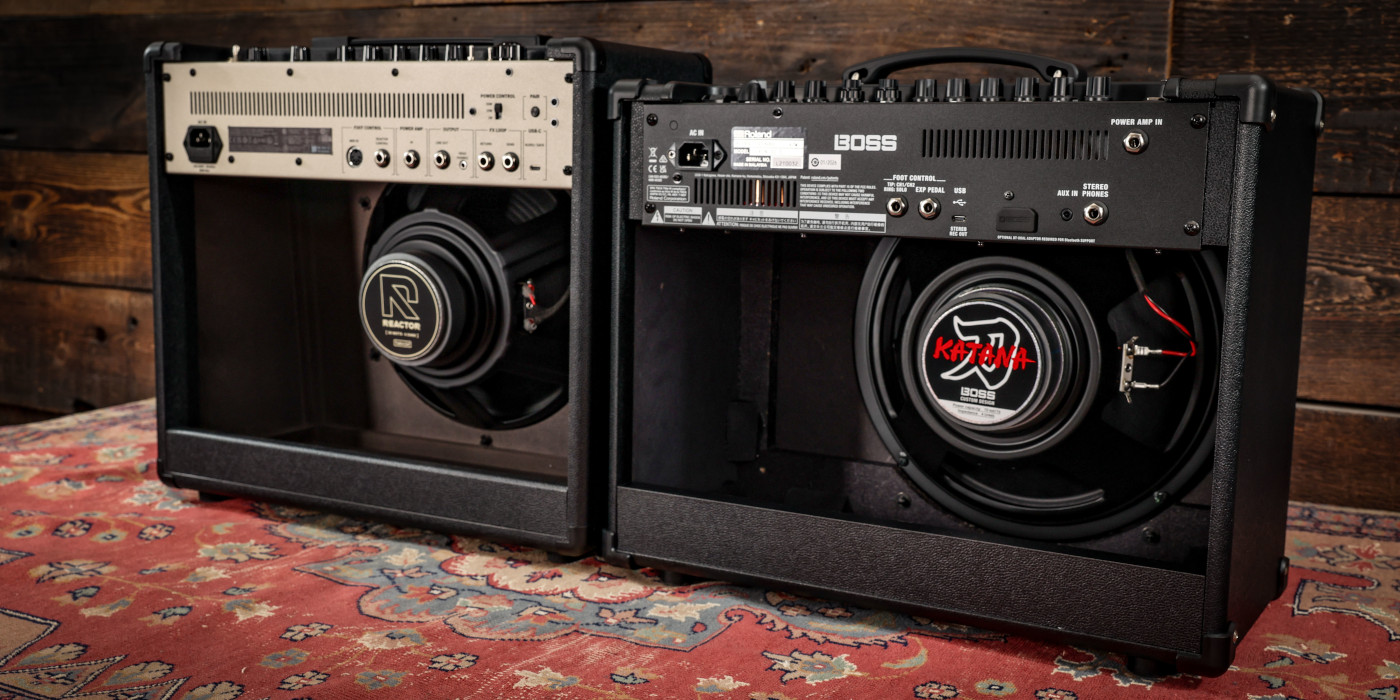
While all these amps come with awesome built-in effects, you can still incorporate your own pedals (particularly modulation, delay or reverb) if you want to, with most of them featuring FX loops. The only exception is, once again, the Katana-50 Gen 3.
And if you’ve got a more advanced setup, the Reactor also offers MIDI connectivity. This allows you to control parameters and switch presets via something like a pedal switcher. Alternatively, you can opt for the dedicated Reactor Control footswitch, while the Katana range is compatible with a variety of Boss footswitches.
Which one should you buy?
If you want something familiar, reliable and gig-ready straight out of the box, the Boss Katana Gen 3 is still incredibly hard to beat. It’s easy to use, sounds great with minimal effort, and its Tube Logic design delivers an amp-like feel that’s kept players coming back time and time again. Add in its solid build, proven track record and flexible power options, and it’s clear to see why the Katana remains such a popular choice for everyone from beginners to seasoned players.
The Positive Grid Reactor amp, on the other hand, is all about pushing boundaries. Its doesn’t rely on fixed, preloaded amp models, so if you like the idea of building tones in a more creative way (whether that’s describing a sound, analysing a photo or matching a song), it offers something genuinely fresh. Its Amp Intelligence engine, cool app integration and expanded preset capabilities make it a super powerful tool, especially if you’re a player who enjoys experimenting or wants near-limitless tonal possibilities at their fingertips.
Ultimately, it comes down to how you approach your sound. If you prefer a straightforward, tried-and-tested amp that just works, go for the Katana. If you’re excited by cutting-edge tech and a more interactive way of shaping your sound, the Reactor is a compelling new contender. Either way, you’re getting a hugely capable amp that can cover everything from bedroom practice to the stage.
Positive Grid Reactor and Boss Katana amps on Andertons TV
We’ve gone into plenty of detail on these amps and their features, but the most important thing is how they sound! So, who better to put them through their paces than Lee, Pete and the Andertons crew?
Want to learn more?
If you’re into the latest gear gossip, our gear news page is well worth a bookmark. For proper nerdy deep dives, handy how‑to guides and cool product comparisons, head over to our learn and labs sections instead.
Responses & Questions