



Infinia guitars are primed for prog, fusion and any boundary-pushing style that demands precision and a tight, controlled sound. Built in Europe by a small team, each instrument is crafted using high-quality materials and sustainable practices, with a clear focus on modern design and playability.
Founded in 2023 by Brian van Zwietering, Daan van Dijk and Maikel van der Wel, the company has worked alongside some of the industry’s most innovative designers, including Sheldon Dingwall, who created an exclusive Infinia original called the Titan. But it’s Infinia’s Padalka connection that makes its story particularly interesting. Many of the brand’s current electric guitars breathe new life into discontinued Padalka models, preserving their legacy following a major shake-up in the company’s lineup.
We had a chat with Daan van Dijk about the story behind this unique tie-up, what makes Infinia guitars special and why it’s a name that guitarists should be keeping a close eye on.
10 questions with Daan van Dijk
1. What inspired you and your team to start Infinia Guitars?
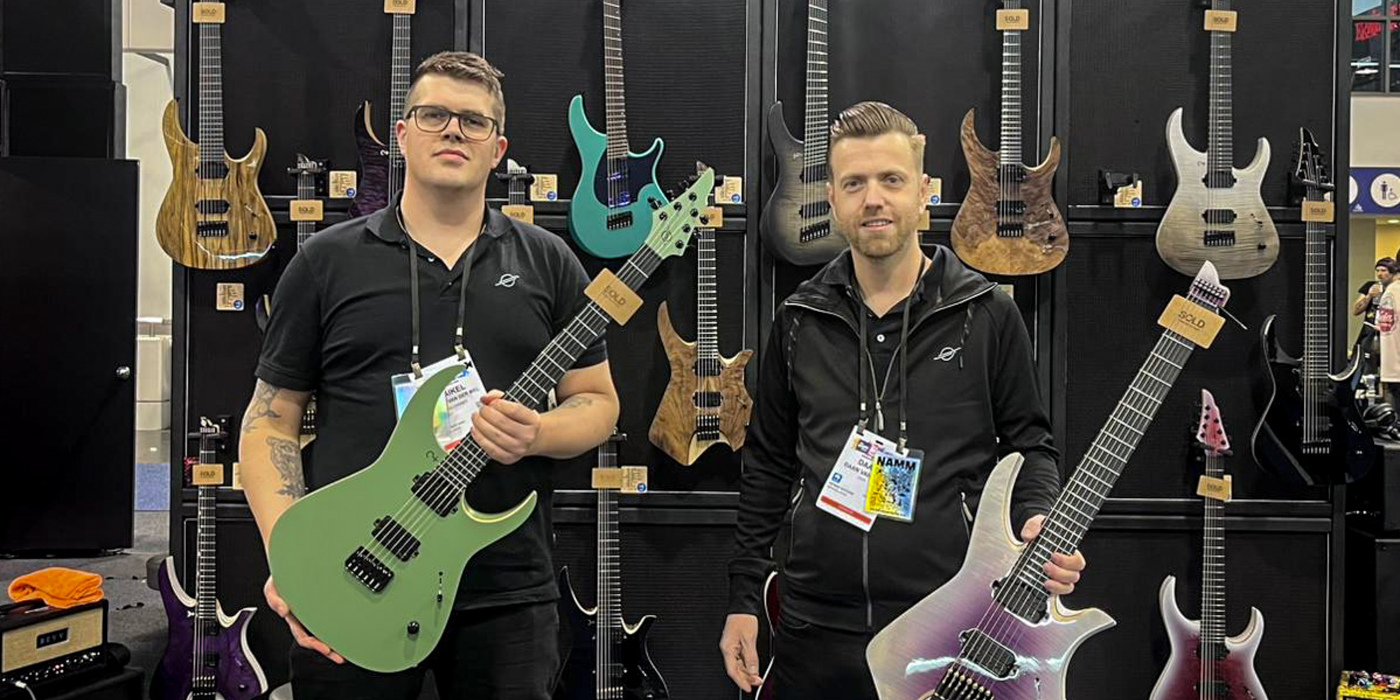
It really was a case of the right opportunity coming along at exactly the right time. Maikel and I have spent our entire careers in the musical instrument industry and worked together for the same company for the last eight years. At the time, Maikel was leading the QC and repair department, while I was working as a product manager.
We both shared a passion for high-end metal guitars, and it wasn’t unusual for us to spend our breaks showing each other photos of incredible custom builds we’d found online. More often than not, those guitars were made by Padalka as he was easily our favourite builder.
As a trained luthier, Maikel would explain the construction techniques and point out the details that made those instruments so special. With my background in repairs and woodworking, I was equally fascinated by the craftsmanship. Naturally, my mind would then drift toward the commercial side of things, thinking about how a brand like that could fit into the market.
Having worked with high-end guitar brands for many years, we knew exactly what we were looking for and, just as importantly, what we wanted to avoid.
When the opportunity came along to continue the original Padalka catalogue, everything suddenly fell into place. Between us, we felt we had the experience, the network, and the knowledge to give those guitars the future they deserved. So, the inspiration for Infinia Guitars came from years of passion for exceptional instruments. The opportunity to continue the Padalka legacy was simply the spark that turned that passion into a company.
2. How did the Padalka partnership first come together?
As longtime fans of Simon’s work, we actually had two custom guitars on order with him. Then, one day, Simon contacted me with the unfortunate news that he had to cancel those orders. The war had broken out in Russia, where he was living at the time, and he had made the difficult decision to sell his workshop and move to Canada.
I asked if he wanted me to introduce him to our friend Sheldon Dingwall, thinking Sheldon might be able to help him find his place in the Canadian guitar industry. Simon laughed and told me that wouldn’t be necessary as he had already accepted a position at Dingwall as a Master Builder. While we were genuinely happy for him, he also explained that he would be retiring his existing guitar catalogue. With most of his time dedicated to building bass guitars at Dingwall, he simply wouldn’t be able to continue producing his own models.
That news stayed with us for a while. We kept thinking about those guitars and what would happen to the designs that we had admired for so many years. Eventually, we had a long conversation with Daria Padalka, and she gave us the opportunity to acquire the rights to Padalka’s original catalogue.
That was the moment everything changed. Suddenly, it wasn’t just an idea anymore as we had the responsibility to decide what the future of those instruments would look like, and to make sure their legacy would continue in the right way.
3. How did you convince Daria and Simon that Infinia was the right home for their designs?
From their side, the decision had already been made to retire the original Padalka lineup, so that was never really part of the discussion. The real conversation was about which models we wanted to continue and what that continuation should look like.
There was one particular model that Simon felt strongly about preserving, while Daria had a very clear vision of what the future of the brand should be. For her, it was essential that production remained in Europe and that the legacy they had spent so many years building would be respected rather than reinvented.
That actually aligned almost perfectly with our own vision. We never wanted to turn these guitars into mass-produced instruments or take production overseas. Our goal was to preserve everything that made them special while making them available to a wider audience. In the end, it wasn’t about convincing anyone. It was about making sure we all shared the same vision for the future and agreeing on the best way to carry that legacy forward.
4. Why was it important to keep production entirely in Europe?
That really came down to the level of quality we wanted to achieve. Having worked with high-end guitar brands for many years, we knew exactly what we were looking for and, just as importantly, what we wanted to avoid. The challenge wasn’t defining the standard, it was finding the right manufacturing partner who shared that vision and could consistently deliver both the quality and the production capacity we needed.
From the very beginning, we knew production had to stay in Europe. It wasn’t just about quality; we also wanted to build a close working relationship with the people making our guitars. Being able to visit the factory, discuss improvements face-to-face, and work together on new ideas is incredibly valuable to us.
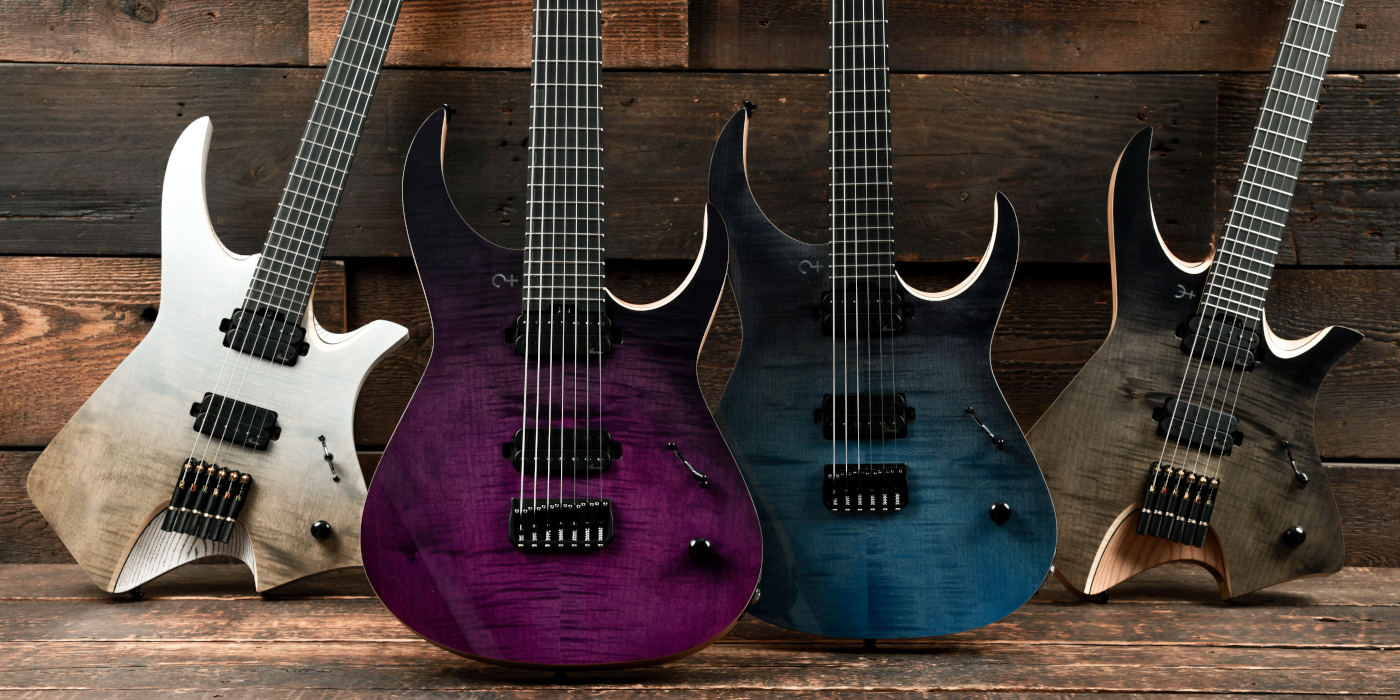
A lot of people don’t realize how much work we still do ourselves before a guitar is ever assembled. We source, resaw, level and prepare every top in-house because we want complete control over the look and quality of each piece of wood. Depending on the model, we also make neck laminates, fretboard inlays and body blanks ourselves. We carefully source our hardware, and in some cases we even design custom guitar parts specifically for our models.
One detail that really reflects our philosophy is the wooden Certificate of Authenticity that comes with every guitar. Each one is handmade by us and crafted from the same piece of wood as the guitar’s top, making every certificate unique to that instrument.
It’s a very hands-on and labour-intensive way of working, but it’s also what allows us to maintain the level of consistency and attention to detail we’re aiming for. To make that possible, we needed a manufacturing partner we could trust completely as one that’s close enough for us to work together throughout the entire process.
5. What was the biggest challenge in bringing the Ceres and Neptune back?
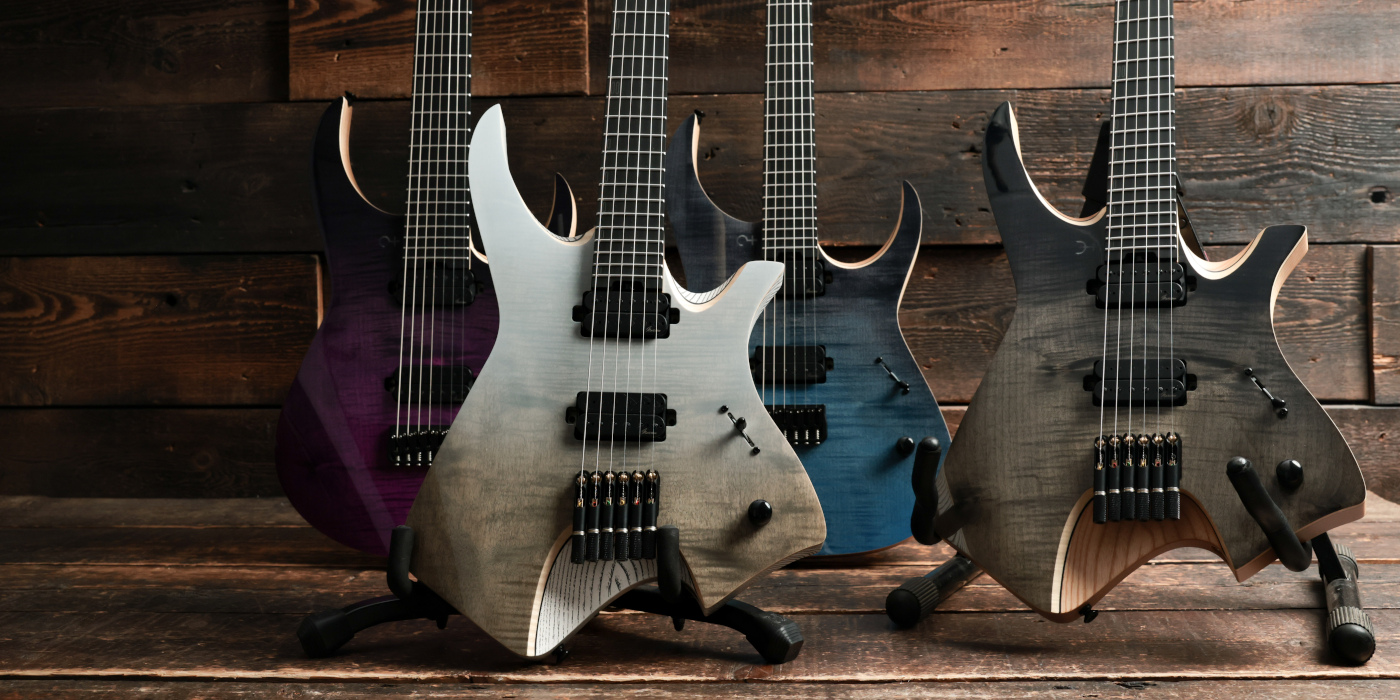
Acquiring original guitars to reverse engineer was probably one of the biggest challenges of the entire project. We eventually managed to buy back the Padalka CS that Simon had originally built for Protest the Hero. We also tracked down a Neptune that belonged to a collector in Switzerland.
[What] really surprised me was how many people told us we had the best-playing guitar at NAMM.
Once we had both guitars, the real work began. We completely disassembled them to understand every detail of how they were built and created accurate CAD models of every component. From there, we moved into the prototyping phase, which was incredibly exciting. It was the moment of truth to see if we could faithfully recreate what made those guitars so special.
6. How did the collaboration with Sheldon Dingwall on the Titan happen?
As I mentioned before, we already knew Sheldon Dingwall as he was a long-time business contact. The company I worked for was the European distributor for Dingwall, so we’d known each other for many years. A long time ago, I actually showed Sheldon a mock-up of a Dingwall-inspired guitar in the hope that it might inspire him to build one. He deliberately chose not to, because he wanted Dingwall to stay fully focused on basses.
Years later, while we were working on the Padalka models, I came across that old mock-up again. It felt like the perfect opportunity to revisit the idea, this time as an official collaboration. I spoke to Sheldon once more, and when we showed him our first CS and Neptune prototypes at Guitar Summit 2024, he immediately embraced the concept. He told us he wanted to build his own vision of what a Dingwall guitar should be.
About a month before we officially launched Infinia Guitars at Guitar Summit 2025, the prototype arrived. As you’d expect from Sheldon, the execution was exceptional. Rather than simply adapting one of our existing designs, he took a completely fresh approach. He designed a seven-string guitar with a 27″–25.2″ multi-scale layout, yet the overall length is actually shorter than a traditional S-style guitar. The result is an instrument with the string tension and sound of a long-scale multi-scale, but the comfort and compactness of a much smaller guitar.
From that point on, it became our job to refine the design, integrate it into the Infinia lineup, and prepare it for production. That’s really where the Titan story began.
7. Can you explain Controlled Mass Reduction (CMR) and why it matters to players?
One of the challenges we ran into during development was the weight of the guitars. We know that for a lot of players, a heavy instrument can be a real downside, so we wanted to find a way to keep the weight as consistent as possible.
The biggest variable is the wood itself. Both the body wood and the top can vary quite a bit in density and weight, even when they’re the same species. Because of that, we’ve developed a system where we take those differences into account during the build process and adjust certain elements accordingly. The goal is to keep the finished guitar within a predictable weight range instead of leaving it entirely to chance.
Time and again, people told us they were ready for a new high-end brand focused on modern metal guitars.
It’s still a system that’s evolving, and the more guitars we build, the more data we collect. That allows us to refine the process and gives us even more control over the final result.
8. What’s the difference between the Icarus/Nautilus and Avalon/Exelion pickup sets?
That’s an interesting question. During the development of our guitars, we spent a lot of time debating which pickups should become our standard set. To make the process as objective as possible, I built a guitar with a quick-change pickup system that allowed us to swap pickups in just seconds. That meant we could compare a large number of pickup sets under exactly the same conditions.
We each did our own blind tests, and we also invited a number of other players to do the same. Surprisingly, the results were remarkably consistent. The Icarus/Nautilus set came out on top almost every time, so that became our standard pickup configuration.
After we launched the guitars at the Guitar Summit 2025, we were getting some requests from players looking for something with a little more output. Fortunately, we had a guitar fitted with the Avalon/Exelion set with us and we asked people to compare the two back-to-back. The results were almost a perfect 50/50 split, which convinced us there wasn’t a single “best” choice. Instead, there were two different types of players with different preferences, so we decided to offer both options.
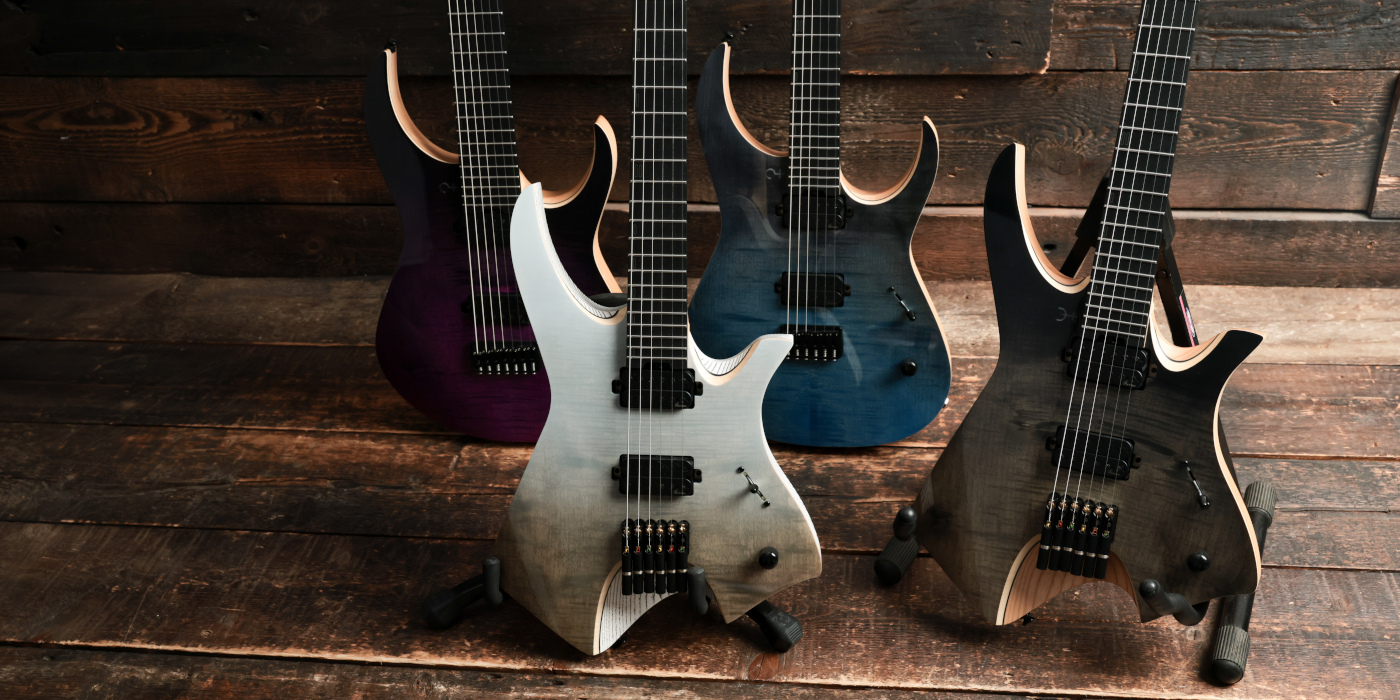
The easiest way to describe the difference is this: the Icarus/Nautilus is a more traditional, medium-output set that fits perfectly with the current trend of players moving back toward lower-output pickups with plenty of dynamics and clarity. The Avalon/Exelion set is designed for players who want a modern, tight, high-output sound, delivering plenty of aggression while still retaining the mids that help a guitar cut through a mix.
9. What has surprised you most since launching Infinia Guitars?
Without a doubt, that has been the response from the market. Time and again, people told us they were ready for a new high-end brand focused on modern metal guitars. We heard it from players, but just as importantly, from dealers.
The second thing that really surprised me was how many people told us we had the best-playing guitar at NAMM. We kept hearing it throughout the show, and after a while it became hard to ignore. Receiving that kind of feedback from so many different people was incredibly rewarding and gave us even more confidence that we’re on the right track.
10. What’s next for Infinia that guitarists should be excited about?
We’re almost ready to ship the first Titan models, and we know a lot of people have been looking forward to finally getting their hands on one. While all our focus is on getting these first Titans out the door, we’re already deep into projects planned for late 2026 and 2027. With Guitar Summit and NAMM on the horizon, we’re putting the finishing touches on some very exciting new developments.
Alongside left-handed models, single-pickup versions and multi-scale guitars, we’re also exploring completely new body shapes and collaborations with designers, artists and bands. There’s a lot happening behind the scenes, and we’re excited about where we’re taking the brand over the next few years.
Infinia guitars on Andertons TV
Want to hear them in action? Watch John “Digital John” Connearn put a couple of Infinia’s models through their paces in our NAMM video below, while head honcho Lee Anderton gets the lowdown from Daan:
Follow Infinia Guitars online
Love the look of these instruments? Stay in the loop with the latest news, models and more from Infinia:
Be sure to bookmark the Andertons Blog too. We’re always posting fresh content, from in-depth learn articles to the latest gear news.
Responses & Questions