



Founded in Los Angeles in 1989 — at a time when spandex-clad shredders were tearing up the Sunset Strip and rocking refrigerator-sized rackmount rigs — Fryette Amplification (formerly VHT) has earned a reputation as one of the industry’s most respected builders of premium valve amps, guitar cabs and attenuators.
The company first made its name with cutting-edge power amps that became staples in the setups of players like Steve Lukather (Toto), Dean DeLeo (Stone Temple Pilots) and Page Hamilton (Helmet). It later expanded into high-gain, multi-channel amplifiers with the Pittbull Series, a range still going strong more than 30 years on, alongside the Deliverance Series — clean-to-mean amps that distil the signature Fryette sound into a stripped-back, single-channel design with immense power and dynamic range.
We were lucky enough to catch up with Steven Fryette himself to talk about what inspired him to start making amps, the products he’s proudest of and why the Power Station line of load boxes has resonated with so many modern guitarists.
10 questions with Steven Fryette
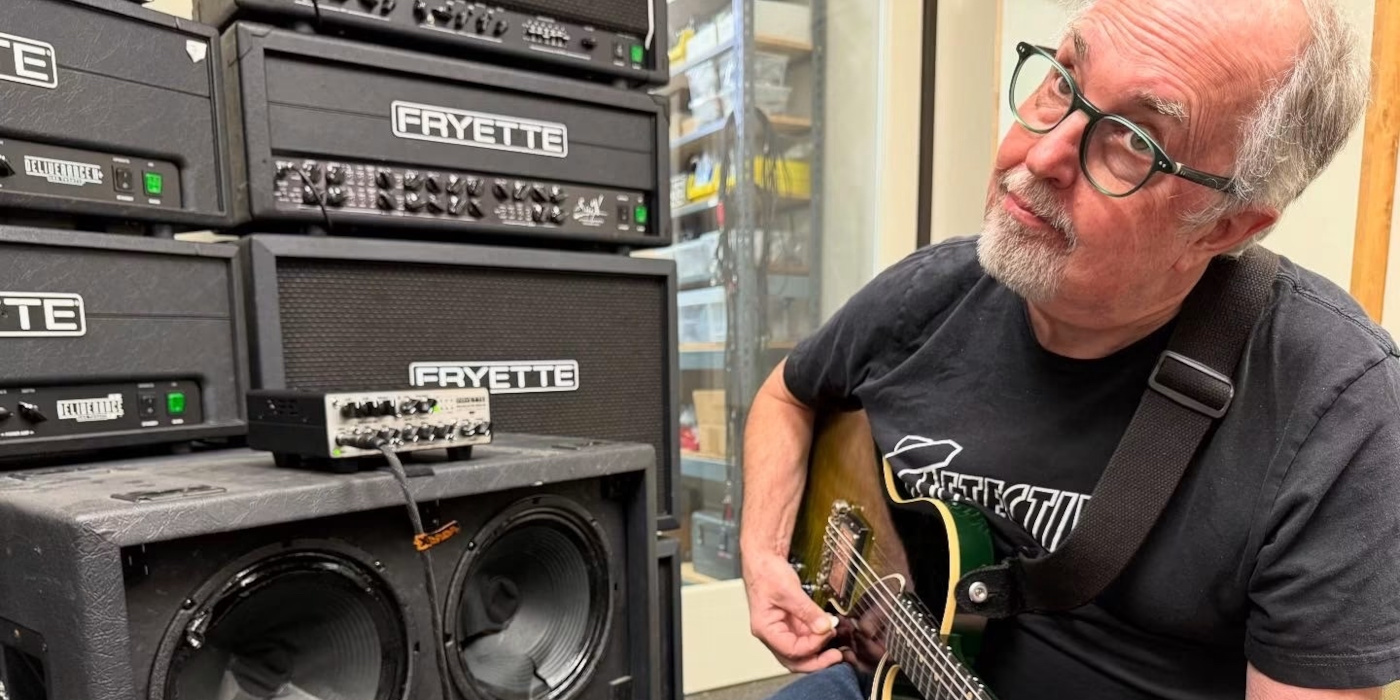
1. What first inspired your fascination with guitar amps and what led you to start building your own designs?
I grew up in a home where music was a constant. My father loved classical guitar and my mother plays piano to this day. They bought all the latest records from artists as varied as Elvis, Nat King Cole and Edith Piaf. The radio was always on and from the time I was 10 years old, American Bandstand, The Mahalia Jackson Show and The Liberace Show were part of my daily musical diet.
One day when I was around seven or eight, my uncle brought me his old Erector Set, which I still have, and I learned to tinker on that. When I was around 12, my older brother Jim and I started playing music together. He adopted the guitar and I chose the drums because, you know, Ringo.
Jim’s first amp was a National 1210 with a cool big chrome volume knob. I had already started exploring basic electronics at the local library and I couldn’t wait to get the screws off that amp to see what made it tick. That’s what started it all. After that, I cracked open anything with the irresistible smell of hot tubes and “hazardous voltages inside”. That and music were my twin muses that still drive everything I do to this day.
2. When you founded VHT in the late ’80s, what did you want to do differently from other amp brands?
After transitioning from drums to guitar, I spent my time doing repair work and playing in bands. From that experience, I started getting a sense of what did and didn’t work for me and why. I also got a very keen sense of how the term “quality” was interpreted by the companies that produced the gear and the players that used that gear.
That led me to seek out what seemed to me to be the best gear for me develop my playing and the most compelling to understand electronically. Of course, having the opportunity to tear apart everything that came into my shop and get paid to do it was a gift from Heaven, really. And from that, I learned how things were generally done for better or worse.
So, to answer your question, I didn’t start out thinking about what to do differently so much as which of the designs or functional elements in products I’d already encountered could be blended into something that would allow me to tap into the sounds in my head, and the features that I needed instant access to in one box. So many of my peers at the time were consumed with modding Fender and Marshall amps, and that was of zero interest to me.
Initially, I wasn’t trying terribly hard to sell my work as much as I was trying to obtain what had thus far been unobtainable to me at any price. That morphed into a philosophy in which finding a solution for a problem I personally needed solved could become a real-world solution for my friends, and a growing list of clients who saw or heard something they hadn’t realized they were looking for. I suppose what I wanted to do differently was pretty much whatever anyone else was doing.
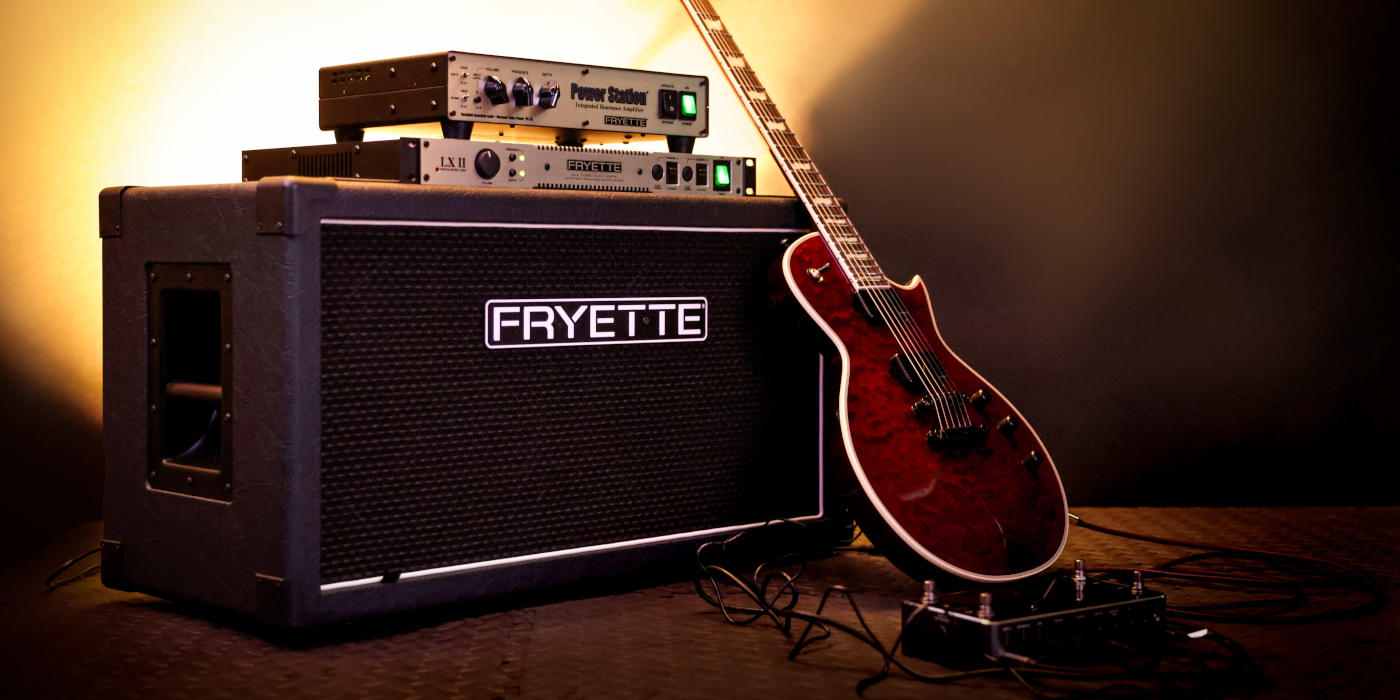
3. How did your approach to high-gain amp design differ from what others were doing at the time?
Simply put, I don’t hear “sounds”. I hear an orchestra of fundamentals, harmonics, dynamics and space. I wasn’t trying to get “the most gain” or a particular kind of gain. I was after whatever it was that kept that orchestra intact, and I came to understand that it was all about balance.
I listened to Pete Townsend and I heard all these gorgeous ringing, sparkling booming things simultaneously, and they always seemed to be in more or less perfect proportion. That’s why I love big amps. It’s not all about volume. It’s about balance. Everything about the instrument, amplifier and the space you’re in are ideally working together to create this immense experience.
For “gain” to be meaningful, it must be useful within whatever musical genre or context to which it’s applied. There can be a point of diminishing return in that, especially with respect to gain, so I’m genetically inclined to avoid pushing that envelope beyond the point of more simply for the sake of having more. When it gets to the point where you’re compromising whatever else you might do with this amp in service of more gain, then the whole design functionality is diminished.
4. What do you think made the Fryette Pittbull Series such an influential amp range?
Our sonic and cosmetic signature is recognisable and unique. You can pick it out a mile away. We were early enough in the specialist amp field to be able to create a distinctive voice, and to apply some discipline to achieve that and maintain it.
I always feel that I start the design, but eventually it will tell me where it wants to go. I never interfere with that impulse.
It’s so easy to just say “okay, here’s another flavour of brown”, and a lot of players will rush to get in line for that. We’ve been asked many times to produce an amp that represents “our take on Marshall”. And my reply is “that’s what we’ve been doing all along”. What Marshall, Fender or Mesa/Boogie represents is unique to them, and so it is for us as well.
I’ve made it my mission in life to navigate away from that crowded field simply because I hear things a certain way, and nobody is going to convince me that the “easy money” is worth discarding what my intuition tells me is our most important and valuable asset.
5. How did the rackmount revolution of the ’80s and ’90s shape your products and philosophy?
That was a classic case of pure dumb luck and being in the right place at the right time. My prior experience and many thousands of hours exploring how guitar power amps behave allowed us to offer not just a product, but a sonic approach that made a rack rig inspiring to play.
I made an assessment that loads of rack gear in a complex signal chain robbed tone and dynamics, so the right power amp could restore and enhance that lost magic rather than simply colouring the sound, which is what a typical guitar power section mounted in a rack chassis would be doing. By making something completely from scratch, I wasn’t constrained by any preconceived rules or outcomes.
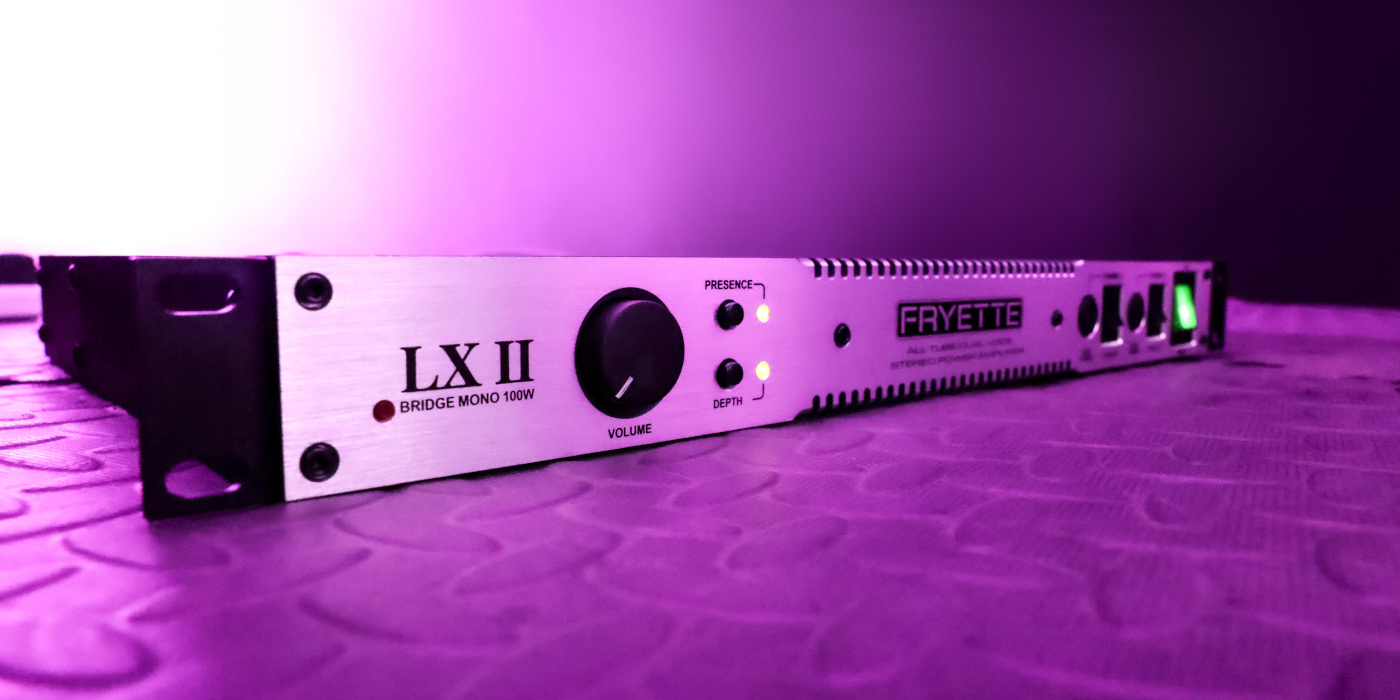
All the best players and biggest bands were accessible to us, and they were always interested in the next hot development. I brought a rat’s nest of a power amp prototype to a couple of the most respected guitar shops in the area expecting a lot of advice and criticism to apply to the next attempt. What I left with was a handful of orders for a conglomeration of parts in a box that now needed to become a reality, and fast.
Our destiny was shaped by necessity, which is an enviable position, and especially so at that time. We could make our own rules. Randall Smith, whom I had already met while doing Mesa warranty service, told me he was blindsided by our power amps because all of his people were telling him not to put sound altering controls on the front panel, and now people are choosing VHT power amps doing the very thing he thought would be considered some kind of blasphemy.
6. You’ve worked with some huge artists over the years. Who had the biggest impact on your products and the way you think about tone?
While we do have a pretty deep roster of well-known and respected artists, they don’t necessarily have direct input or influence on product design in general, or my ideas about how things should work or sound. Sorry if that sounds a bit arrogant, but the artists that inspired and influenced me and my thinking about design and sound are the same as those who inspired and influenced how every musician plays and creates.
That not only covers any genre or time period, but applies to any instrument, not just guitar. Hendrix wanted to sound like a sax player. Jack Bruce’s overdriven bass melody lines sounded like a cello ensemble in a classical orchestra. Gregorian chants… The well that we all draw from to invent or reinvent music provides the stuff that goes into the design of a piece of equipment that’s intended to enable a creative musician to invent.
I certainly listen to what contemporary players play, but more often than not, I’m thinking about what they could do if they had access to X. I’ve had the opportunity to play in places where the likes of Jeff Beck, Jesse Ed Davis and Dick Dale either stopped and listened, smiled appreciatively, complimented me or started a conversation. The conversation can involve anyone great or small. But what’s important is that the conversation is what gets the wheels turning.
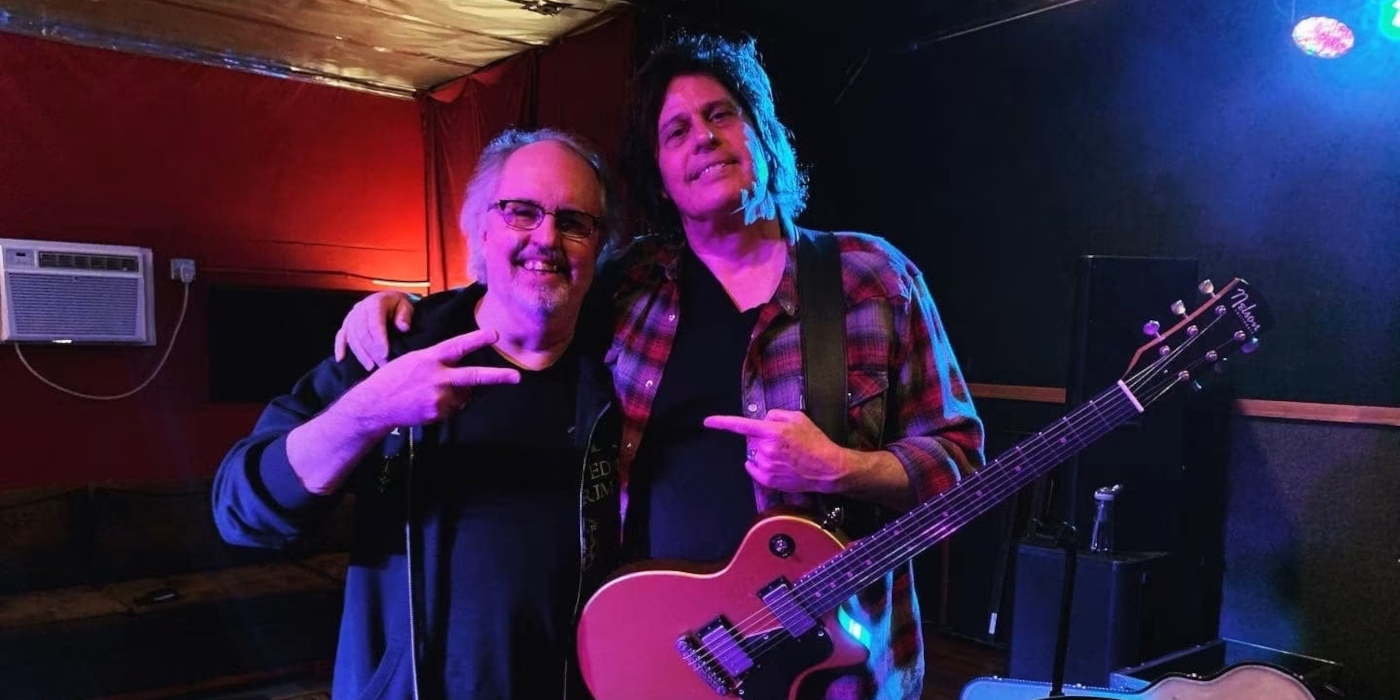
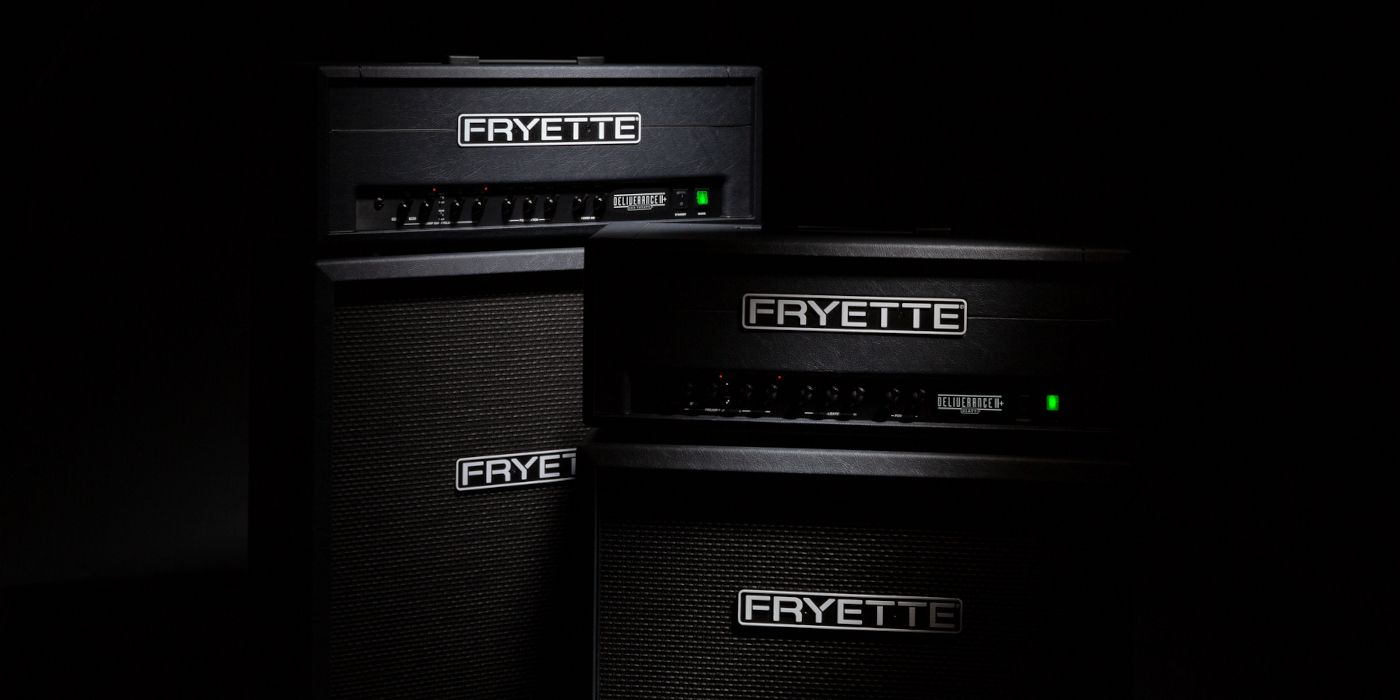
7. The Fryette Deliverance Series has become something of a cult classic. What was the original vision behind it?
Our general manager, Eriko Fryette, is a seasoned musician, educated graphic designer and long-time vinyl junkie with an incredible ear and an inquiring personality who asks lots of questions. She’s been very influential in the development of our design ethos. By the early 2000s, we were growing weary of constant requests for more features and functions on every new amplifier model, only to face criticism over the resulting complexity of the design.
Eriko asked me to demonstrate what I felt was our signature sound. She questioned whether or not it was possible for an amplifier with a limited feature set to achieve whatever that was. That seemed like a no-brainer to me, as long as players would accept the fact that one would have to work a little harder to make such an amplifier work for them and then be satisfied that it wouldn’t easily morph into something else at the flick of a switch.
I said players do it all the time with vintage amps, so there’s no inherent limitation in our designs for such a player using our gear. I demonstrated what I meant by dialling in a range of sounds and styles with different instruments creating a variety of clean, mid-gain and overdriven voicings using only the rhythm channel on the Pittbull CLX. When she asked me if we could build something like that, I said it was just a matter of stripping out a lot of bells and whistles first and then see if things still sounded familiar.
That initiated the project. Just a simple “what if” that became this stripped-down beast that somehow didn’t lose anything in translation. Later during a staff meeting, we were kicking potential model names around and, you know, it was every bit as boring and painful as a group of guys trying to name a band. After a while, I just dropped the first thing that came to mind. The word Deliverance came out, and everybody stopped talking all at once. One guy just said “oooh”, and that was it — which is often how things work here.
Sting once said that when you’re looking for inspiration, you simply need to “keep your antenna switched to input”. I loved that. These things take on a life of their own and you have to be willing to let that process play out. I always feel that I start the design, but eventually it will tell me where it wants to go. I never interfere with that impulse.
We all expected that there will be fans and haters anyway, and to drive the point home, there would be no footswitch or FX loop. You were going to live or die by whatever it is as a creative musician that drives you, and that’s all there is, isn’t there? We even made a Deliverance T-Shirt that said “Are you afraid?” on one side and “Play or die” on the other. The reaction ran the gamut, of course, and we greeted it all with acceptance. We did what we believed in and that amp was proof of our commitment to everything we care about. The rest is up to you, the player.
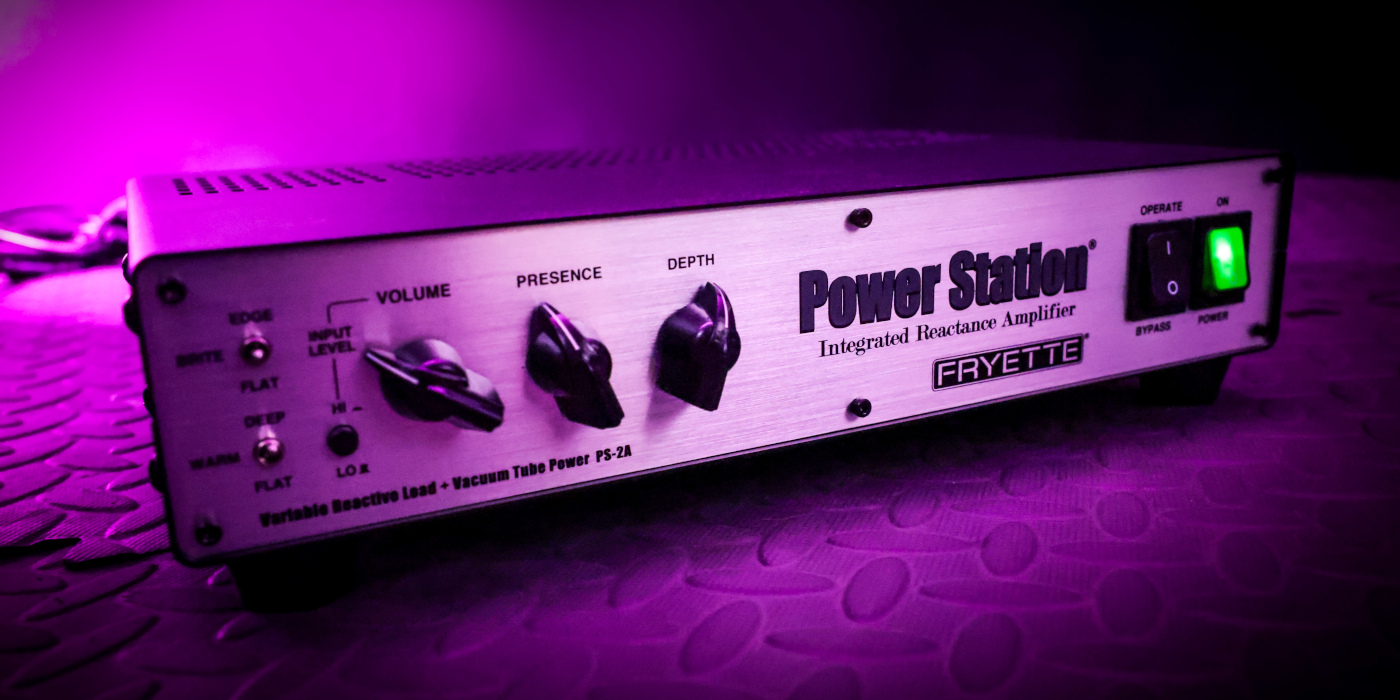
8. How did the idea for the Power Station come about, and why do you think it’s resonated with so many players?
The Power Station was a project where we went off script. What I mean is, we try to avoid getting caught up in the latest trends, but when I saw how much frustration there was out there for an attenuation device that really worked, I followed the advice of my longtime friend Pat Quilter, who says “sometimes you do a thing because it just needed to be done”.
I still pinch myself 10 years on now knowing that every day players are just discovering the Power Station.
We had just released the LX II power amp when a new attenuator appeared to be close to hitting the market, for which a lot of well-known players were throwing down significant deposit money. Then the product and the creator disappeared and I thought “what a wasted opportunity”, and I didn’t see anyone stepping into the breach.
Just for fun, I built a reactive load and started thinking about how it would behave under a variety of load conditions. That got boring really fast because there were way too many compromises, and I immediately saw how complicated and expensive it would be to build. But I still wanted to evaluate the load behaviour, so I fed an amp output into the load, added a pad to drop the signal down to line level and fed that into the LX II power amp and a cab. I played one open E chord and the hair on the back of my neck stood straight up.
I then brought in some of the crew to listen to make sure I wasn’t imagining things, and they all had the same reaction. Just wide-eyed excitement. That’s when I knew this was going to be something special, and that’s why I think it resonates. You don’t have to think about it or explain it. You just plug in and you’re immediately having fun, and who cares why. It’s agnostic about which amp you’re using, so everyone has the same experience: “where have you been all my life?”. I still pinch myself 10 years on now knowing that every day players are just discovering the Power Station.
9. Which amplifier design are you personally most proud of, and why?
The Deliverance, hands down. It makes me happy and it always sounds good no matter my mood or motivation for turning it on. If I want to try something new or different than what I usually play, it’s right there and ready to go. I never have the feeling that it needs something more. There are diehard Deliverance players out there and honestly nothing is better than that.
10. What’s next for Fryette Amplification?
Besides having released the Valvulator Mini just this month, there are six new products in development as we speak. Please accept my apologies for not being able to share details at the moment. It’s very hard to hold back my desire to leak tidbits, but if I shoot my mouth off, anxious players will want to know what’s up and they’ll want to know right now.
We’re busy little bees operating on several tracks simultaneously, so it’s never boring or a chore. We’re really enjoying our little sandbox doing all kinds of fun things that will surprise and please a lot of players.
Follow Fryette Amplification online
If you’re now a big fan of Fryette, stay in the loop with their latest news, product launches and more:
- Subscribe to Fryette Amps on YouTube
- Follow @fryetteamps on Instagram
- Follow @FryetteAmps on Facebook
And while you’re here, don’t forget to bookmark the Andertons Blog. Whether you’re looking to sharpen your guitar knowledge, explore iconic gear stories or keep up with the latest gear news, we’ve got plenty more to dive into.
Responses & Questions