



- What you’ll learn about setting up a guitar
- The most common reason why a guitar needs a setup
- When should I get my guitar setup?
- Why does my guitar need a setup?
- Where should I go for a guitar setup?
A guitar setup is a process you can liken to a car service: you take your car to a garage at least once a year to make sure it’s running smoothly – so why not give the same top treatment to your beloved guitars?
Sometimes a routine check is all that’s needed to keep your acoustic or electric guitar in great working shape, feeling amazing to play and sounding the best it possibly can.
A guitar setup most often involves setting the correct intonation (which are the two same notes – an open string and the 12th fret – separated by an octave), eliminating fret buzz most usually by lowering raising the string action, and cleaning the ensuring the hardware like the bridge and tuners are stable and performing as they should. A setup can can also extend to certain forms of basic repairs like removing sharp fret edges and levelling frets.
Guitar Care
What you’ll learn about setting up a guitar
- The most common cause why a guitar would need a setup
- How to check if your guitar needs a setup
- How often you should set up your guitar
- The differences a setup can make to how a guitar sounds and plays
The most common reason why a guitar needs a setup
The most likely reason why a guitar would be in need of a service is the fact that it’s made primarily of wood. And wood tends to react quite drastically to the environment even if it’s mostly kept indoors, as the seasons are will still cause temperature changes wherever you’re located. Heat and cold cause the neck to twist and/or warp, while humidity can lead to the wood bloating or drying out. This is particularly prevalent in acoustic guitars.
For this reason alone, you need to ensure that your guitar is regularly kept in check so that it doesn’t lead to bigger issues further down the line.
The second reason why a guitar would need a setup is if you’ve equipped it with a different gauge of strings to the previous set you were using. Whether they are heavier or lighter strings, a particular string gauge will put a certain amount of tension on the neck. Either way, you may experience fret buzz, higher action or tuning and intonation instabilities if you switch to a new set, which calls for a setup.
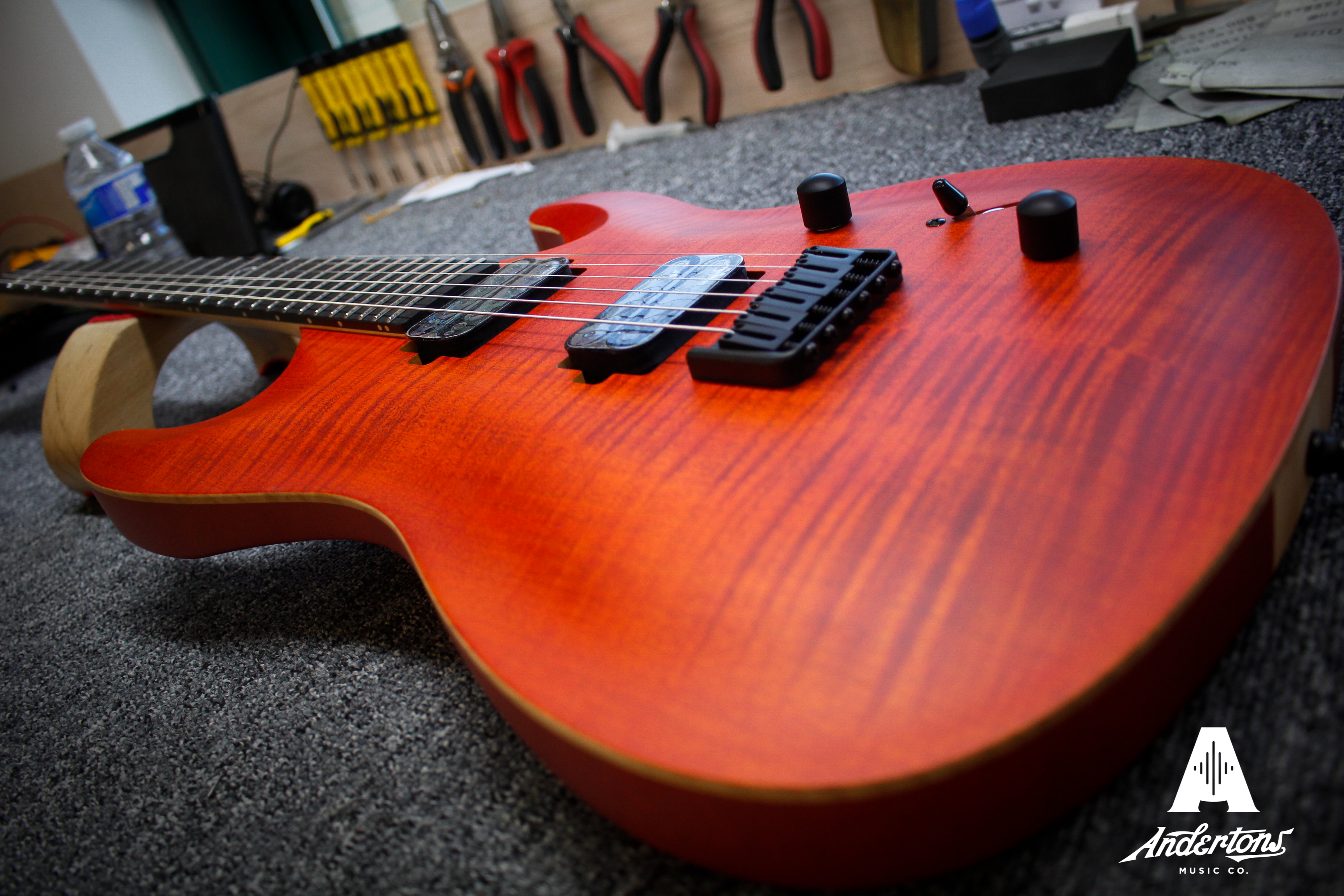
When should I get my guitar setup?
Here are a few guidelines to follow with regards to when you should get a guitar setup:
- If you’ve gone a year without a setup
- If you’ve just purchased a brand new or second-hand guitar
- You’ve changed the string gauge
- The action (distance between the strings and the frets) is too high, making it difficult to play
- Some notes buzz or sound muted when fretted
- The intonation is out. You can check this by tuning the guitars open string and fretted at the 12th fret. If they don’t match up, the intonation is incorrect.
- There’s visible damage.
- The nut or frets have sharp edges that make the guitar uncomfortable to play.
- The guitar doesn’t stay in tune
- You consistently break strings in the same place. For example: the string often breaks nearest the bridge or the nut
Why does my guitar need a setup?
Whether you play your guitar often or not a lot, your guitar will still require a setup because the guitar’s wood remains temperamental regardless of how much the instrument is touched. Think of it like a wristwatch: leaving it in the case without regularly moving it can actually still cause the internal mechanisms to slow down.
Professional players tend to face different problems because they’re playing their guitars so often. As a gigging guitarist, you might take your instrument from a comfortable lounge temperature to a cold venue or out into the hot festival sun. The frets also tend to take more of a battering because you’re playing it that much more often. These are just a few factors that prove you need to make sure the guitar has a regular setup to keep it playable.
Ultimately, a well set up guitar plays better and therefore sounds better because you are more comfortable playing it. It also means you can rely on the guitar on-stage and not have to worry about any embarrassing gig possibilities. Scientifically, the guitar will sound better because the perfect setup will optimise sustain and intonation – meaning your notes ring for longer and hit the exact pitch that you’re after.

Isn’t once a year overkill?
Simply put, no! If you love your guitar, you’ll want to take care of it – even if you don’t play it as often as you’d like.
There are players that go years without getting a setup, but that could be down to pure laziness, or they might have the knowledge to do it themselves, or they might be accustomed to its quirks. But remember: you might have an issue with your frets or with neck warping and not even realise that it’s happening!
‘If it ain’t broke, don’t fix it’… But it’s sure to break if you don’t check it.


Responses & Questions