Design and size
The GP-5 has more than proved that small can be mighty. But the new Valeton GP-50 embraces a slightly larger form factor to unlock even more potential. It’s still super portable though, with a footprint not much bigger than your average stompbox. And at 430g, it’s hardly going to make a dint in your gig bag pocket.
The GP-50’s got a bumped-up 1.77” screen that’s almost twice the size of the GP-5’s, plus a slick new interface to make the most of that extra real estate. Pair that with four knobs and a set of buttons, and tweaking tones on the fly is a total breeze. You don’t have to get the Valeton Suite app up on your phone or PC to make detailed changes — the GP‑50 gives you plenty of control right on the unit itself.
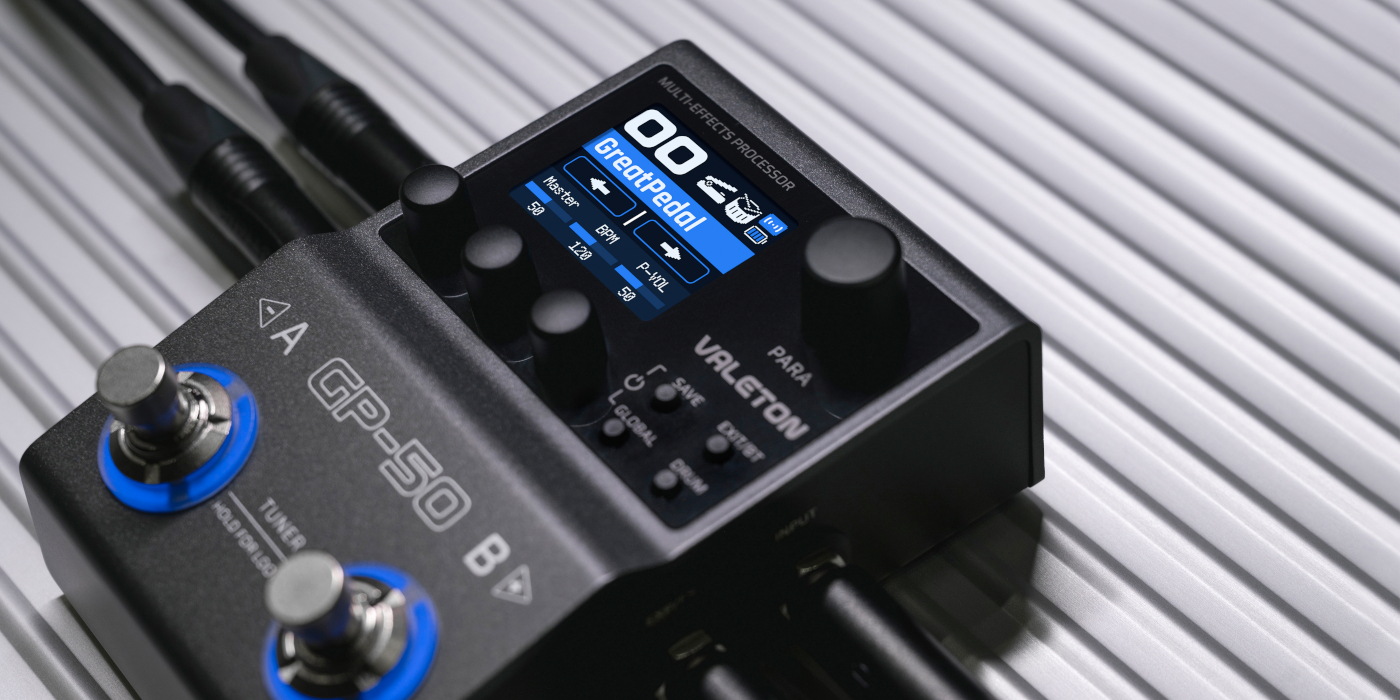
And then there’s the footswitches. The GP‑5’s single switch is already clever, letting you customise it for patch switching, FX bypass, songlist or turning on the tuner. But the GP‑50 ups the ante with two fully customisable switches, complete with a gradient‑style design for a smoother feel underfoot. Best of all? Hold them both down and you’ll fire up the GP‑50’s built‑in looper. Speaking of…
Does the Valeton GP-50 have a looper?
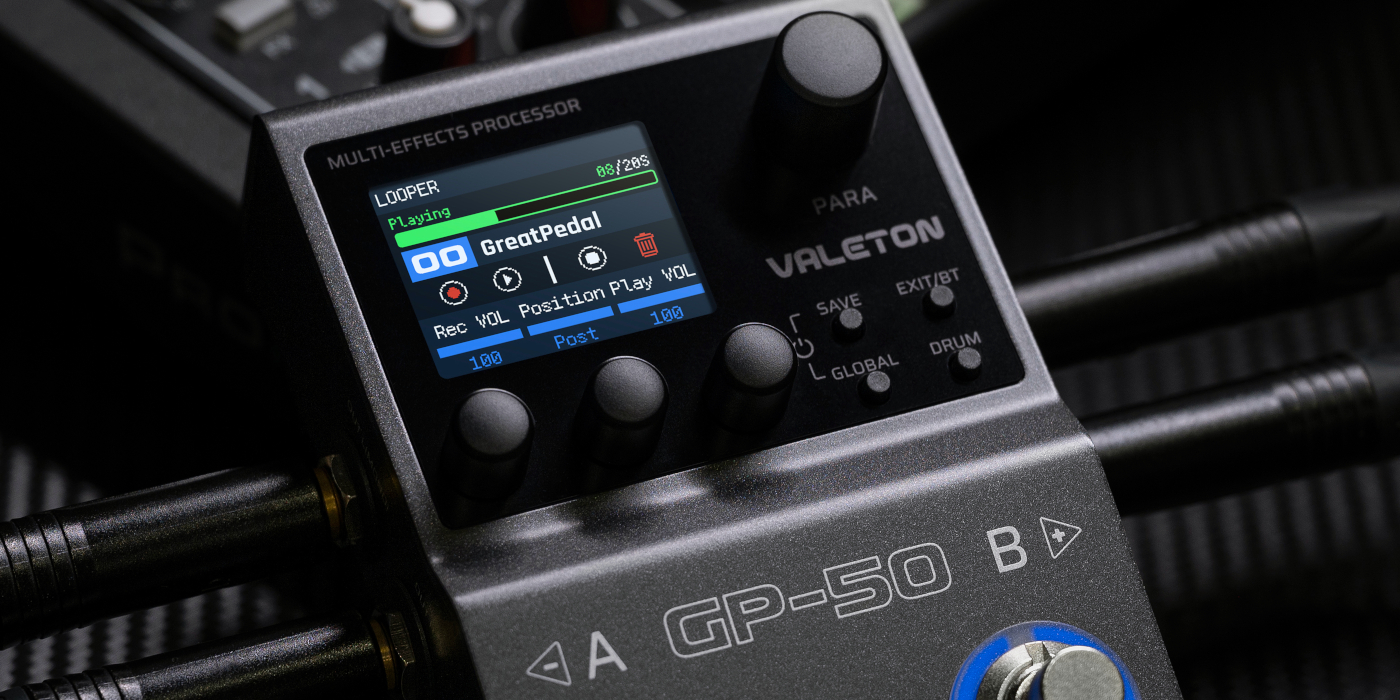
We’ve spoiled the surprise already — yes, it does. If you’ve never used one before, a looper is a total game‑changer for cranking up your creativity. It lets you record and layer riffs, chords and melodies in real time with just a simple tap of your foot. So, having one baked in makes the Valeton GP‑50 an even more powerful tool for home jams, songwriting and performing live.
Valeton’s latest unit also packs a drum machine loaded with cool grooves. So, instead of faking percussion by tapping your strings, you can lock into the built‑in patterns and play along with a proper rhythm section at your feet.
GP-5 vs. GP-50: power requirements
Like most mini guitar pedals, the Valeton GP-5 is just too dinky to squeeze a battery into. That means you’ll need to hook it up to your pedalboard’s power supply, a standalone 9V PSU or a USB 5V charger to use it.
The GP-50, on the other hand, has a built-in 1,450 mAh rechargeable battery. It provides around four hours of playtime on a single charge, so you can record, gig or practice on the go without hunting for a mains socket. If you’re running it as part of a larger rig, you can still keep it powered via a standard pedal supply though. And for extra convenience, it supports USB 5V charging like the GP-5. That could come in handy if you want to stick it up on your desk for a recording sesh!
Which one should you buy?
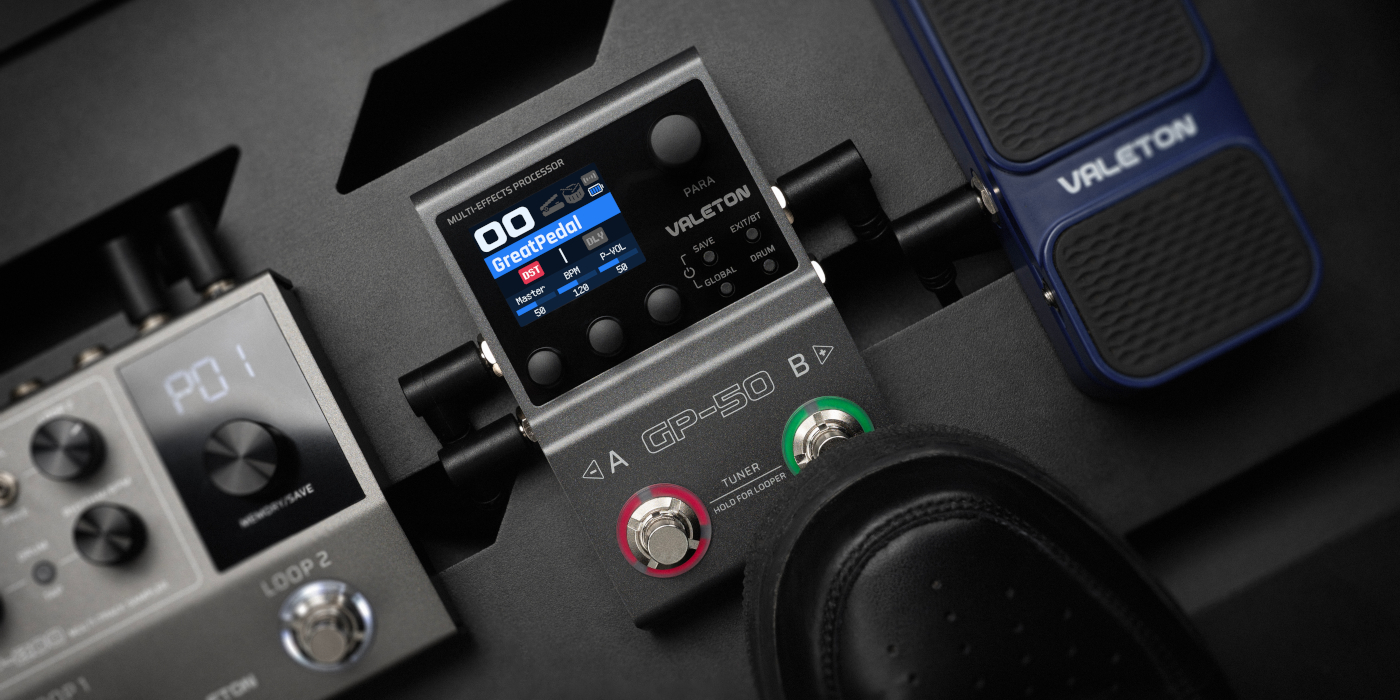
It’s clear that the Valeton GP-50 is more versatile than the GP-5. You get the same core sounds, but with its larger display and extra knobs, it’s a lot easier to use and let’s you change up your tones without having to reach for your phone. That built‑in looper is great for keeping your practice sessions fresh and your creativity flowing too. And with the ability to connect an expression pedal or external footswitch, the GP-50 is a proper gig‑ready rig.
But don’t sleep on the GP‑5. It’s still an awesome bit of kit, and we’re scratching our heads at how Valeton managed to cram so many features into such a tiny box. If you’re tight on space, this mini marvel is a cracking option — plus it’s still a fair bit cheaper than the new GP-50.
Exclusive Andertons x Valeton downloads
Want the same tones as Lee Anderton and Danish Pete? We’ve teamed up with Valeton to create a set of SnapTones you can download for free! Whether you go for the GP-50 or GP-5, you can expand your library with exclusive, dialled-in tones of the Victory Deputy, Victory Duchess and the mighty ENGL Fireball.
Want to learn more?
We’ve got loads more learn articles here on the Andertons blog. Our how to build a budget pedalboard piece is perfect if you want to know how to create a killer setup around the Valeton GP-50 or GP-5. And don’t forget to check out our full range of guitar pedals for even more inspiration for your dream rig.
The Valeton GP Series




.jpg?w=400&h=400&&fit=fill&bg=FFFFFF)


Responses & Questions