



- Benefits of pedal switching systems
- Best for under £100: Hotone Patch Kommander
- Best value: Mooer L6 MKII
- Best for small pedalboards: One Control Xenagama Tail Loop MKIII
- Best for big pedalboards: Electro-Harmonix Super Switcher
- Best for gigging: Boss MS-3
- Best overall: The GigRig G3S
- Guitar pedal switchers FAQs
As a guitarist who plays live a lot, I absolutely swear by pedal switching systems. Before I bought mine a few years ago, I was doing a whole lotta tap dancing on stage. And trust me — it’s one of the best gear investments I’ve ever made. Pedal switchers even earned a spot on our ultimate gigging guitarist gear checklist.
These clever gadgets let you organise, control and switch between your effects with minimal effort. Simply route your guitar pedals into their dedicated “loops” and toggle them on and off using footswitches placed neatly at the front of your board. Some of the best switching systems even let you create presets, so you can store your favourite combinations and engage or disengage multiple effects at once with a single press. Pretty awesome, right?
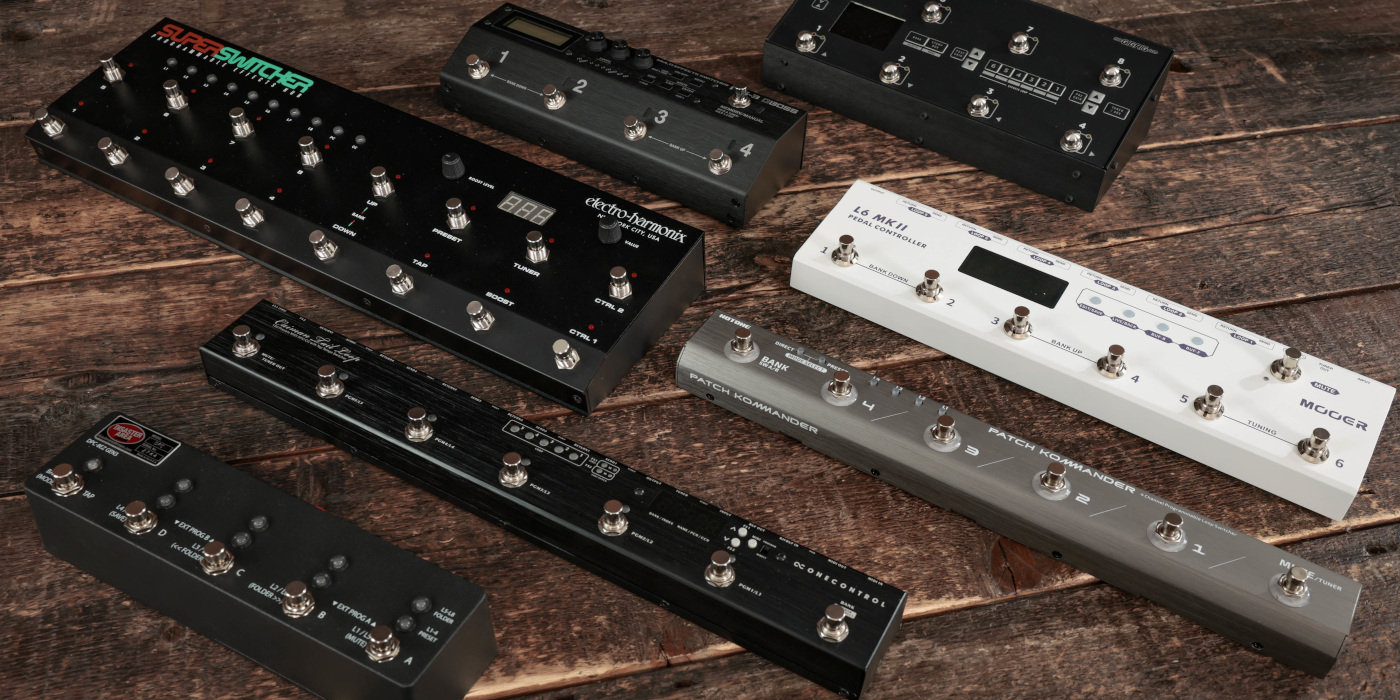
If you’re looking to upgrade your rig, we’ve picked out six of the best pedal switchers available today that’ll help you manage your effects like a pro (and stop you looking like a Gene Kelly impersonator). From affordable options to posh MIDI-equipped models, there’s something here for every kind of pedal fanatic. But first, let’s quickly go over all the reasons why they’re so cool…
Benefits of pedal switching systems
Whether you’re gigging on the reg or building your dream pedalboard, here are some of the main advantages of a guitar pedal switcher:
- One tap, total control: Instead of doing the pedalboard dance between songs, a programmable switching system lets you turn multiple effects on or off with one footswitch press.
- Consistent tones every time: Dial in your go-to combinations once, save them as presets and recall them instantly. Perfect for making sure your clean, crunch and lead sounds are exactly how you left them.
- Cleaner signal path: Many guitar loop switchers keep unused pedals out of your signal chain, helping to preserve clarity, reduce unwanted noise and maintain your core tone.
- Make playing live easier: If your set requires lots of sound changes, a guitar pedal switcher makes moving between tones quick and seamless, keeping you focused on the performance rather than your pedalboard.
- Reorganise your effects: Some of the best premium pedal switchers let you change the order of your signal chain for each preset without ever unplugging a cable. Ideal if you love experimenting with different sounds.
- Pro-level flexibility: From simple loop management and mute/tuner functions to MIDI control and amp channel switching, modern pedalboard switchers can become the command centre of your entire rig.
Ultimately, a pedal switching system removes distractions, streamlines your setup and lets you focus on what really matters: playing your best and sounding great!
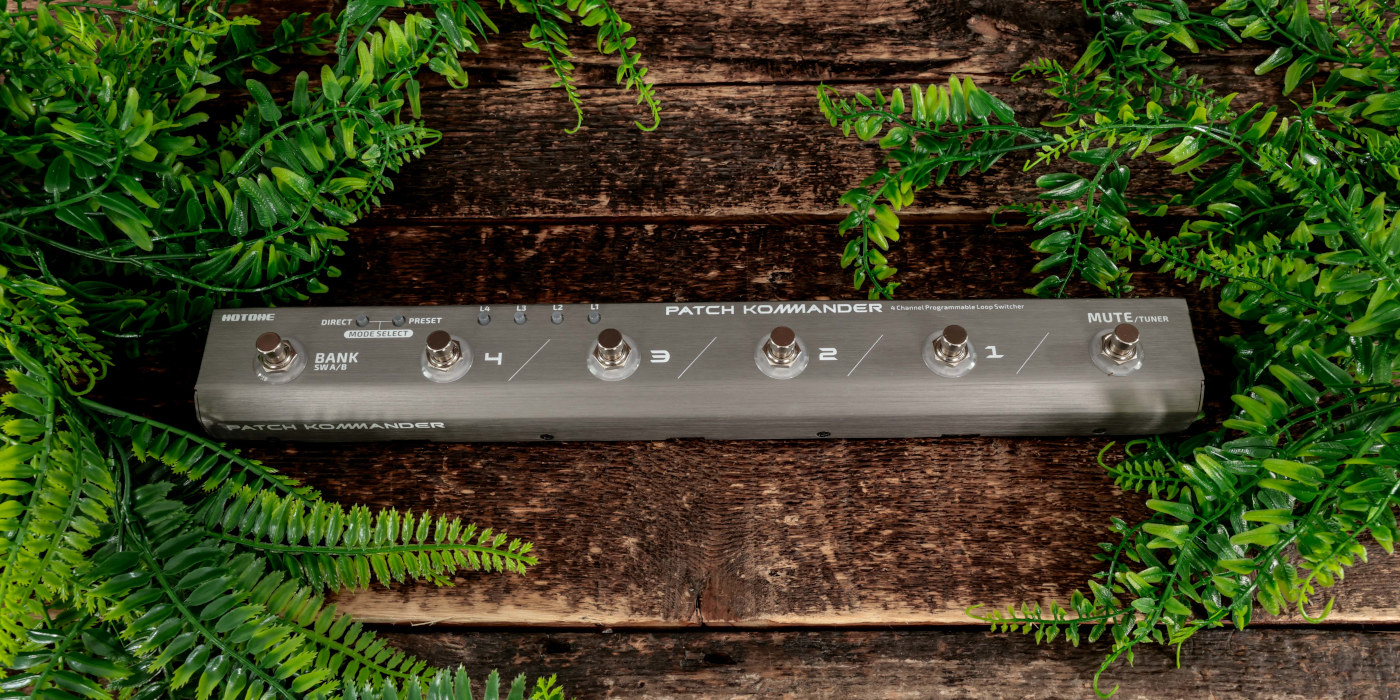
Best for under £100: Hotone Patch Kommander
Believe it or not, you can now buy an effects loop switcher for less than 100 quid. And the Hotone Patch Kommander is easily one of the best options at this price point. Not only does it offer four true bypass loops for routing your favourite effects, but it’s programmable too. That means you can jump from a clean tone with chorus and reverb to a lead sound with distortion and delay with a tap of your foot.
It features 12 presets organised into three banks of four, giving you plenty of scope to create different pedal combinations for songs or sets. And they’re a doddle to dial in, thanks to the intuitive control panel. But if you wanna keep things really simple, just switch to the unit’s Direct mode to turn your individual pedals on and off.
What’s more, the Hotone Patch Kommander comes with an SW A/B function for changing channels on your amp, a switchable input buffer to help prevent high-frequency loss, plus a mute/tuner footswitch output for connecting a tuner pedal. Not bad at all for £84.99 (at the time of writing).
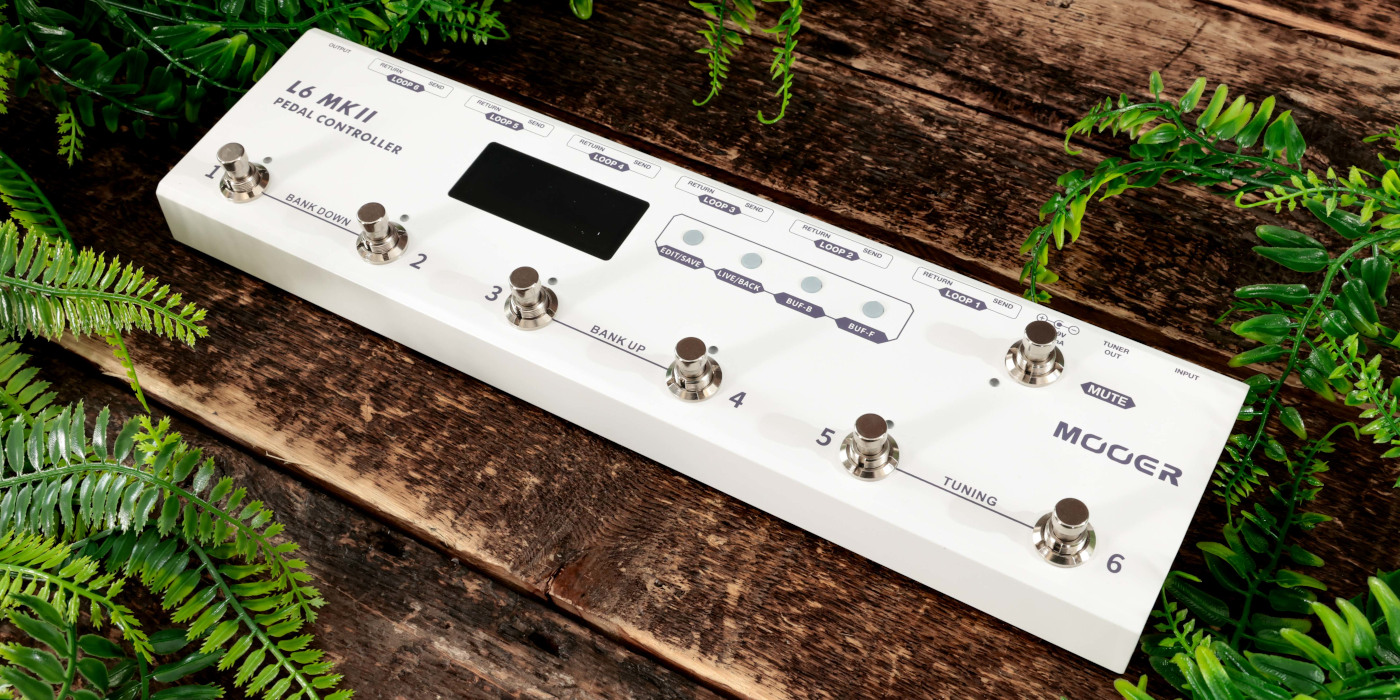
Best value: Mooer L6 MKII
If you’re happy to stretch your budget a little further, the Mooer L6 MKII might be worth the extra dosh. This programmable pedal switcher boasts (you guessed it) six loops, making it a great shout for bigger pedalboards.
Like the Hotone Patch Kommander, it offers two operating modes: Play and Live. In the Play configuration, you can save and recall up to 36 presets, allowing you to activate or deactivate multiple loops with a single footswitch press. Or use Live mode to manually control your pedal loops on the fly.
Another highlight of the Mooer L6 MKII is its large LED display, so you’ll always know which patch you’re using whether you’re on a dark stage or just jamming at home. The built-in tuner is a sweet bonus too, as it could free up some valuable space on your board. And the pre- and post-signal buffers are a nice touch, keeping your signal sounding clear and strong. It’s a lot of bang for your buck!
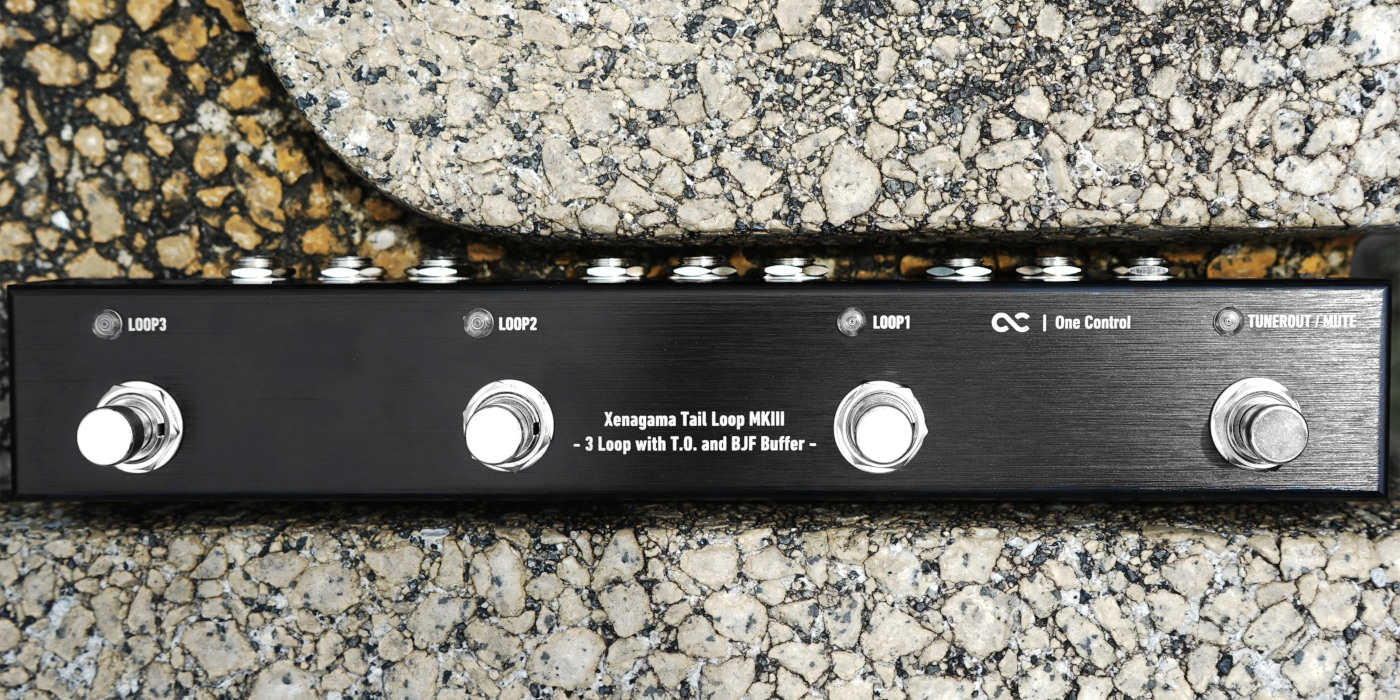
Best for small pedalboards: One Control Xenagama Tail Loop MKIII
Running a dinky fly rig? The One Control Xenagama Tail Loop MKIII is a solid choice for controlling three of your go-to pedals (or a few effects within a single loop, like your delay and reverb). With a depth of just 41mm, it’s one of the world’s smallest pedal loop switchers, making it easy to squeeze onto even the most compact pedalboard. Just stick it right at the front and you’ll never have to awkwardly stretch over your stompboxes again.
And don’t let its size fool you — this little One Control pedalboard switcher packs in some genuinely useful features. While it’s not programmable, it does have a built-in power supply that can provide juice to up to four 9V DC pedals: the three in your loops plus a tuner. Speaking of which, there’s also a handy tuner out/mute function you can click on between songs or when swapping guitars. Plus, the switchable BJF input buffer helps minimise tone loss when you’re using longer guitar cables.
If three loops isn’t quite enough, consider the One Control Iguana Tail Loop MKIII instead. It’s exactly the same depth as the Xenagama Tail Loop MKIII but slightly wider, making room for two extra footswitches and a total of five pedal loops.
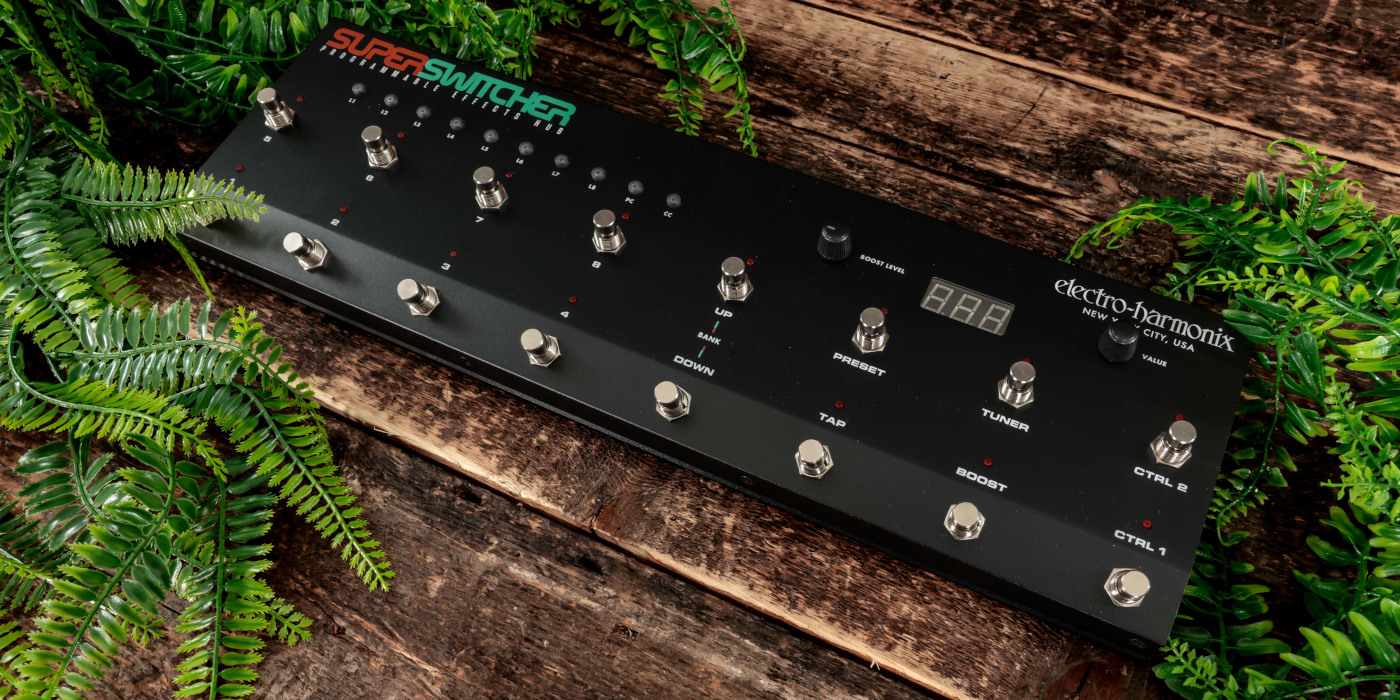
Best for big pedalboards: Electro-Harmonix Super Switcher
If you’ve got loads of effects chained together on a pedalboard that looks more like a space station, you’ll need a switching system with plenty of loops and gizmos to get the most out of your setup. The Electro-Harmonix Super Switcher is a fantastic option that’ll ensure you’re never hollering, “Houston, we have a problem” to the sound guy at your next gig.
That’s because this bulletproof programmable switcher offers eight true bypass loops and can store up to 128 presets. Better yet, two of its loops are stereo, making it ideal for running powerful digital delay pedals and reverbs in stereo through a pair of amps. It’s also a stellar choice if you’re using the four-cable method, as it makes it easy to route certain effects in front of your amp while placing others in the effects loop.
But here’s where it gets seriously clever. With its MIDI in and out, the Super Switcher can change patches on compatible MIDI-enabled pedals as part of your presets. It can also send and receive MIDI clock data, transmit tap tempo signals and keep your time-based effects perfectly synced to a shared master clock. The dedicated Tap footswitch lets you set the BPM globally or on a per-preset basis, giving you loads of flexibility for different songs and sounds. Heck, it’s even got a built-in boost for giving your solos a lift!
Best for gigging: Boss MS-3
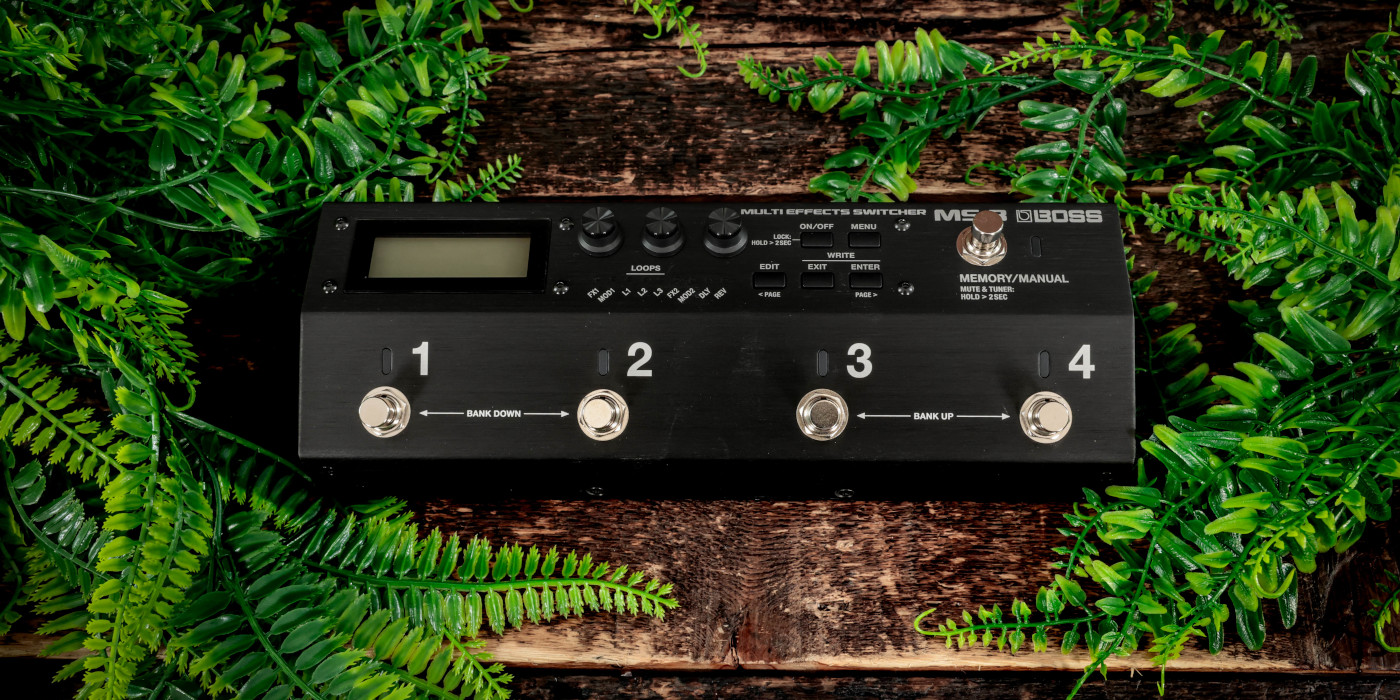
I might be biased because I own one of these bad boys, but the Boss MS-3 is simply a brilliant bit of kit for gigging (although to be fair, most guitar effects switchers are). Why this one specifically? Because it’s compact, programmable and has three loops for controlling your fave stompboxes. But here’s why I really love it: it comes loaded with 112 world-class Boss effects, making it an incredibly versatile all-in-one hybrid pedal switcher.
With 200 presets onboard, you can save enough patches for your band’s entire repertoire and still have room to spare. It’s also crammed with clever deep rig control features, making it easy to tweak parameters on your fancy digital pedals in real time via MIDI, switch channels on your guitar amp and more. You can even hook up external footswitches and expression pedals, giving you control over extra functions and effects within the MS-3.
But perhaps best of all, it’s a breeze to dial in. Thanks to its backlit LCD screen, you can view and edit your entire signal chain when building presets, with the ability to run and re-order up to six internal effects alongside the three pedals you’ve got looped in. There’s a tuner baked in too, plus a tweakable noise suppressor for each patch that helps keep your heavier sounds free from hiss and feedback.
Best overall: The GigRig G3S
If you’ve got the budget to buy the best pedal switcher out there, The GigRig G3S is pretty hard to beat. It’s packed with pro-grade features that’ll take complete control of even the most elaborate rigs. With 12 passive true bypass loops that can be run in mono, stereo or a combo of both, 99 banks with up to 28 presets each, plus the ability to send multiple MIDI messages to compatible pedals and rack gear, the G3S can handle just about anything — even if you’re rocking a pedalboard the size of a dining table.
What really sets it apart is that you get a dedicated OLED display for each footswitch, so you’ll always know exactly what every switch does at a glance (no more masking tape labels stuck all over your board). Programming patches is straightforward too, and with built-in Bluetooth, you can reorder effects, organise setlists, perform backups and update the unit wirelessly using The GigRig’s app and web editor.
Extra features like programmable pre- and post-gain controls, stereo delay and reverb spillover, parallel routing options and switchable outputs give you an incredible amount of flexibility. And despite all that power, The GigRig‘s main focus remains preserving your tone, with an ultra-transparent signal path designed to let your pedals and amps sound exactly as intended. In short, the G3S is a beast!
Guitar pedal switchers FAQs
What’s the difference between a loop switcher and a pedal switching system?
With a standard loop switcher, you simply route your guitar pedals into separate loops and toggle them on and off using footswitches positioned neatly at the front of your pedalboard. A pedal switching system typically adds programmable presets, MIDI control, amp channel switching and more advanced routing options, giving you greater control over your entire rig.
Can a pedalboard switcher improve my guitar tone?
Yes, many pedal switching systems help maintain signal integrity by removing unused pedals from your chain, reducing unwanted noise and minimising tone loss. Many also feature true bypass loops, plus switchable input/output buffers to help keep your signal strong when using longer cable runs.
Are pedal switchers compatible with MIDI pedals?
Many modern pedal switching systems include MIDI functionality, allowing you to control MIDI-equipped pedals, modelling amps and rack effects alongside your analogue stompboxes from a single controller. This makes it easy to switch multiple devices simultaneously and recall complex presets with one footswitch press.
Which brands make the best pedal switching systems?
Popular brands include Boss, The GigRig, One Control, Electro-Harmonix, Mooer and Disaster Area, each offering solutions for everything from compact pedalboards to professional touring rigs.


Responses & Questions