



- Manage your expectations and enjoy the process
- Shop affordable guitars and gear for beginners
- Make the most of practice amps and modern tech
- Use guitar learning resources
- Don’t get down (many famous guitarists started later)
- Essential tips for learning guitar as an adult
- Final thoughts
- FAQs
Learning guitar can be one of the most rewarding hobbies you’ll ever pick up. Whether you’re 17, 37 or 77, there’s no expiry date on making music. Thanks to affordable beginner instruments, great-sounding practice amps and an endless supply of online lessons and resources, there’s never been a better time to kickstart your guitar journey.
If you’re just starting out, no matter your age, here are our top tips for learning to play guitar as a newbie…
Manage your expectations and enjoy the process
The most important thing when learning guitar is to keep your expectations realistic. No one becomes a rock star overnight. Even teenagers jamming away in their bedrooms have had to put in the hours to develop their skills.
There’s no doubt that improving at guitar takes practice, but progress comes from consistency, not cramming. If you’re short on time, make the most of the time you do have. Practising for 20 to 30 minutes a day will take you much further than saving everything up for one long weekend sesh.
And whatever schedule works for you, don’t forget to actually enjoy the process. Playing guitar has loads of benefits beyond simply learning a new skill. There’s nothing quite like sitting down and playing a song you’ve learnt or finally mastering a piece you’ve been working on for a while. It’s a rewarding challenge that can be a lot of fun, and who knows, you might even end up writing songs of your own one day!
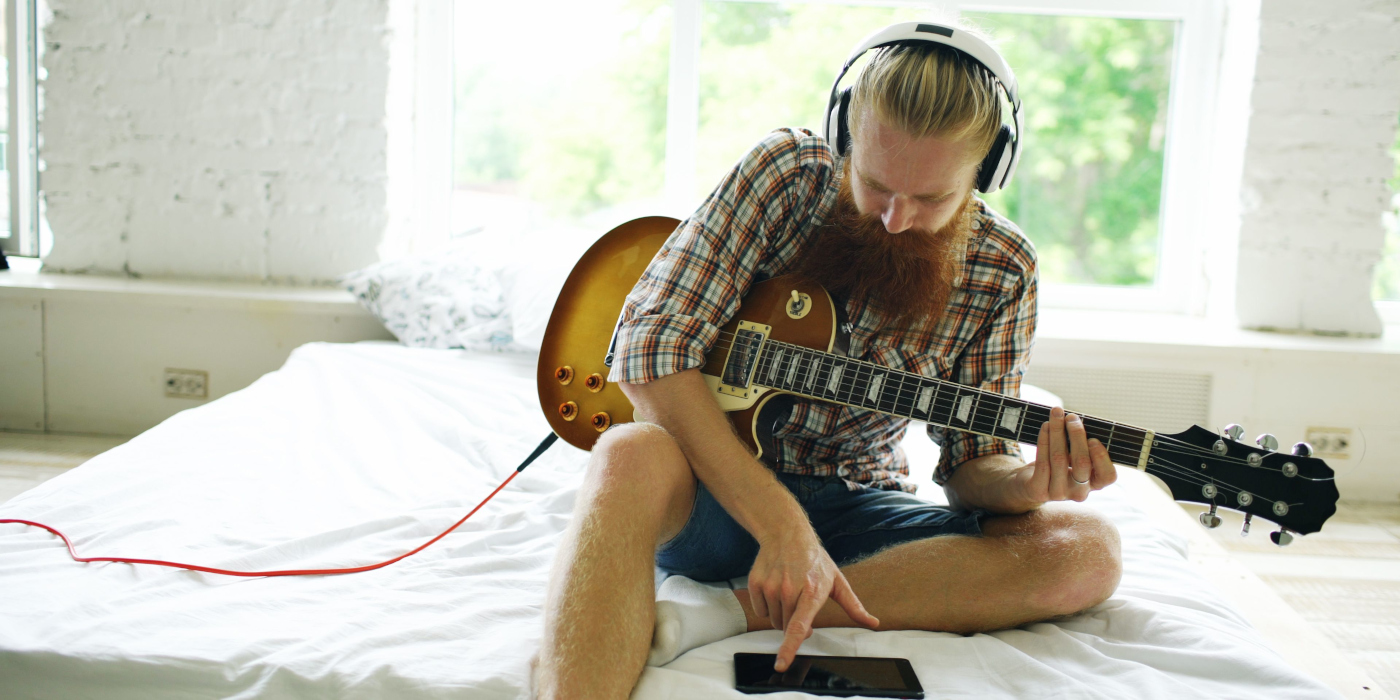
But above all else, don’t rush. The joy of playing guitar comes from the small victories: learning your first chord, playing along to your favourite song or coming up with a new riff. It’s a fantastic creative outlet that can fit into almost any lifestyle.
Shop affordable guitars and gear for beginners
One of the best things about learning guitar these days is how affordable and reliable entry-level gear has become. Brands like EastCoast, Squier, Ibanez and Jackson all produce excellent beginner electric guitars that sound and feel great without costing a small fortune. Many even come as part of handy electric guitar starter packs, complete with a practice amp and all the guitar accessories you need to start playing.
Here at Andertons, we stock a wide range of beginner-friendly guitars and instrument bundles, so it’s easy to find the perfect axe to inspire you without breaking the bank.
Best electric guitars for beginners
Some of our top starter electric guitars include:
- EastCoast electric guitars: Plenty of budget-friendly models based on legendary designs with impressive build quality for the price.
- Squier Sonic Series guitars: Iconic looks and flexible tones, making them a great fit for everything from rock and funk to indie and pop.
- Jackson JS Series guitars: Perfect for aspiring rock and metal players, with slim necks, aggressive styling and a powerful sound.
- Ibanez GIO Series guitars: Stylish, comfortable guitars with versatile electronics and a range of cool colour options.
Ready to start rocking?
Shop all beginner electric guitars
Best acoustic guitars for beginners
Here are some of our favourite starter acoustic guitars:
- EastCoast acoustic guitars: Affordable, comfy to play and available in a range of steel-string and classical options, making them an excellent choice for complete beginners.
- Alvarez Artist Series guitars: Well-built instruments with impressive projection, rich tone and great playability, offering exceptional value for money.
- Fender acoustic guitars: Stylish, dependable acoustics that are easy to play and available in a variety of body shapes to suit different players and musical styles.
Superb starter strummers
Shop all beginner acoustic guitars
Make the most of practice amps and modern tech
Gone are the days when you needed a big, noisy amp to get a half-decent sound. Thanks to modern compact electric guitar amp combos and modelling amps, it’s simpler than ever to get amazing tones at low volumes, or even through headphones.
Options like the Boss Katana Series, Fender Mustang LT25 and Positive Grid Spark 2 are hugely popular with beginners with their built-in effects, Bluetooth connectivity and intuitive controls. With a small practice amp, you can jam quietly at home, play along to backing tracks and experiment with different sounds, all without needing a huge setup.
Pick up a practice amp
Use guitar learning resources
Alongside modern guitar gear, the other area that’s come on leaps and bounds in recent years is resources for learning guitar. Whether you prefer one-to-one guidance or learning at your own pace online, there are more options than ever right at your fingertips. For example, you can:
- Take lessons with a teacher, either in person or over video call.
- Explore free content on YouTube, or follow structured courses from platforms like Fender Play, JustinGuitar and Yousician.
- Use smartphone apps for tuning, chord charts, metronomes and tracking your progress.
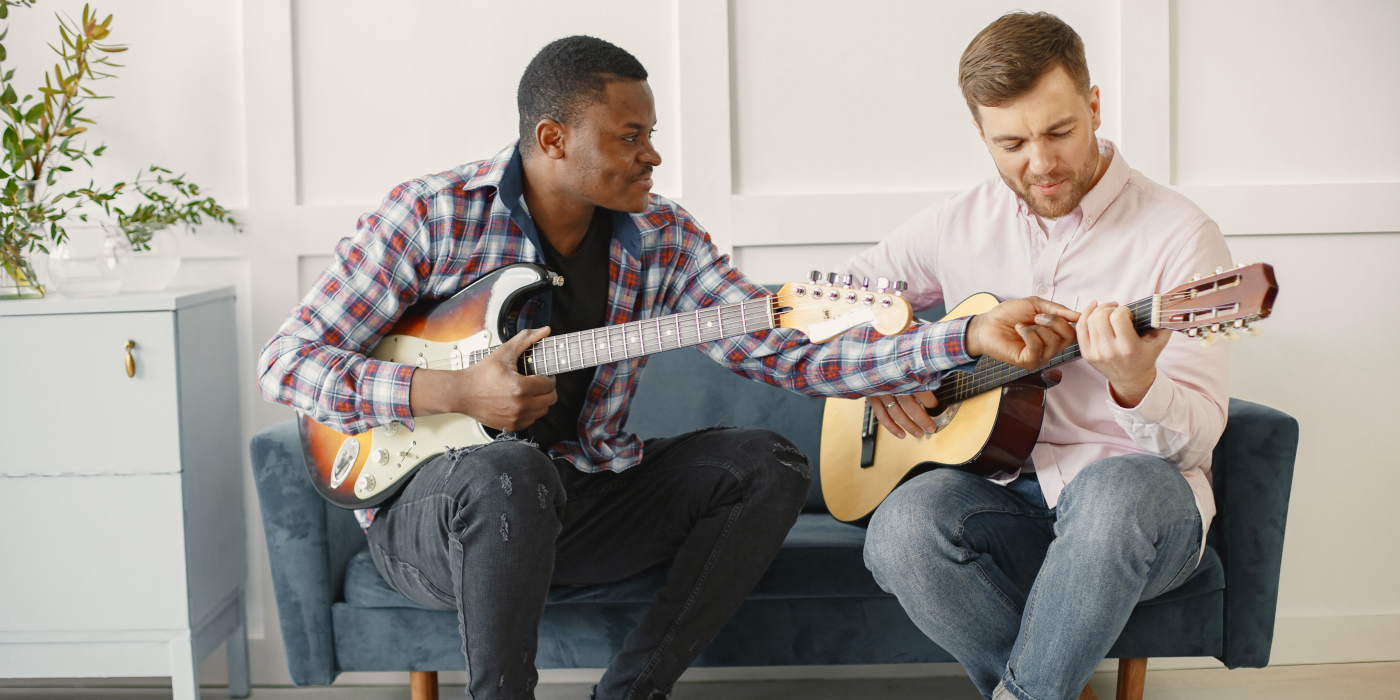
Pros and cons of different guitar learning options
As you can see, there are plenty of ways to learn guitar, and each comes with its own advantages and drawbacks:
- Traditional teacher (in-person): Offers personalised feedback, structured lessons and accountability, but can be more expensive and less flexible when it comes to scheduling.
- Remote teacher (video call): Provides many of the same benefits as in-person lessons, with the added convenience of learning from home. However, it still requires regular scheduling, plus a reliable internet connection!
- YouTube tutorials: Free and available on demand, making them a great option for beginners. The downside is that quality can vary, and there’s no one to spot mistakes or help you avoid bad habits.
- Online learning platforms: Structured courses with interactive features and the flexibility to learn at your own pace. On the flip side, they can lack the personalised guidance of a dedicated teacher.
Don’t get down (many famous guitarists started later)
Still think you’re too old to learn guitar? Think again. Here are just a few examples of guitar icons who didn’t even pick up a guitar until a little later in life:
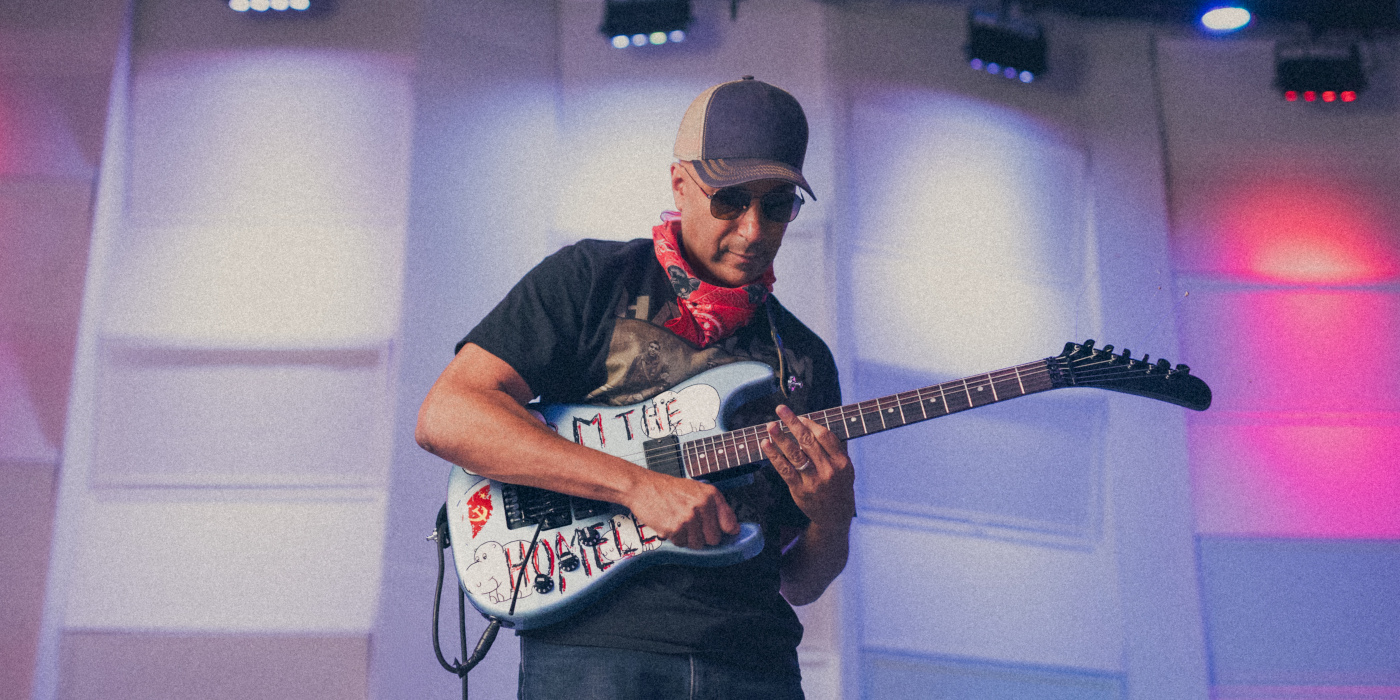
- Tom Morello (Rage Against the Machine, Audioslave) only started taking guitar seriously when he was at college.
- Glenn Tipton (Judas Priest) didn’t pick up the guitar until his late teens.
- Wes Montgomery, one of the most influential jazz guitarists of all time, didn’t start playing until he was 20.
If they could all go on to shape entire genres, there’s every reason to believe you can learn to play your favourite songs, join a band or compose music of your own.
Essential tips for learning guitar as an adult
With so many tools and resources available today, learning guitar has never been more accessible. As we’ve discussed, there’s a plethora of learning material online, much of it completely free. And if you’d prefer to go the traditional route, there are still loads of experienced guitar teachers out there who can help take your playing to the next level, either in-person or remotely.
If we had to condense our advice into a few essential tips, these would be our key takeaways:
- Learn songs you love: Scale exercises are important, but don’t forget to learn a few of your favourite songs along the way. It’s a great way to stay motivated and keep practising fun.
- Be patient with your fingers: There’s no getting around it, your fingers will feel clumsy at first. You might even find they get sore and tired. But stick with it, and your strength and dexterity will improve over time.
- Balance practice with life: Life has a habit of getting in the way, so keep your practice schedule realistic. Even short, regular sessions can make a big difference.
- Don’t compare yourself to others: It’s easy to be impressed by players on YouTube and social media, but everyone progresses at their own pace. Try to focus on your own improvement rather than comparing yourself to somebody else’s highlight reel. Just keep pushing, and you’ll be amazed how far you can go!
Final thoughts
No matter your age, you’re never too old to start playing guitar. With affordable gear, powerful practice tech and more learning resources than ever before, all you need is the willingness to pick up a guitar and the motivation to keep going.
Take things one step at a time, enjoy the process and celebrate the small wins along the way. Before long, you’ll be playing your favourite songs and discovering just how rewarding making music can be.
Ready to get started? Check out our huge range of beginner instruments, including electric guitars, acoustic guitars, bass guitars and classical guitars.

FAQs
Am I too old to learn guitar at 40/50/60?
Not at all. Many people start in their 40s, 50s or even later. Consistency and enjoyment matter far more than age.
Will my fingers be too stiff to play guitar?
It will probably feel awkward at first, but with regular practice, your fingers will gain the strength and flexibility they need.
Should I start on acoustic or electric guitar?
Choose the one that suits the music you want to play. Acoustic guitars are great for strumming and songwriting, while electric guitars are more versatile and easier on the fingers.
Do I need a teacher, or can I learn online?
Both options are still valid. A teacher can provide tailored guidance and may be better at keeping you accountable, but plenty of people successfully learn using online courses and apps.
How long will it take to learn my first song?
With regular practice, many beginners can play a simple song within a few weeks. The key is to focus on consistency rather than trying to learn everything at once.
What’s the best affordable beginner guitar?
Models from EastCoast, Squier, Yamaha and Epiphone are popular choices for new players, thanks to their combination of quality, playability and value for money.
Can I practice guitar quietly in a flat or apartment?
Yes! A small practice amp or amp modeller with headphones makes it easy to play without disturbing your neighbours. You can also just keep the volume low when playing through a speaker.
Is it harder for adults to build calluses?
Not really. Calluses will form naturally as you practice, regardless of your age. Regular playing is more important than how old you are when you start.
How much should I spend on a beginner guitar and amp?
You can get a great starter setup for a few hundred pounds. For the best value, consider a starter pack that includes a guitar, practice amp and essential accessories such as a strap, picks and a tuner.
What if I only have 15 minutes a day to practice?
That’s totally fine. Short, consistent practice sessions are often more effective than occasional marathon sessions. Even 15 minutes a day can lead to steady progress over time.
Want to learn more?
Our Learn section is packed with helpful guides, buying advice and tutorials for musicians of all experience levels. Or browse our Gear News section to discover the latest product launches and industry updates.
Responses & Questions