



- Five ways Eddie Van Halen rewrote the rock guitar rulebook
- Is Eddie Van Halen the best guitarist ever?
- FAQs
Back in 2012, Eddie Van Halen was voted the winner of Guitar World’s Greatest Guitarist of All Time readers’ poll. Big deal, right? In the social media era, we see these kinds of clickbaity listicles all the time. But this one was pretty significant…
Not only was it the publication’s first-ever GOAT guitarist poll, but almost half a million votes were cast. We ain’t talkin’ ’bout some random blogger’s opinion here. It was a full-blown, tournament-style showdown featuring 132 of the biggest names in guitar, with Eddie battling past players like Slash, Satch and Randy Rhoads before seeing off Brian May in the final.
Whatever you make of lists like that, there’s still a compelling case that Eddie Van Halen was the most influential guitarist to emerge since Jimi Hendrix. Few players have captured the raw excitement of the electric guitar in quite the same way, and even fewer have pushed it forward while doing so.
When Eddie plugged in, it felt like anything was possible, and his impact reshaped how guitarists play, sound and even think about the instrument. In this blog, we’re going to dive(bomb) into five ways Eddie changed the game.
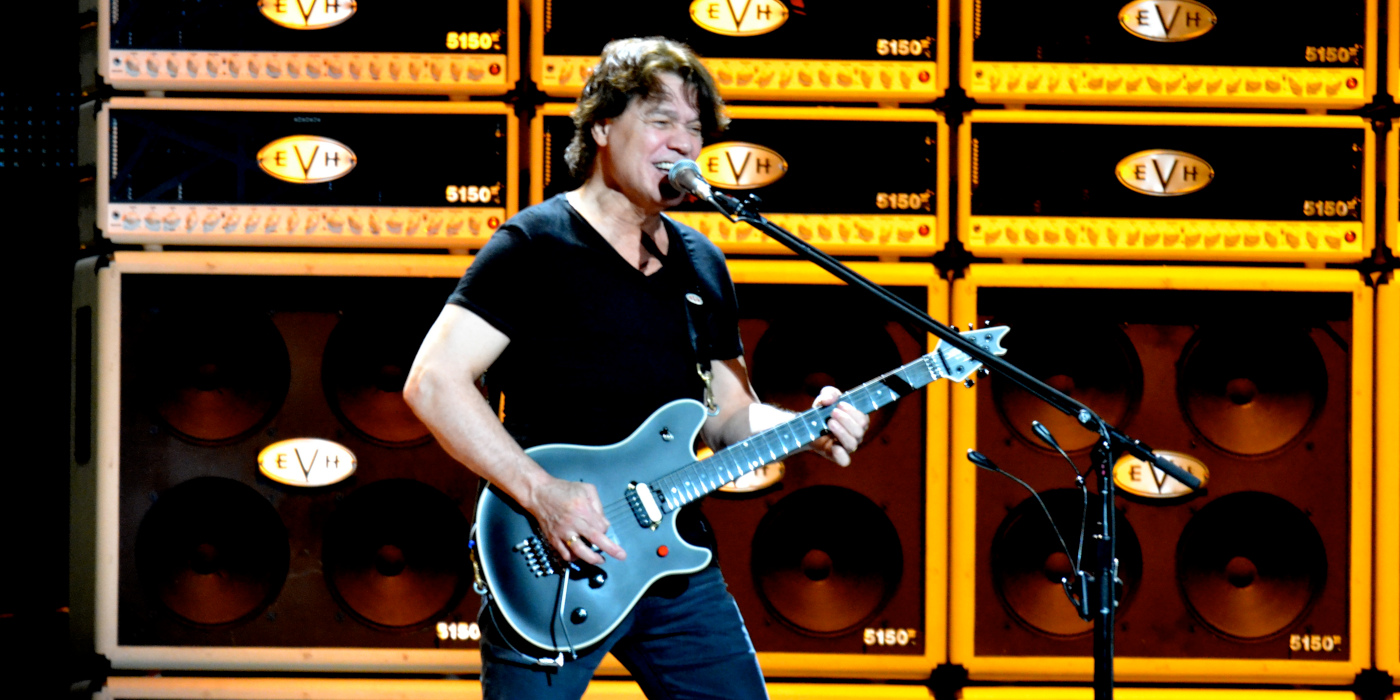
Five ways Eddie Van Halen rewrote the rock guitar rulebook
From his explosive style to pushing gear to its limits, Eddie Van Halen raised the bar in more ways than one:
1. He took guitar technique to a new level
Eddie popularised two-handed fingerboard tapping, a technique that allowed him to play rapid, cascading arpeggios that sounded more like a keyboard than an electric guitar. While he didn’t invent tapping (contrary to what some EVH die-hards might think), he refined it, weaponised it and brought it into the mainstream.
His showcase moment came in the now-iconic instrumental “Eruption”, the second track on Van Halen’s debut album, where he unveiled a completely new vocabulary for rock guitar seemingly out of nowhere. It wasn’t just about speed, it was about phrasing, feel and the sheer musicality of what he was doing with both hands on the neck.
Almost overnight, tapping became part of the modern guitarist’s toolkit and players everywhere scrambled to work it into their own style. But very few could match Eddie’s touch and flair. And to this day, “Eruption” remains the benchmark for guitar virtuosity.
2. Pioneered the “brown sound” and tone innovation
Eddie transformed how the guitar sounded too. His tone became just as legendary as his technical wizardry, creating what’s often referred to as the “brown sound” — a rich, saturated high-gain tone that somehow managed to be both smooth and aggressive at the same time.
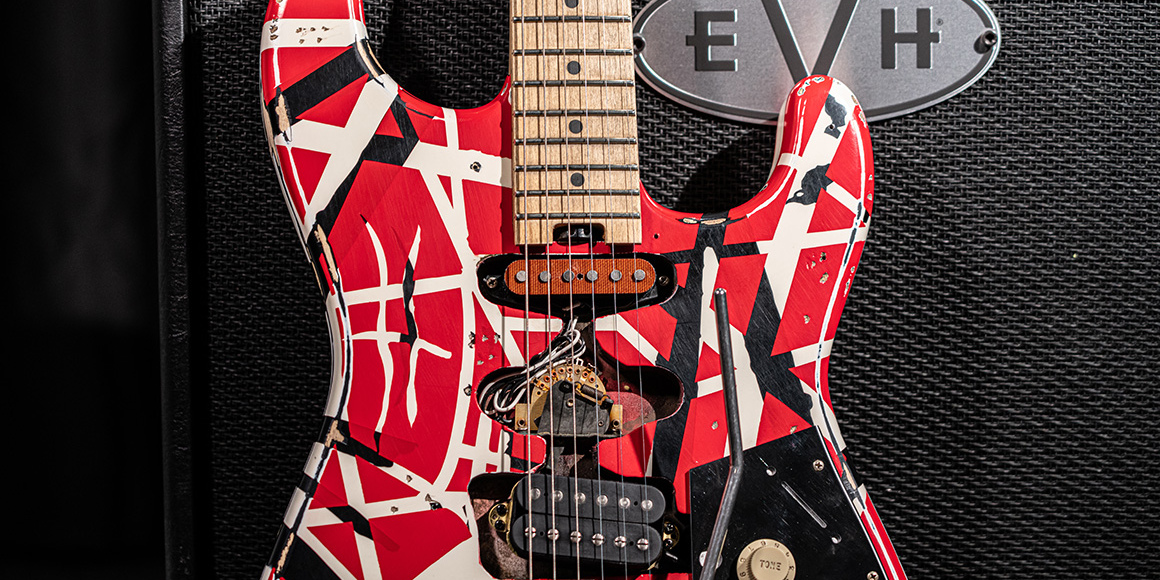
And that tone didn’t come from off-the-shelf gear. Frustrated with what was available, Eddie took matters into his own hands and kickstarted a DIY approach that would inspire countless players to mod their own equipment. Central to this was his famous “Frankenstrat” guitar, a home-built hybrid that paired a Gibson humbucker with a Strat-style body and tremolo, giving him the best of both worlds in tone and feel.
He didn’t stop there either, famously tinkering with his Marshall amps to squeeze out more gain, punch and sustain. The result was a sound that redefined hard rock guitar — thick, articulate and instantly recognisable. More importantly, it proved that tone isn’t something you just buy, but rather something you build, shape and properly obsess over.
3. Inventive use of gear and effects
Eddie Van Halen was always chasing new sounds, treating his rig as an extension of his creativity and constantly pushing the boundaries. A key part of his style was his use of the Floyd Rose locking tremolo, which allowed him to perform extreme dive bombs and wide, expressive vibrato tricks while keeping everything in tune. What had previously been a risky move became a defining part of his playing style. And suddenly, every guitarist wanted a locking trem system!
He also made inventive use of guitar pedals, weaving in phasers, flangers and delays to add movement, depth and a real sense of drama to his sound. Tracks like “Ain’t Talkin’ ’Bout Love” and “Unchained” showed how these effects could become part of the riff itself and not just something layered on top.
4. He blended classical melody with rock energy
Yes, Eddie’s solos were often fast and flashy, but he also had an awesome sense of melody. His playing struck a rare balance between technical brilliance and musical feel, which is probably why his lead parts still resonate with so many players today.
While most guitarists of the era focused purely on blues-based rock phrasing, Eddie drew on a wider palette of influences, including classical music. You can hear it in the structure of his solos — the way phrases build, resolve and evolve, almost like composed pieces rather than off-the-cuff jams. That’s what set him apart. His solos weren’t just fast for the sake of it; they were memorable and packed with personality. Skip to 2:15 below for one of Eddie’s best…
5. Incredible songwriting and hooky riffs
Beyond his soloing ability, Eddie Van Halen’s real superpower was knowing how to serve the song. Long before the solos kicked in, he was laying down riffs that did the heavy lifting. And they’re some of the most recognisable in rock history.
Tracks like “Dance the Night Away”, “Panama” and “Hot for Teacher” show just how inventive his rhythm playing was, blending groove, feel and punch with a real sense of joy. Even now, they still sound as fresh as ever. Whether it was the chugging drive of his palm-muted parts or the way he’d inject subtle embellishments into a riff, his playing always felt bouncy and alive. And let’s be honest, they’re ridiculously fun to play!
Is Eddie Van Halen the best guitarist ever?
“Best” is always subjective when it comes to artists and what they create. But based on everything we’ve covered, Eddie firmly belongs on guitar’s Mount Rushmore alongside Jimi Hendrix. And the remaining spots? That’s up to you. Jimmy Page? Brian May? David Gilmour? Whoever makes your top four, Jimi and Eddie feel like permanent fixtures most guitarists can agree on.
Nearly every rock, metal and shred guitarist who emerged in the ’80s owes something to him — from Vito Bratta (White Lion) and Warren DeMartini (Ratt) to Extreme’s Nuno Bettencourt. His two-handed tapping and whammy bar theatrics may have been the defining sounds of the decade, but it was his melodic phrasing, rhythmic swagger and sheer sense of fun that truly made him special. And the “brown sound” is still the benchmark for great guitar tone!
So, is he the best of all time? That’s for you to decide. But very few players have changed the instrument so completely, or made it feel so exciting, as Eddie Van Halen.
FAQs
Why is Eddie Van Halen so popular?
Eddie Van Halen is widely regarded as one of the most influential guitarists in rock history thanks to his trailblazing technique, iconic tone and memorable riffs. From his explosive playing on tracks like “Eruption” to his innovative gear choices and signature “brown sound,” Eddie redefined what guitar was all about. His unique style and creativity helped shape modern rock and inspired generations of guitarists.
How was Van Halen so good at guitar?
Eddie’s skill came from a combination of natural musicality, obsessive practice and constant experimentation. He was known for spending hours refining techniques and tweaking his gear to achieve new sounds. And while synonymous with speed and technicality, it was his sense of phrasing, rhythm and melody that really made his playing feel exciting and fresh.
What is Eddie Van Halen’s greatest guitar solo?
Eddie wrote countless iconic solos, but “Eruption” is often considered Eddie Van Halen’s greatest guitar moment. Released on Van Halen’s 1978 debut album, the instrumental showcased his revolutionary two-handed tapping and tremolo picking techniques, plus his creative use of echo, phaser and whammy bar effects.
Did Eddie Van Halen invent tapping?
No, Eddie Van Halen didn’t invent two-handed tapping, but he popularised it and took it to a whole new level. Players like Steve Hackett and others had used similar techniques before, but Eddie refined it, made it a core part of his style and introduced it to a global audience through songs like “Eruption”, “Jump” and “Mean Street”.
Who taught Eddie Van Halen to play guitar?
Eddie Van Halen was largely self-taught on guitar, although he did receive early music training in piano as a child. After switching to guitar, he developed his style by listening to players like Eric Clapton and experimenting on his own.
Want to learn more?
Chasing your own “brown sound”? Head over to our learn section for deep dives and handy how-to guides to help you dial in your perfect tone. Or if you’d rather stay in the loop with all things gear, our gear news page is well worth a bookmark.
Responses & Questions