


- What does the Victory PowerValve 200 do?
- How do you set up the Victory PowerValve 200?
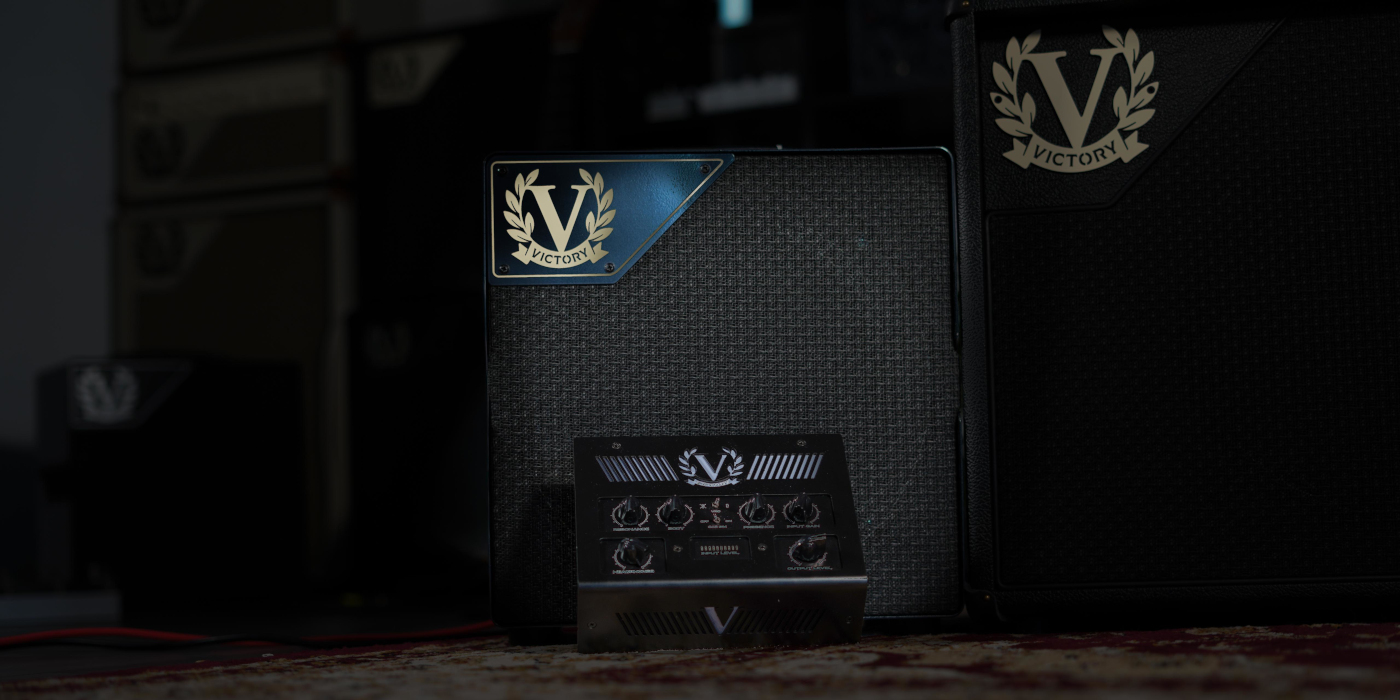
- How big is the Victory PowerValve 200?
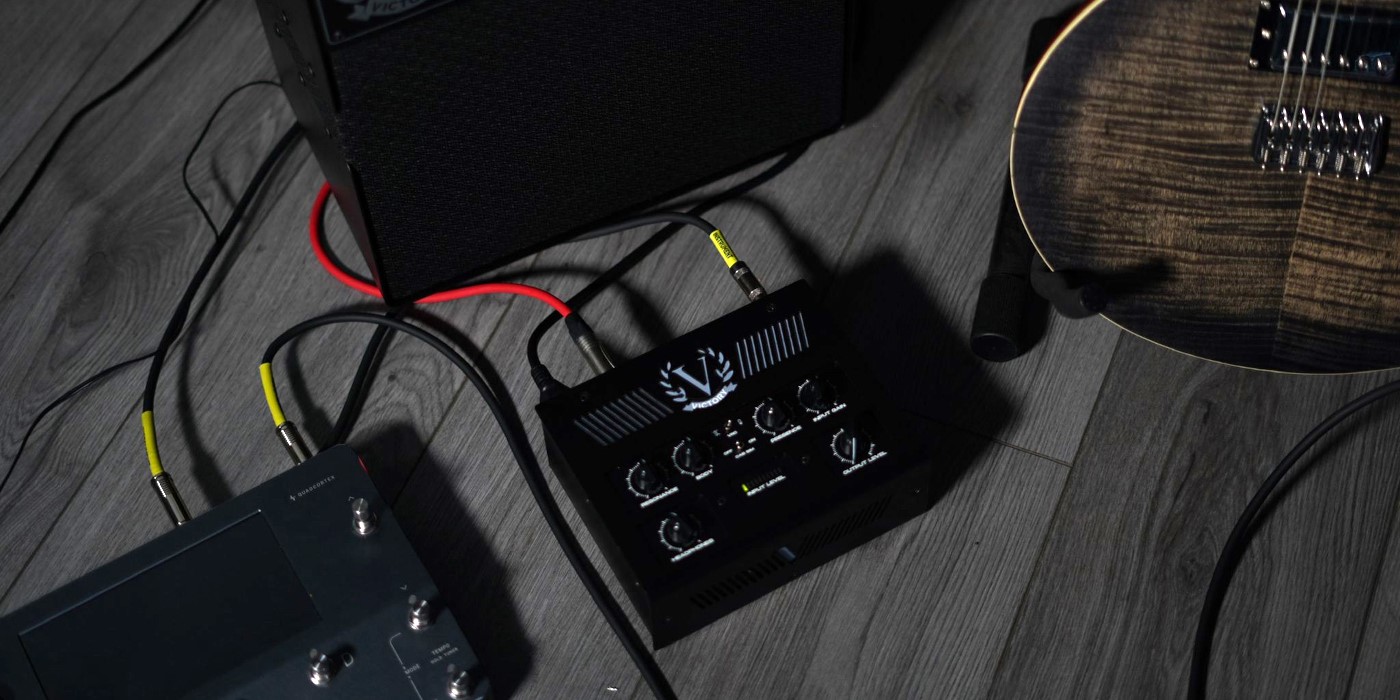
- Does the Victory PowerValve 200 work well with a Quad Cortex?
- Which cab goes best with the Victory PowerValve 200?
- Who uses the Victory PowerValve 200?
- Victory PowerValve 200 vs. Seymour Duncan PowerStage 200
- Victory PowerValve 200 on Andertons TV
It’s no surprise that hundreds of thousands of guitarists rely on the Neural DSP Quad Cortex and other next‑gen floor modelling amps for their core tones. They’re portable, powerful and packed full of killer sounds. But even with all that digital magic, two things are still tough to truly capture: the feel of a real valve amp and the way it interacts with a guitar cab. The new Victory PowerValve 200 could be about to change that.
The PV200 is a compact, valve‑driven power amp designed to unlock the full potential of your modeller. It injects the warmth, punch and harmonic richness we all love from valve amps while letting you plug straight into a traditional guitar cab. Think of it as the perfect bridge between the digital and analogue worlds.
In this blog, we’ll break down the Victory PowerValve 200’s standout features, how easily it slots into your existing rig and what Neural DSP think about it.
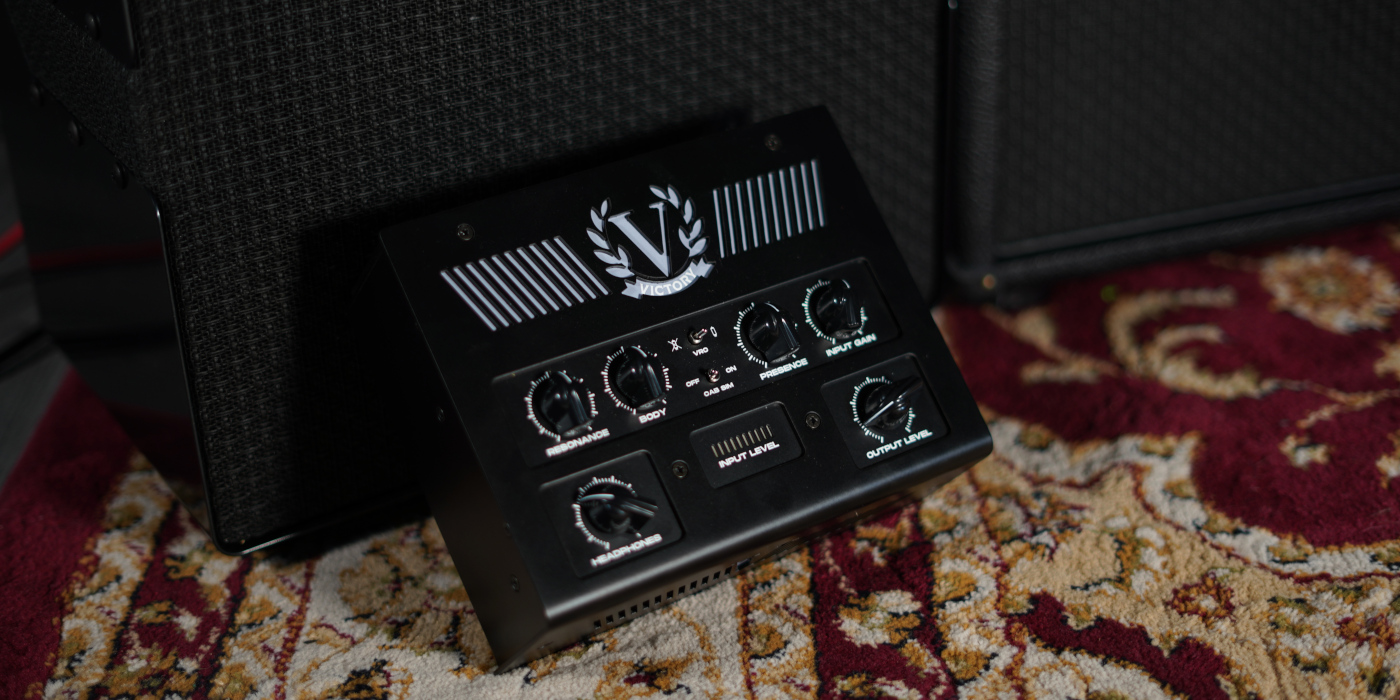
What does the Victory PowerValve 200 do?
The Victory PowerValve 200 is a small 200‑watt power amp built to bring digital rigs to life. As convenient as modern modellers are, they can sometimes fall short when it comes to recreating the feel of certain valve amps. But with Victory’s switchable Valve React Circuit (VRC) onboard, the PV200 adds a richer, more dynamic and touch‑responsive character to your tone.
So, whether you’re running a modeller, a standalone preamp pedal or a pedalboard‑based rig, this could be the missing link: a way to push real air through a proper guitar cab while keeping all the flexibility of digital. Essentially, you get the best of both worlds!
“Players told us they still wanted to feel the weight of a guitar speaker cabinet moving air on stage — something that doesn’t quite happen with FRFR cabs. The subtle harmonic content generated by a valve stage creates slight asymmetry in the waveform, and that’s where the feel comes from.” — Victory’s Chief Designer, Martin Kidd

.png?w=400&h=400&&fit=fill&bg=FFFFFF)
_compressed.jpg?w=400&h=400&&fit=fill&bg=FFFFFF)

Responses & Questions