



- What do Tone King preamp pedals do?
- Tone King Royalist Preamp vs. Imperial Preamp: specs compared
- What does the Tone King Imperial Preamp sound like?
- How does the Tone King Royalist Preamp sound?
- Which Tone King preamp pedal should you choose?
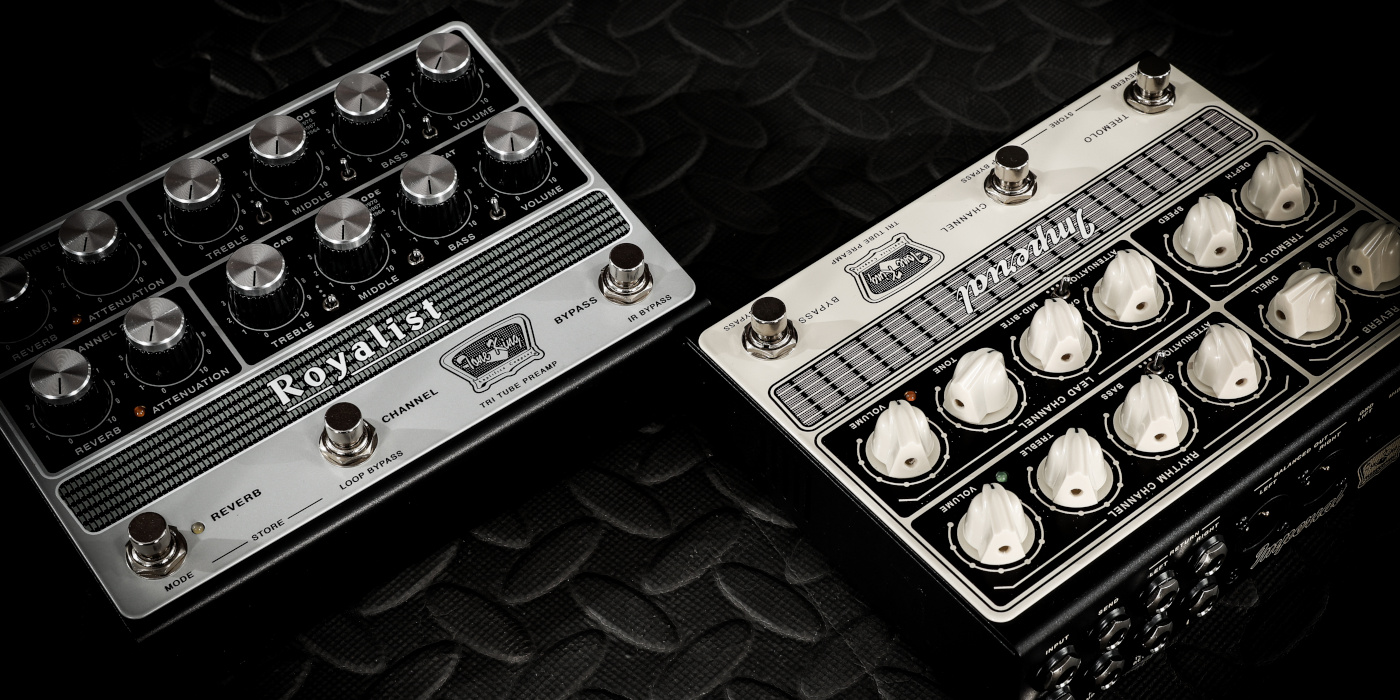
Tone King knocked it out of the park with their Imperial Preamp pedal last year. Not only did it become one of our best-selling stompboxes of 2025, but it even bagged an Andertons TV Award — as voted by our amazing global audience of musicians. And now, the Imperial’s got a sibling in the new Tone King Royalist Preamp.
At first glance, you’d swear they’re twins. Same size, similar controls, they’re the same price and they basically do the same the thing. So, what sets them apart? That’s what you’re about to find out. But before we dive into the differences, let’s quickly break down what they’re all about…
What do Tone King preamp pedals do?
The Tone King Royalist Preamp and Imperial Preamp are designed to capture the sound of the full-sized Tone King valve amps of the same name. They bottle the soul of those amplifiers into compact, two‑channel guitar pedals that are small enough to slot onto a pedalboard. And they cost only a fraction of the price!
In a world where more players are ditching big combos and going “ampless,” these pedals are a bit of a dream come true (even if you normally swear by the warm glow of valves behind you). That’s because, despite their small footprint, both units house three genuine 12AX7 valves running at high voltage. This means they deliver authentic valve dynamics and feel, plus that magical interaction with your guitar’s pickups and pedals.
Add an ultra‑low‑latency IR (impulse response) loader, stereo outputs and full MIDI control into the mix, and you’ve got two portable, all‑in‑one tone solutions ready for stages, studios and everything in between. No wonder they’ve been flying off our shelves.
Tone King preamp pedal benefits
Preamp pedals have been around for years, but Tone King’s models have exploded in popularity because they tick so many boxes:
- Authentic valve feel: Three high‑voltage 12AX7 tubes provide genuine valve dynamics, natural compression and that sweet harmonic richness.
- Pedalboard‑friendly size: At just 7.2” (W) x 5.7” (D) x 2.75” (H), you get premium amp tone without having to haul around a hefty 1×12” or 2×12” combo.
- All‑in‑one rig solution: Thanks to a built‑in IR loader, you can run straight into front‑of‑house, an audio interface or a pair of headphones (for silent practice) with realistic cab tone.
- Included OwnHammer IRs: The Tone King Editor software gives you loads of high‑quality IRs to choose from. And swapping them into the pedal’s six onboard slots (three per channel via the CAB/IR selector) is a doddle over USB‑C.
- Two‑channel versatility: Switch between clean and drive channels just like the real amps, with independent EQ controls for each side.
- MIDI programmable: Store up to 128 presets for instant recall via a MIDI switcher, covering channel changes, IR selection and more.
- Dual stereo balanced XLR outputs: Perfect for wide ambient rigs, with a handy ground lift switch to eliminate noise.
- Stereo, series effects loop: Place your time‑based and modulation effects exactly where they sound best (after the preamp but before the IR section) for a true amp‑style signal path.
- Expand your amp’s channel count: You don’t have to run either unit as a standalone pedalboard amp. If your current guitar amp has a series effects loop, a quick three‑cable hookup with one of these preamps lets you add two additional channels to your current setup.
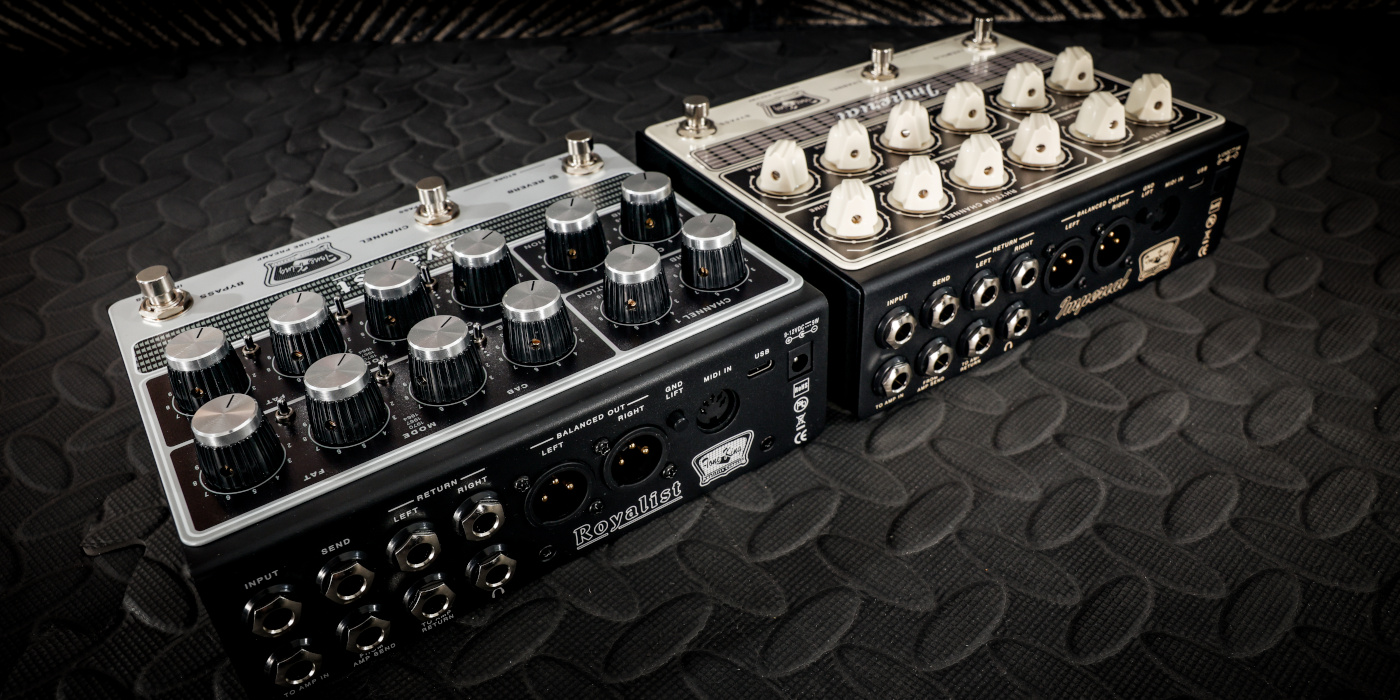
Tone King Royalist Preamp vs. Imperial Preamp: specs compared
Now that we’ve covered the standout features both Tone King pedalboard amps share, let’s look at how their specs stack up side by side:
| Specifications | Tone King Imperial Preamp | Tone King Royalist Preamp |
| Valves | 3 x 12AX7 | 3 x 12AX7 |
| Channels | 2 | 2 |
| Footswitches | 3 (for reverb/tremolo, channel and bypass) | 3 (for reverb, channel and bypass) |
| EQ controls | Bass and treble (rhythm channel), mid-bite and tone (lead channel) | Treble, middle, bass, FAT switch and 3-way voicing switch (per channel) |
| Onboard effects | Reverb and tremolo | Reverb |
| Built-in attenuation | Yes | Yes |
| Dual stereo balanced XLR outputs | Yes (with ground lift switch) | Yes (with ground lift switch) |
| Headphone output | Yes | Yes |
| Effects send and stereo return jacks | Yes | Yes |
| To amp in, from amp send and to amp return jacks | Yes (for adding Imperial channels to your amp) | Yes (for adding Royalist channels to your amp) |
| Series FX loop | Yes (bypassable) | Yes (bypassable) |
| USB-C connector | Yes (for use with included Tone King Editor software) | Yes (for use with included Tone King Editor software) |
| Impulse response (IR) tech | Yes (with 3-position CAB/IR select switch per channel) | Yes (with 3-position CAB/IR select switch per channel) |
| Included IRs | 15 | 20 |
| MIDI programmable | Yes | Yes |
| Presets | 128 (instantly recallable via a MIDI switcher) | 128 (instantly recallable via a MIDI switcher) |
| Power supply | Universal 12V PSU (included) | Universal 12V PSU (included) |
| Dimensions (W x D x H) | 7.2” x 5.7” x 2.75” (182.9 x 144.8 x 69.9 mm) | 7.2” x 5.7” x 2.75” (182.9 x 144.8 x 69.9 mm) |
| Weight | 1.9 lbs (0.86 kg) | 1.9 lbs (0.86 kg) |
| RRP | £599 | £599 |
What does the Tone King Imperial Preamp sound like?
The Tone King Imperial Preamp pedal nails the character of the Imperial MKII amp. That means it serves up ’50s tweed sweetness, ’60s blackface sparkle and a touch of vintage British grit, all at your feet. It lifts the exact preamp and phase‑inverter circuitry from the full‑fat amp, and even brings along its reverb, tremolo and built‑in attenuation. In short: it’s rich, lively and feels super responsive under your fingers.
The lead channel is full of “golden‑era” attitude — warm, articulate cleans that can quickly tip into a snarling mid‑range bark. Its Mid‑Bite control tightens the low end and adds snap, presence and gain, so it’s perfect for coaxing out that classic British‑style crunch. Flip to the rhythm channel, and you’re in ’60s blackface territory. Think shimmering cleans, tons of headroom and a smooth, musical breakup when you dig in.
Like the amp, the Imperial Preamp includes foot‑switchable spring reverb and tremolo (digitally recreated here) that you can assign per channel. These era‑correct effects add space, depth and movement. And with them onboard, you can claw back some valuable pedalboard real estate.

.jpg?w=400&h=400&&fit=fill&bg=FFFFFF)
Responses & Questions