| Specifications |
GP-5 |
GP-50 |
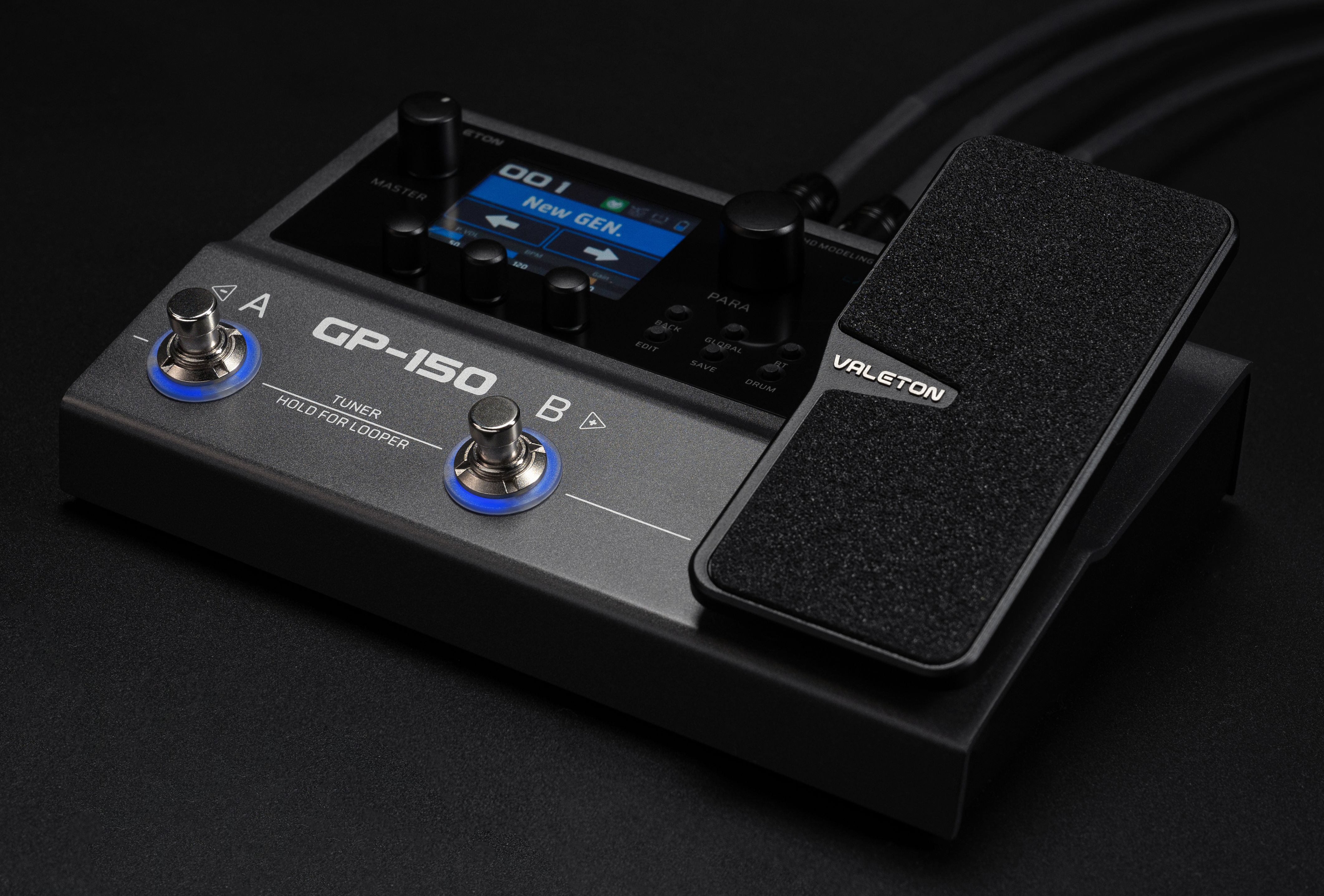
GP-150 |
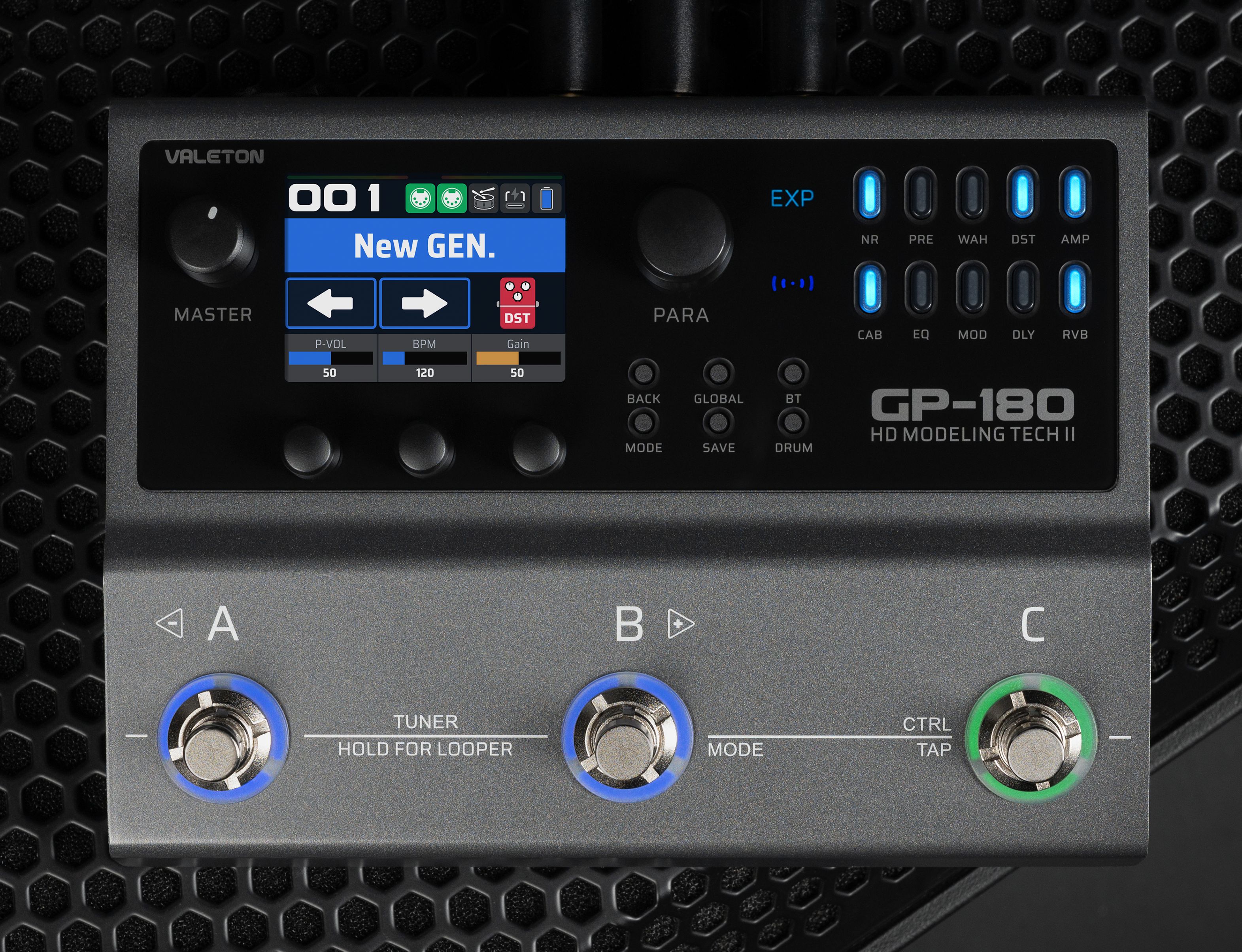
GP-180 |
GP-200 |
| Screen |
0.96″ colour LCD |
1.77″ colour LCD |
2.4″ HD colour LCD screen |
2.4″ HD colour LCD screen |
4.3″ TFT LCD |
| User Interface |
Interface for specific features |
Comprehensively redesigned interface with full-functionality coverage |
New style interactive interface |
New style interactive interface |
Comprehensively redesigned interface with full-functionality coverage |
| Controls |
Master knob + PARA knob |
3 quick access knobs + PARA knob + 4 quick access buttons |
1 master knob, 1 PARA knob, 3 quick access knobs and 6 quick access buttons |
1 Master knob, 1 PARA knob, 3 quick access knobs, 6 quick access knobs and 10 module shortcut buttons |
1 Master knob, 1 PARA knob, 3 quick access knobs, 6 quick access knobs and 10 module shortcut buttons, 4 blobal buttons |
| Footswitches |
1 (with LED light ring) |
2 (with LED light ring) |
2 (with LED light ring) and built-in expression pedal |
3 (with LED light ring) |
8 (with LED light ring) with built-in expression pedal |
| A/D/A Converter |
24-bit |
24-bit |
24-bit |
24-bit |
24-bit |
| Sampling Frequency |
44.1 kHz |
44.1 kHz |
48kHz |
48kHz |
44.1kHz |
| SNR (Signal-to-Noise Ratio) |
100dB |
106dB |
110dB |
110dB |
110dB |
| Looper |
No |
Yes |
Yes (Max 180 seconds) |
Yes (Max 180 seconds) |
Yes (Max 180 seconds) |
| Drum Machine |
App |
Internal + App |
100+ Internal + App |
100+ Internal + App |
100 Patterns |
| Effects Chain |
Up to 9 modules able to work simultaneously |
Up to 9 modules able to work simultaneously |
Up to 12 modules able to work simultaneously |
Up to 12 modules able to work simultaneously |
Up to 11 modules able to work simultaneously |
| Effect Types |
100+ |
100+ |
200+ |
200+ |
240+ |
| CTRL |
Up to 3 modules can be controlled simultaneously |
Up to 6 modules can be controlled simultaneously |
Up to 6 modules can be controlled simultaneously (single footswitch can control up to 3 modules) |
Up to 6 modules can be controlled simultaneously (single footswitch can control up to 2 modules) |
Up to 11 modules able to work simultaneously |
| SnapTone |
50 curated files, max. 80 stored |
50 curated files, max. 80 stored |
50 curated files, max. 100 stored |
50 curated files, max. 100 stored |
10 Slots (5 for Amps, 5 for Pedals) |
| IR |
Supports loading 3rd-party cabinet IRs, max. 20 stored |
Supports loading 3rd-party cabinet IRs, max. 20 stored |
Supports loading 3rd-party cabinet IRs, max. 20 stored – Switchable between 1024 and 2048 sampling points |
Supports loading 3rd-party cabinet IRs, max. 20 stored – Switchable between 1024 and 2048 sampling points |
Supports loading 3rd-party cabinet IRs, max. 20 stored |
| Patch |
100 patch slots (50 factory patches) |
100 patch slots (50 basic patches + 5 acoustic patches) |
200 patch slots (100 factory: 85 Guitar, 10 Bass and 5 acoustic patches) |
200 patch slots (100 factory: 85 Guitar, 10 Bass and 5 acoustic patches) |
256 Patch slots (100 Factory Patches) |
| Input |
1/4″ unbalanced (TS) |
1/4″ unbalanced (TS) |
1/4″ unbalanced (TS) |
1/4″ unbalanced (TS) |
1/4″ unbalanced, 3 Input Impedance |
| Output |
1/4″ unbalanced stereo (TRS), compatible with headphones |
1/4″ unbalanced stereo (TS) |
L(MONO): 1/4″ unbalanced stereo (TS), R: 1/4 Balanced TRS |
L(MONO): 1/4″ unbalanced stereo (TS), R: 1/4 Balanced TRS |
2 x Balanced XLR outputs |
| Headphone |
1/4″ unbalanced stereo (TRS), compatible with headphones |
1/8″ stereo (TRS) |
1/8″ stereo (TRRS) |
1/8″ stereo (TRRS) |
1/8″ stereo (TRS compatible with high-impedance monitoring headsets) |
| Bypass Mode |
Analogue bypass, DSP bypass |
Analogue bypass, DSP bypass |
DSP bypass |
Analogue bypass, DSP bypass |
DSP bypass |
| EXP/FS |
No |
Yes |
Yes |
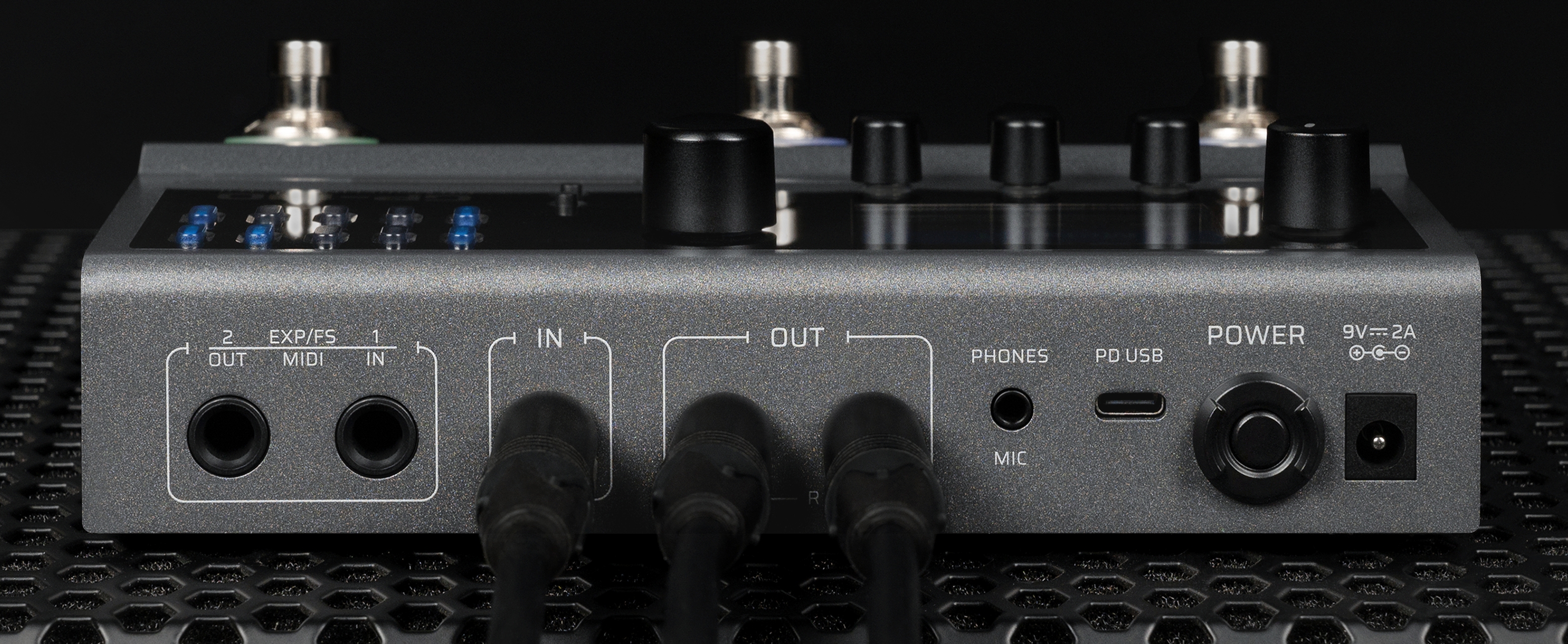
Two simultaneously |
Yes |
| MIDI |
USB MIDI |
1/8″ (TRS) MIDI In/Thru + USB MIDI |
Supports 6.35mm TRS/BT/USB MIDI |
Supports 6.35mm TRS/BT/USB MIDI, Supports footswitch MIDI commands |
MIDI (IN/OUT/THRU): 5-pin MIDI connectors |
| USB |
USB 2.0 Type-C port, 2-in/2-out |
USB 2.0 Type-C port, 2-in/2-out |
USB 2.0 Type-C port, 6-in/4-out |
USB 2.0 Type-C port, 6-in/4-out |
USB Port: USB 2.0 Type-C Port |
| Bluetooth Wireless |
5.0 Dual-Mode (BLE & audio) |
5.0 Dual-Mode (BLE & audio) |
5.0 Dual-Mode (BLE & audio) |
5.0 Dual-Mode (BLE & audio) |
None |
| Companion Software |
Mobile app + PC software |
Mobile app + PC software |
Mobile app + PC software |
Mobile app + PC software |
Mobile app + PC software |
| Battery |
None |
1,450 mAh built-in battery (providing approx. 4 hours of battery life) |
3000mAh Li-ion battery (providing approx. 6 hours of battery life) |
3000mAh Li-ion battery (providing approx. 6 hours of battery life) |
None |
| Power |
DC 9V centre negative or USB 5V |
DC 9V centre negative or USB 5V |
DC 9V centre negative or USB 5V |
DC 9V centre negative or USB 5V |
DC 9V centre negative |
| Dimensions (W x D x H) |
93.5 x 42 x 52 mm |
122 x 82 x 54 mm |
200(W) x 139(D) x 55(H) mm |
181(W) x 139(D) x 52(H) mm |
345mm(W) x 220mm(D) x 62.5mm(H) |
| Weight |
237g |
430g |
958g |
843g |
2.37 kg |






.jpg?w=400&h=400&&fit=fill&bg=FFFFFF)


Responses & Questions