


- What Is the Roland JUPITER-08?
- History of the JUPITER-8
- Roland JUPITER-08 – Key Features
- Classic JUPITER Character in a Compact Package
- JUPITER-08 Breakdown
- Who Is the Roland JUPITER-08 For?
- In Summary: JUPITER-08, something to get excited about!
What Is the Roland JUPITER-08?
There are few names in the world of synthesis that get me as excited as Roland. From the unmistakable sound of the SH-101 to the lush, unmistakably ’80s tones of the Juno-106, Roland has produced some of the most iconic synthesizers and drum machines ever made. And when it comes to polysynths, few instruments have the legendary status of the mighty JUPITER-8 and they continue this with the Roland JUPITER-08!
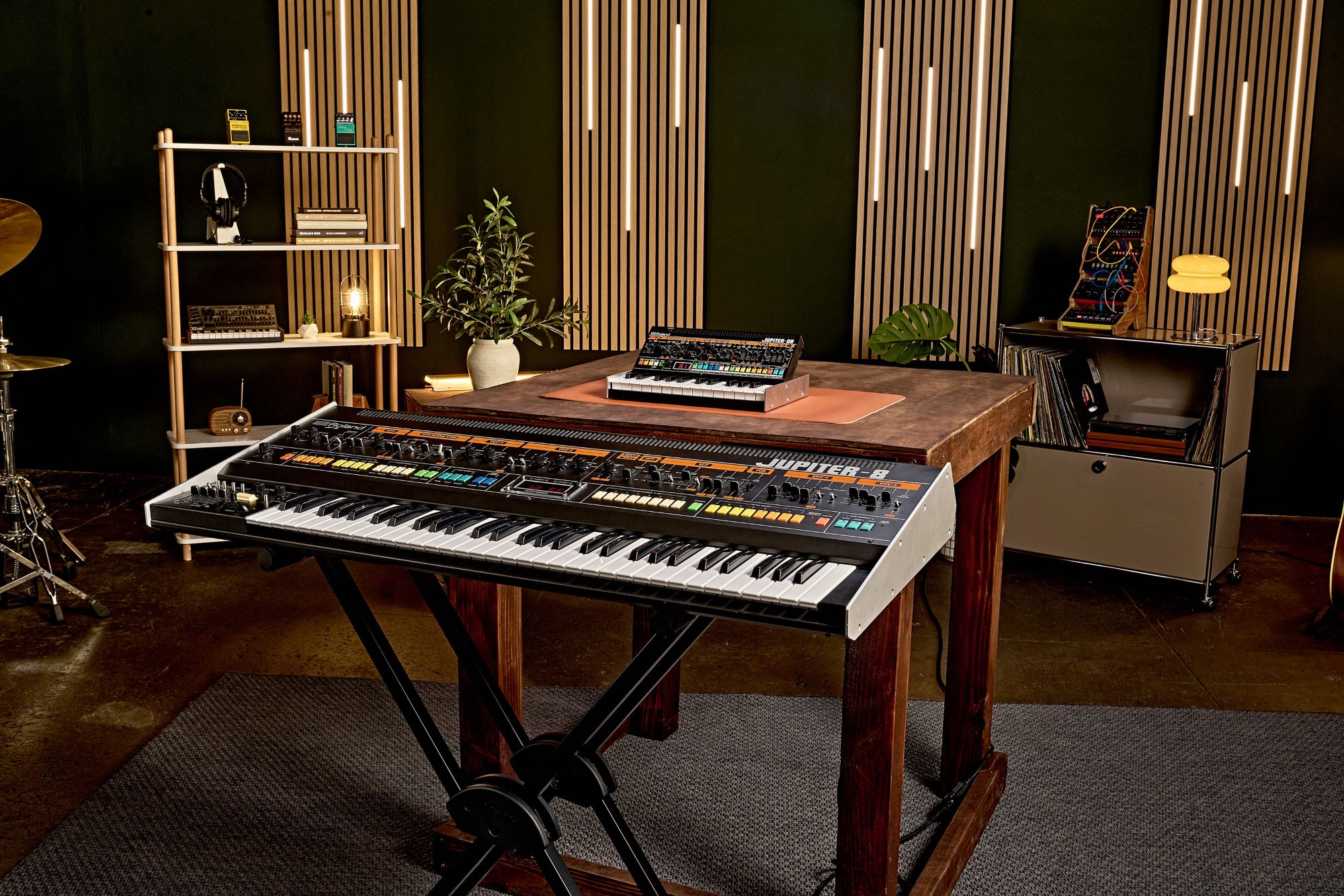
Originally released in 1981, the JUPITER-8 helped define the sound of an era. Its enormous polyphonic sounds, hands-on controls and ability to create everything from shimmering pads to punchy basses and soaring leads made it a dream instrument for musicians and producers alike.
Roland first brought that JUPITER magic into its Boutique range back in 2015 with the JP-08. This miniature recreation captured the look, feel and sound-shaping approach of the original in a compact module, using Roland’s Analog Circuit Behaviour modelling technology. It was a brilliant way to bring the JUPITER-8 experience to a new generation of musicians, although its four-voice polyphony meant that getting the full eight-voice experience required chaining two units together.
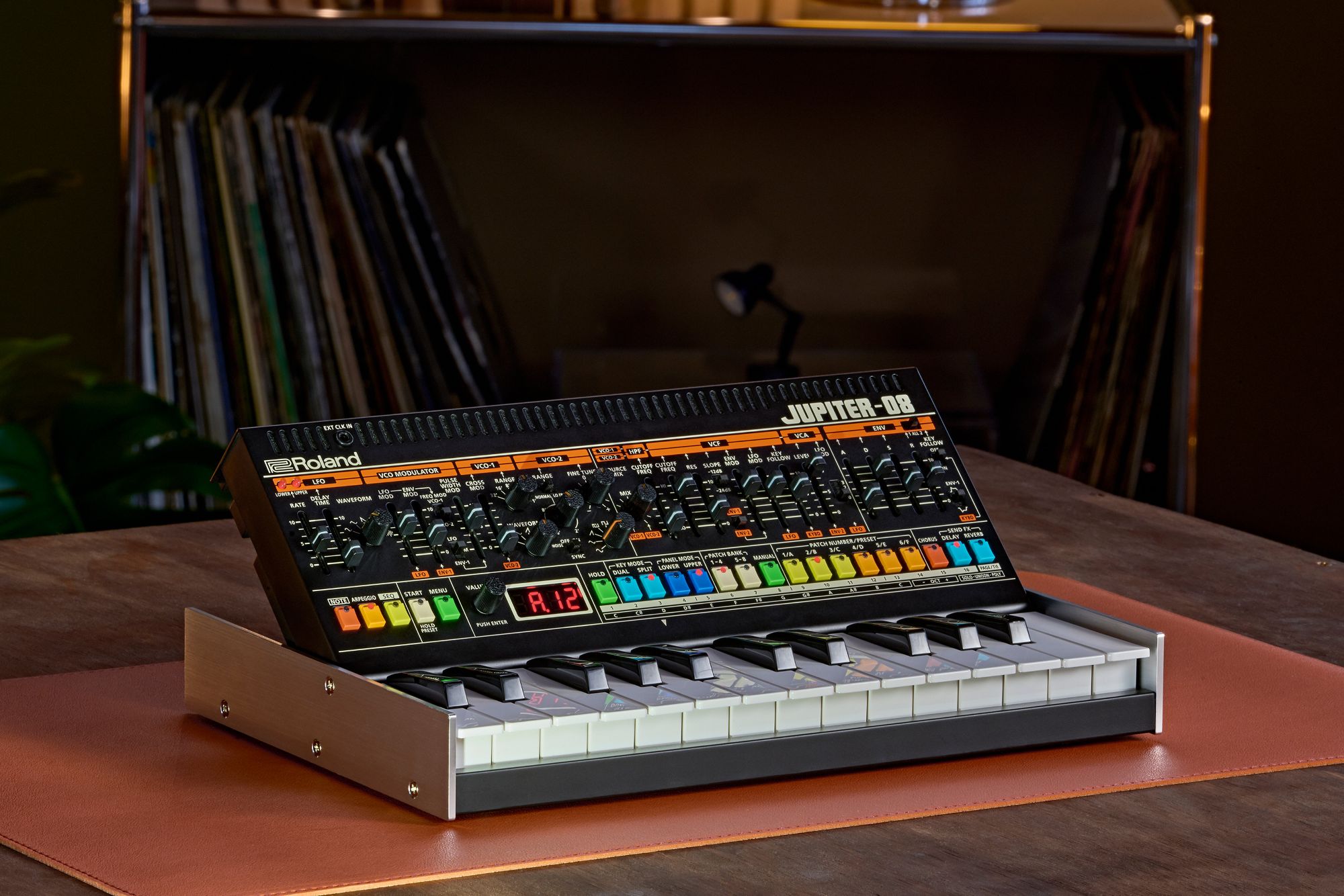
Now, 45 years after the original JUPITER-8 arrived, Roland is revisiting that legacy with the JUPITER-08. This new Boutique synthesizer takes the concept further, combining an eight-voice, two-part architecture with modern performance features, extensive onboard effects and USB-C connectivity, all in a portable instrument with an included keyboard dock.
As someone who owns an original SH-101 and Juno-106, alongside the Boutique SH-01A and TB-03, this is exactly the sort of announcement that gets my attention. I’ve always loved the way Roland balances hands-on sound design with instruments that have a character all of their own. The JP-08 was already an exciting piece of that puzzle, so seeing Roland revisit the JUPITER concept with a more form friendly design, is exciting.
But what exactly has changed since the original JUPITER-8 and the first Boutique JP-08? And what makes the new JUPITER-08 worth getting excited about? Let’s take a closer look!
History of the JUPITER-8
The Original JUPITER-8: The Legend
The original JUPITER-8 was a flagship analogue polysynth that helped establish Roland as one of the defining names in synthesizer design. With eight voices of polyphony, two oscillators per voice and a deeply hands-on interface, it offered musicians an enormous amount of control over their sound.
Its ability to create rich chords, layered textures, expressive leads and powerful basses helped make it an enduring classic. Even today, the JUPITER-8 remains one of those instruments that makes synthesizer enthusiasts stop and take notice.
Of course, original vintage hardware comes with practical considerations. These were substantial, expensive instruments when new, and finding space for one isn’t exactly easy. Most were also toured into absolute oblivion. That’s a big part of the appeal of Roland’s more compact recreations.
The JP-08: The First Boutique JUPITER
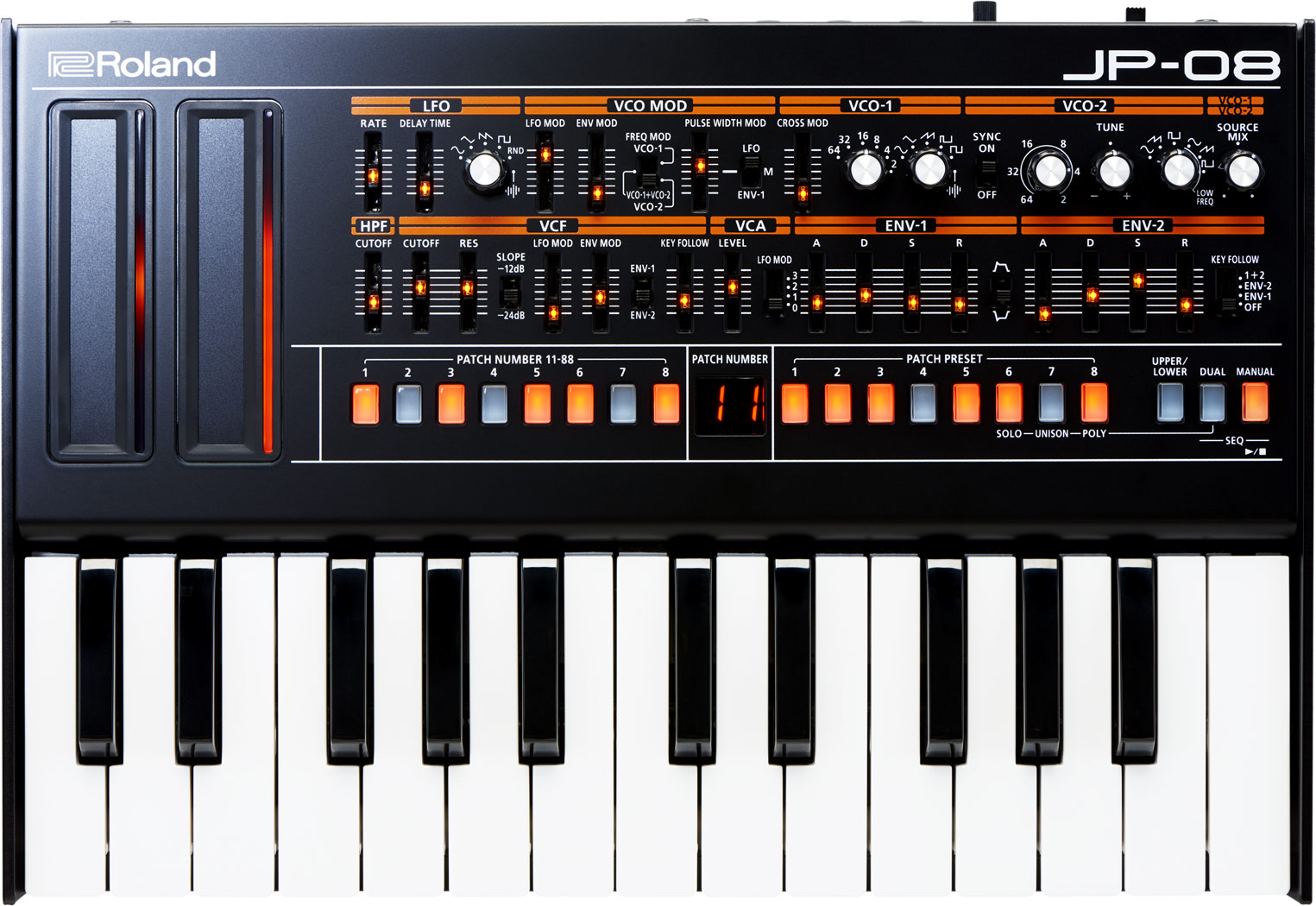
When Roland introduced the Boutique series in 2015, the JP-08 brought the JUPITER-8 concept into a module small enough to sit comfortably on a desktop. It used Roland’s Analog Circuit Behaviour (ACB) technology to recreate the original’s sound and response in a digital format, with 36 controls inspired by the JUPITER-8’s front panel. It also introduced some additional sound-shaping options, including an expanded oscillator range and extra waveforms.
The main compromise was polyphony. The JP-08 offered four voices, rather than the original’s eight, although Roland provided a chain mode that allowed two JP-08 modules to work together for eight-voice operation.
For a compact instrument, it was an impressive way to explore the JUPITER sound. It retained the hands-on approach that made the original so appealing while adding practical features such as battery power, a built-in speaker and USB audio/MIDI connectivity.
The JUPITER-X and JUPITER-Xm: Roland’s Modern Synth Powerhouses
The JP-08 wasn’t the only way Roland brought its JUPITER heritage into a modern instrument. The JUPITER-X and JUPITER-Xm took a different direction, combining classic Roland sounds with a powerful modern sound engine. This technology was designed to do far more than recreate a single vintage instrument.
Both models use Roland’s ZEN-Core synthesis system, alongside models of classic instruments including the JUPITER-8, JUNO-106, JX-8P and SH-101. This lets you explore a huge range of familiar Roland sounds, from analogue-inspired basses and leads to lush polysynth pads, digital textures and rhythm parts.
The flagship JUPITER-X houses this technology in a full-size instrument with a 61-note semi-weighted keyboard, channel aftertouch and extensive hands-on controls. The JUPITER-Xm, meanwhile, packs much of the same synthesis power into a more compact 37-note keyboard. It also features built-in speakers, Bluetooth connectivity and battery operation.
Both models can work with up to five parts: four playable parts and one rhythm part. This gives you plenty of scope for layered sounds and more elaborate arrangements.
Roland Jupiter Synths Available at Andertons
The JUPITER-08: A New Chapter
The new JUPITER-08 builds on that Boutique heritage with a more expansive specification. Rather than requiring two modules for eight-voice operation, it offers eight voices and a two-part architecture in a single instrument, with layered, split and dual-part capabilities inspired by the original JUPITER-8.
It also introduces a two-part, 64-step polyphonic sequencer, an arpeggiator, 17 onboard effects and dedicated delay, reverb and shimmer reverb. USB-C audio /MIDI interface, traditional MIDI connections and an external clock input help it fit into modern production and hardware setups.
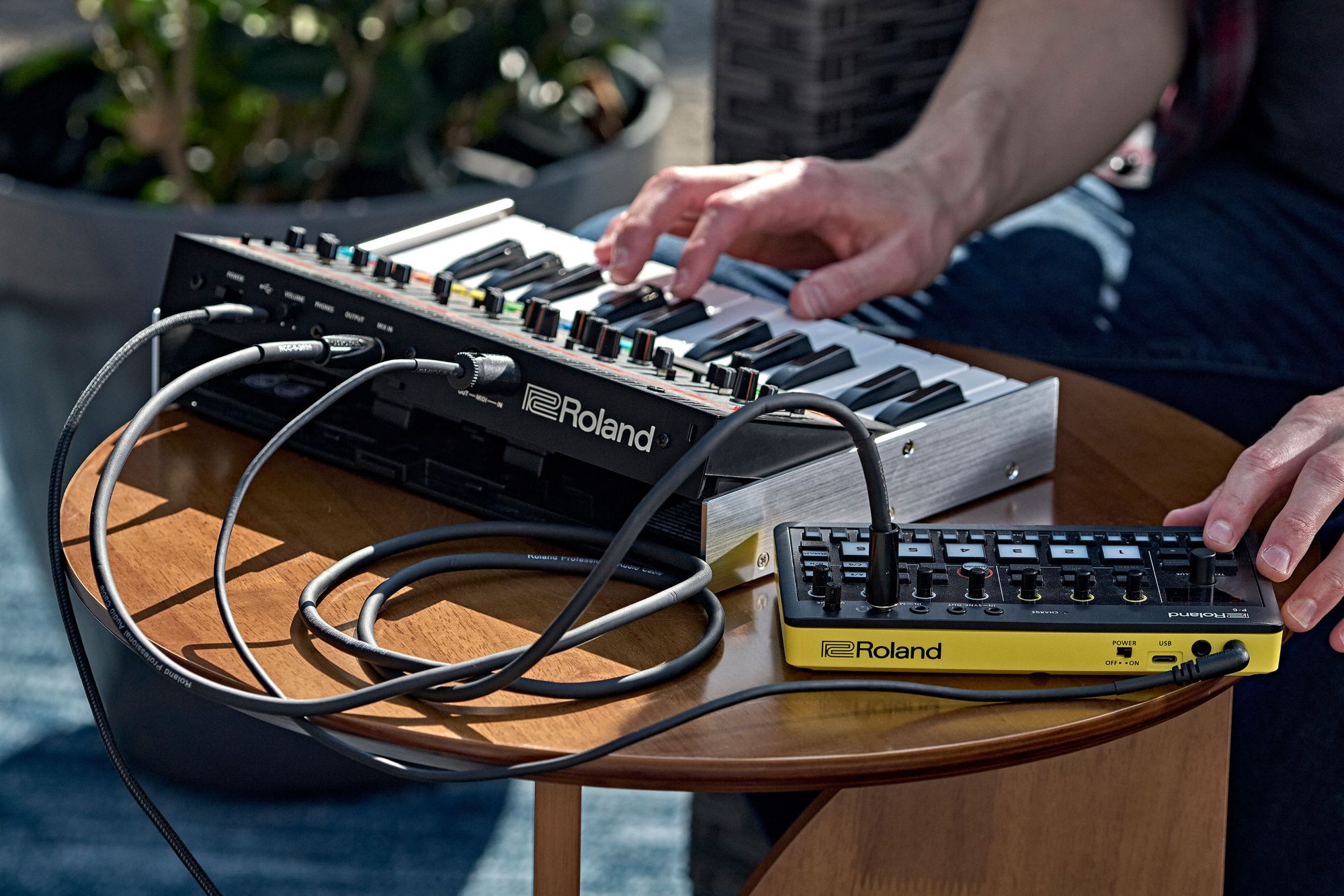
The compact format remains central to the experience, too. The JUPITER-08 includes the K-25m keyboard dock, built-in speakers and the option to run on four AA batteries or USB-C power.
For me, that’s the most exciting part of this new release. The JP-08 introduced the idea of a miniature JUPITER-inspired instrument, but the JUPITER-08 looks to offer more of the original’s polyphonic flexibility without sacrificing the portability that makes the Boutique series so appealing.
It’s not simply a case of making the old instrument smaller. It’s about taking the spirit of a classic synthesizer and making it practical for a new generation of musicians, while giving existing Roland fans another reason to get excited.
And as someone who’s spent time with both original Roland hardware and its Boutique counterparts, I can’t wait to see what people do with it.
Roland JUPITER-08 – Key Features
- Eight-voice, two-part architecture: Create layered sounds, split performances and complex arrangements inspired by the original JUPITER-8.
- 17 onboard effects: Shape your sounds with a selection of effects, including chorus and MFX, alongside dedicated delay, reverb and shimmer reverb.
- Two-part polyphonic sequencer: Build basslines, chords and melodies with a 64-step sequencer supporting up to eight notes per step, plus motion recording.
- Arpeggiator and Hold function: Create evolving patterns and rhythmic sequences while keeping your hands free to experiment with the sound.
- USB-C audio and MIDI: Connect to your computer or DAW, with traditional MIDI connections for integrating external hardware.
- Portable Boutique design: Enjoy built-in speakers, USB-C or battery power, and the included K-25m keyboard dock.
Classic JUPITER Character in a Compact Package
Let’s start with the obvious: the sound.
The original JUPITER-8 occupies a special place in synthesizer history, and it’s easy to understand why.
Vintage Roland instruments continue to attract musicians, producers and collectors for good reason. Their sounds have become part of the musical landscape, from huge, expressive chords to bright, cutting leads and deep, punchy basslines.
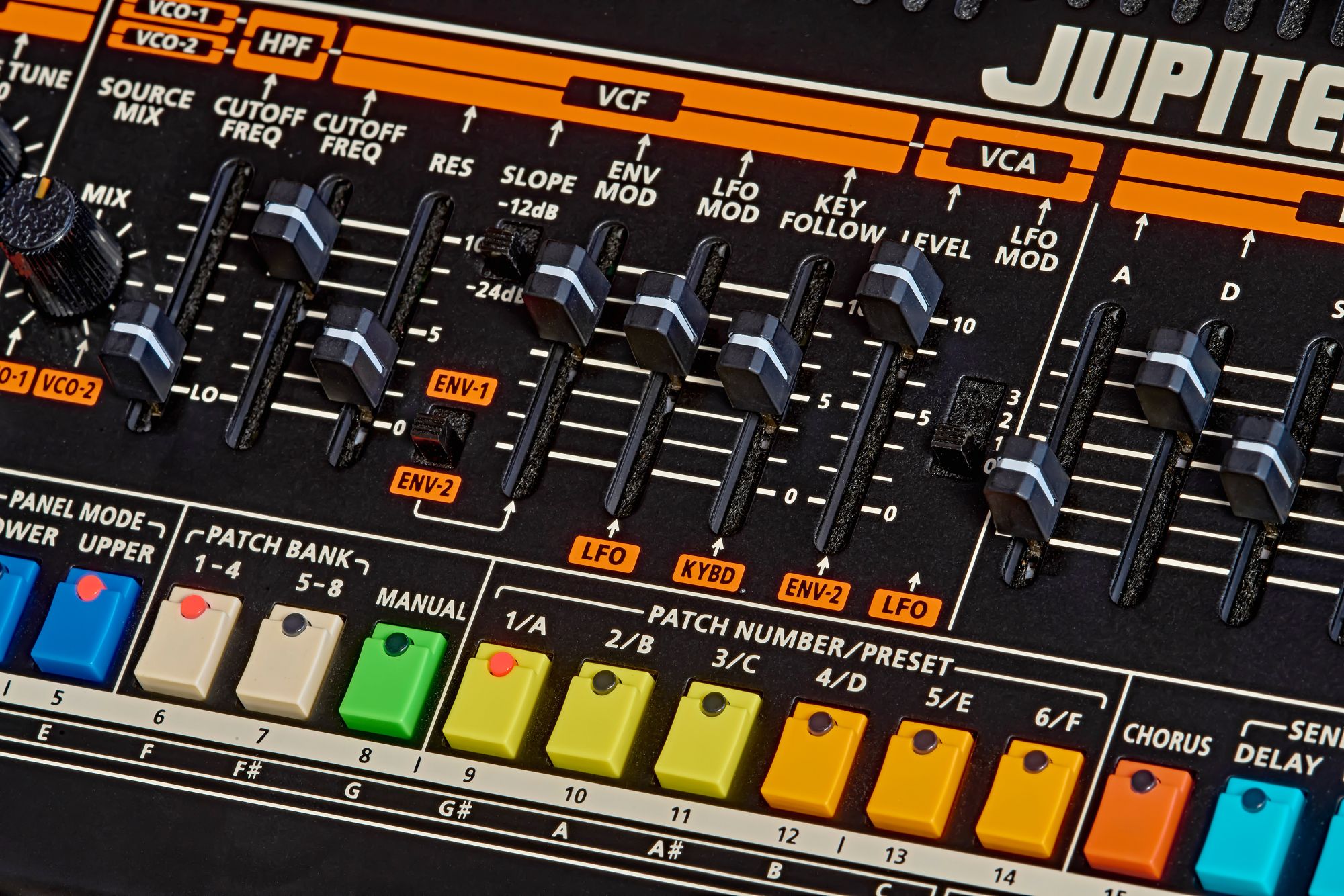
The JUPITER-08 aims to bring that character into a much more accessible format. Roland’s latest technology underpins its sound generation, with refined voice allocation and pitch behaviour. These features help deliver an expressive, vintage-inspired playing experience.
One of its biggest attractions is the eight-voice, two-part architecture. Previous Boutique instruments have offered more limited polyphony, but the JUPITER-08 gives you considerably more room to explore. Its layered, split and dual-part capabilities open up possibilities for studio composition and live performance.
For me, this is where the appeal really starts. I love the immediacy of classic Roland hardware. With instruments like the SH-101 and Juno-106, part of the magic comes from hands-on control. You can reach for a control, make an adjustment and hear the difference straight away. The JUPITER-08 brings this philosophy into a compact instrument inspired by one of Roland’s biggest icons.
The JUPITER-08 isn’t a full-size vintage JUPITER-8, but it doesn’t need to be. Its appeal lies in bringing that inspiration, architecture and performance-focused approach to a much more portable format.
JUPITER-08 Breakdown
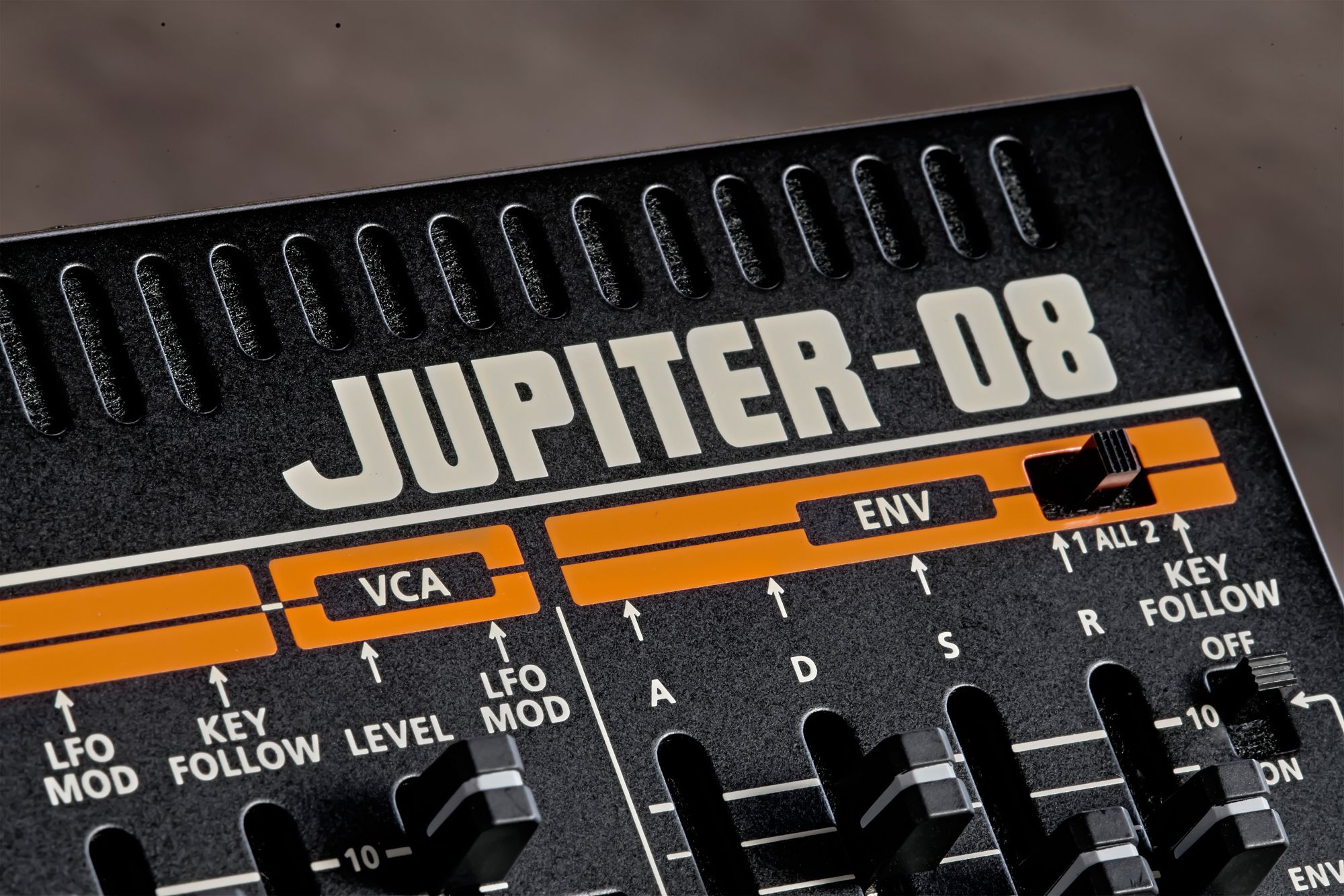
More Than Just a Synth: Sequencing and Performance
A great synthesizer should inspire you to make music, not just scroll through sounds. Fortunately, the JUPITER-08 includes several features designed to get ideas moving.
The two-part, 64-step polyphonic sequencer is a particularly useful addition. It supports up to eight notes per step, letting you build chords, melodies and basslines. Motion recording adds another dimension, allowing you to capture parameter movements as part of your sequences.
Then there’s the arpeggiator, which transforms simple collections of notes into something more rhythmically interesting. Combine it with the Hold function, and you have an instrument that encourages experimentation. Whether you’re building a track in the studio or performing live, there’s plenty to explore.
This is one of the things I appreciate about hardware synthesizers. Having an instrument directly in front of you, with physical controls to interact with, makes creating music feel more immediate.
Rather than relying entirely on a mouse and keyboard, you can tweak sounds, experiment with patterns and develop ideas as they happen. The JUPITER-08’s sequencer and arpeggiator make it particularly well equipped for this hands-on approach.
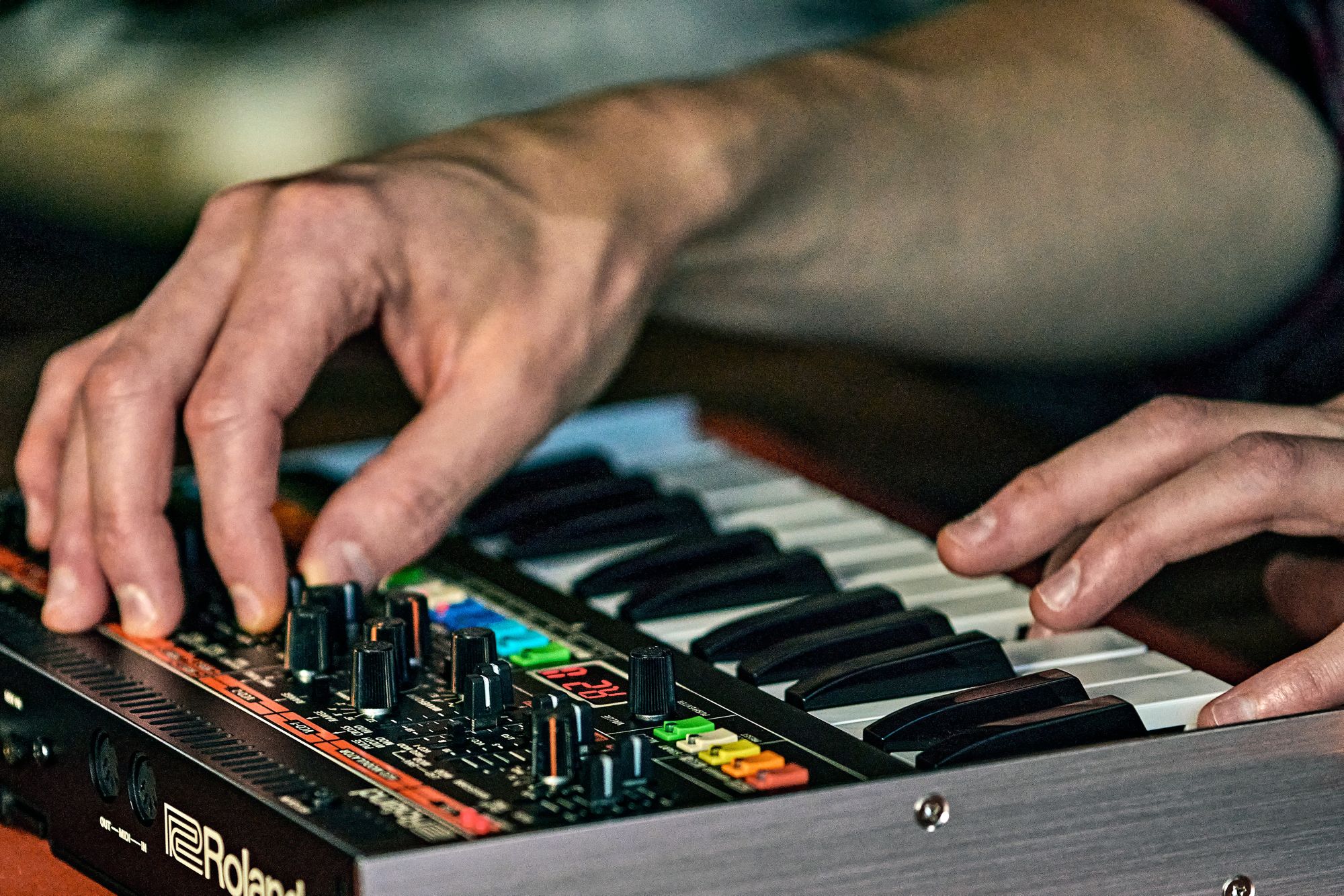
Built-In Effects for Bigger, More Expressive Sounds
Effects can make a massive difference to a synthesizer’s character. A simple sound can become a huge atmospheric pad, a shimmering lead or a rhythmic sequence with the right processing.
The JUPITER-08 features 17 onboard effects, including chorus and MFX. It also includes dedicated delay, reverb and a new shimmer reverb.
This gives you plenty of scope to shape sounds without immediately reaching for external effects or plugins. Chorus adds width and movement, while delay introduces rhythmic interest. Reverb can also give your sounds a greater sense of space.
The dedicated shimmer reverb is particularly interesting for anyone who enjoys creating expansive, atmospheric textures. It can transform a straightforward sound into something far more cinematic.
Of course, effects aren’t just for ambient music. A touch of modulation, a carefully chosen delay or some extra space can help a sound sit in a mix. These effects can also add movement to a sequence or give a lead more personality.
For anyone building a compact hardware setup, this much onboard processing is a real advantage.
You can experiment with sounds from the moment you switch the instrument on, without needing to build an entire effects chain around it.
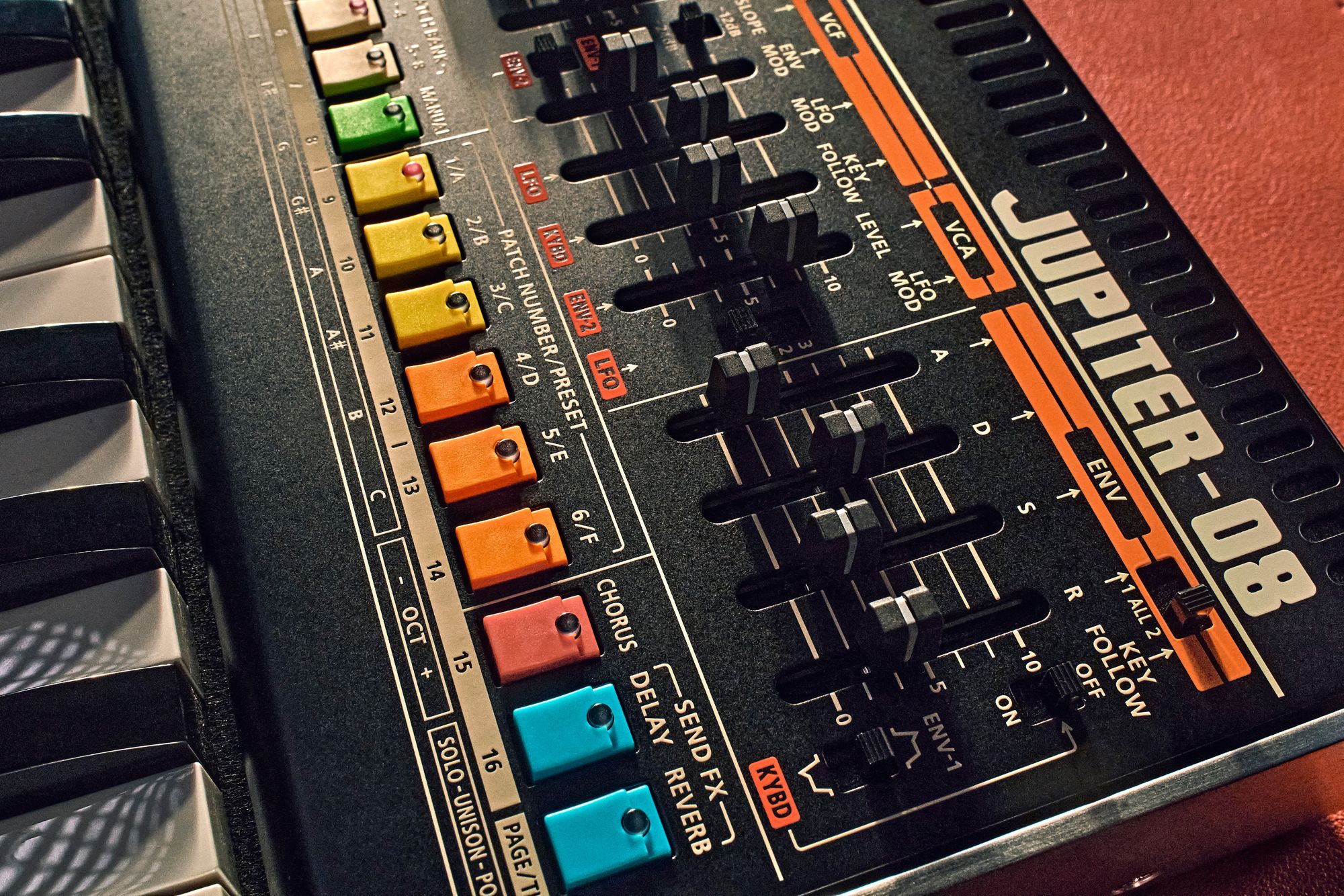
A Boutique Synth Designed to Go Anywhere
One of the biggest advantages of the Roland Boutique range is its compact design. Vintage synthesizers can be wonderful instruments, but they’re not always practical for modern studios, particularly when space is limited.
Better still, the K-25m keyboard dock is included, turning the module into a standalone mini-instrument. Built-in speakers let you play without connecting external amplification. Power options include four AA batteries or USB-C.
This makes it suitable for desktop setups, smaller studios and portable music-making rigs. It’s also ideal for musicians who want hands-on hardware alongside a laptop-based production environment.
I think this is where the Boutique concept really comes into its own. These instruments bring classic Roland-inspired synthesis into setups where a full-size vintage keyboard simply wouldn’t be practical.
There’s also something appealing about having a dedicated instrument you can pick up, switch on and start playing. Sometimes, you don’t want to boot up a computer, open a DAW and start building a project. Sometimes, you just want to play a synthesizer and see where the sound takes you.
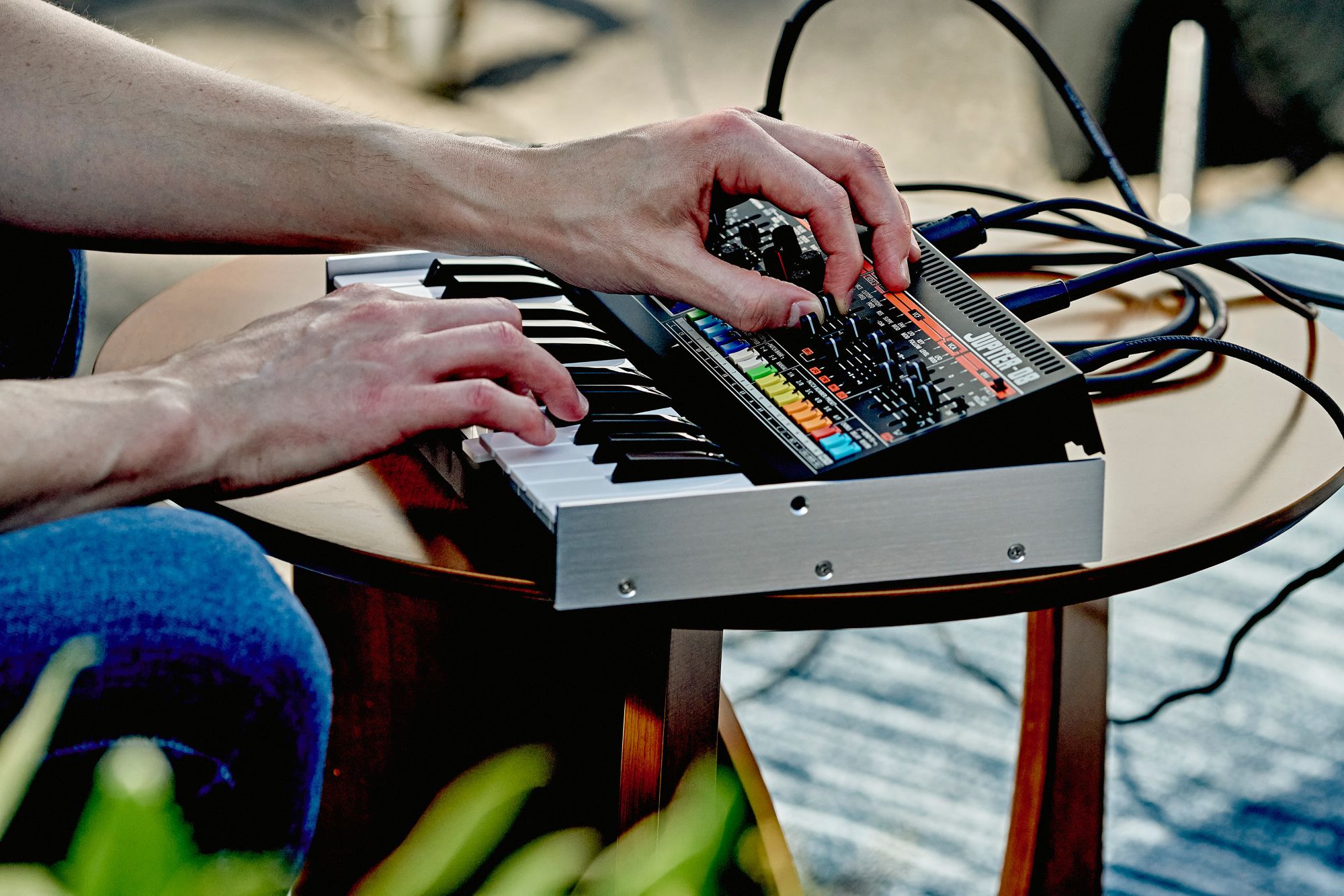
Available Roland Boutique Synths & Accessories at Andertons
Modern Connectivity for Your Studio Setup
Portability doesn’t mean much if an instrument is difficult to integrate into your setup. Thankfully, the JUPITER-08 offers a range of connections designed to make this straightforward.
USB-C provides audio and MIDI connectivity for computers and DAWs. Traditional MIDI input and output let you connect compatible external hardware. There’s also an external clock input for integrating the instrument into hardware-based sequencing and synchronised production workflows.
Whether you’re using it in a larger hardware rig or bringing its sounds into a computer-based production setup, these connections offer plenty of flexibility.
For those of us who enjoy combining different generations of equipment, this is particularly welcome. Vintage-inspired synthesis and modern production tools don’t have to exist in separate worlds. The JUPITER-08 can sit alongside other hardware and software, providing another source of sounds for your music.
Because the instrument is so compact, it should also be relatively easy to accommodate within an existing setup.
Who Is the Roland JUPITER-08 For?
The JUPITER-08 has plenty to offer, but I think its biggest appeal will be to a few particular types of musician.
Roland fans and synth collectors will naturally be interested in a new Boutique instrument celebrating one of the company’s most iconic synthesizers. The anniversary connection and distinctive silver side panels give it a clear identity within the range.
Electronic music producers will appreciate the combination of polyphonic synthesis, sequencing, effects and modern connectivity. It’s an instrument that can contribute everything from basslines and chords to leads, textures and more experimental sounds.
Live performers have the benefit of a compact instrument with dedicated performance controls, an arpeggiator, a Hold function and two-part architecture. Its portable design also makes it easier to incorporate into a smaller live setup.
Finally, anyone who’s curious about the JUPITER-8 but doesn’t want to accommodate a full-size vintage synthesizer has a new option worth investigating. The JUPITER-08 brings together the inspiration of that classic instrument and a more manageable modern format.
It’s worth remembering that the JUPITER-08 is its own instrument, rather than a full-size vintage JUPITER-8 in miniature. If you’re interested in the original, its history and its place in synthesizer design are part of the attraction. If you’re looking for a compact, hands-on instrument with a JUPITER-inspired approach and modern performance features, however, this new Boutique model looks particularly promising.

In Summary: JUPITER-08, something to get excited about!
As a lifelong Roland fan, I’m always interested when the company revisits its classic instruments. The SH-101 and Juno-106 are two of my favourite pieces of hardware, and owning the Boutique SH-01A and TB-03 has only strengthened my appreciation for the way Roland brings its heritage into modern music-making.
The JUPITER-08 feels like a particularly exciting addition to that story.
It combines an eight-voice, two-part architecture with a polyphonic sequencer, arpeggiator, extensive onboard effects and modern connectivity, all in a compact instrument that includes its own keyboard dock. That’s a lot of creative potential in a very small package.
More importantly, it looks like an instrument designed to encourage you to play. Whether you’re building sequences, layering sounds, experimenting with effects or simply sitting down to explore new ideas, the combination of hands-on controls and portable design makes a compelling proposition.
Will it replace an original JUPITER-8? That’s not really the point. The original is a legendary instrument in its own right. The JUPITER-08 is about bringing that inspiration to a new generation of musicians, as well as giving established Roland fans another way to explore the company’s unmistakable synthesizer heritage.
And if you’re anything like me, the arrival of a new Roland Boutique instrument inspired by one of the greatest synths ever made is reason enough to pay attention.
Shop all our Roland synths
Want To Lean More?
If the Roland JUPITER-08 has got you excited about synthesis, there’s plenty more to explore! Whether you want to learn more about the history of Roland’s iconic instruments, get to grips with the fundamentals of synthesis or discover how hardware synths fit into a modern studio, we’ve got you covered.
- TR-1000 to SH-101: How Roland’s Number Series Changed Everything – Explore the history behind some of Roland’s most influential instruments, including the legendary SH-101.
- Synth 101: A Guide to Synthesizer Terminology – New to synthesis, or want to brush up on the basics? This guide breaks down everything from oscillators and filters to envelopes and modulation.
- Hardware Synths vs. Software Synths – Discover the differences between hardware and software synthesis, and find out which approach might work best for your music.
- Desktop Synths vs. Modular Synths – Compare two popular approaches to hardware synthesis and explore the creative possibilities each one offers.
- V-Drums: How to Add Samples To Your Kit – Get the most out of your V-Drums with new sounds, layering and sampling possibilities.
Whether you’re a lifelong Roland fan or just starting to discover the world of synthesizers, there’s always something new to learn, hear and create. Happy tweaking!
Responses & Questions