



- Which type of ukulele should I buy?
- 1. They’re affordable
- 2. Small, lightweight and portable
- 3. Relatively easy to play
- 4. The perfect gateway to guitar
- 5. Great for being social
- Final thoughts
Thinking about taking the plunge and finally learning how to play music? Or maybe you have a child or loved one who’s been begging to get an instrument of their own to learn on, but you don’t know which one to suggest? Well, look no further than the humble ukulele!
First developed around the late 1800s, the ukulele has grown from strength to strength, gracefully weaving itself into popular culture and music in just about every corner of the globe. It’s an instantly recognisable instrument, and in our opinion, ukuleles are some of the best instruments for beginners. So, in no particular order, here are our five reasons why you need a ukulele. But first…
Which type of ukulele should I buy?
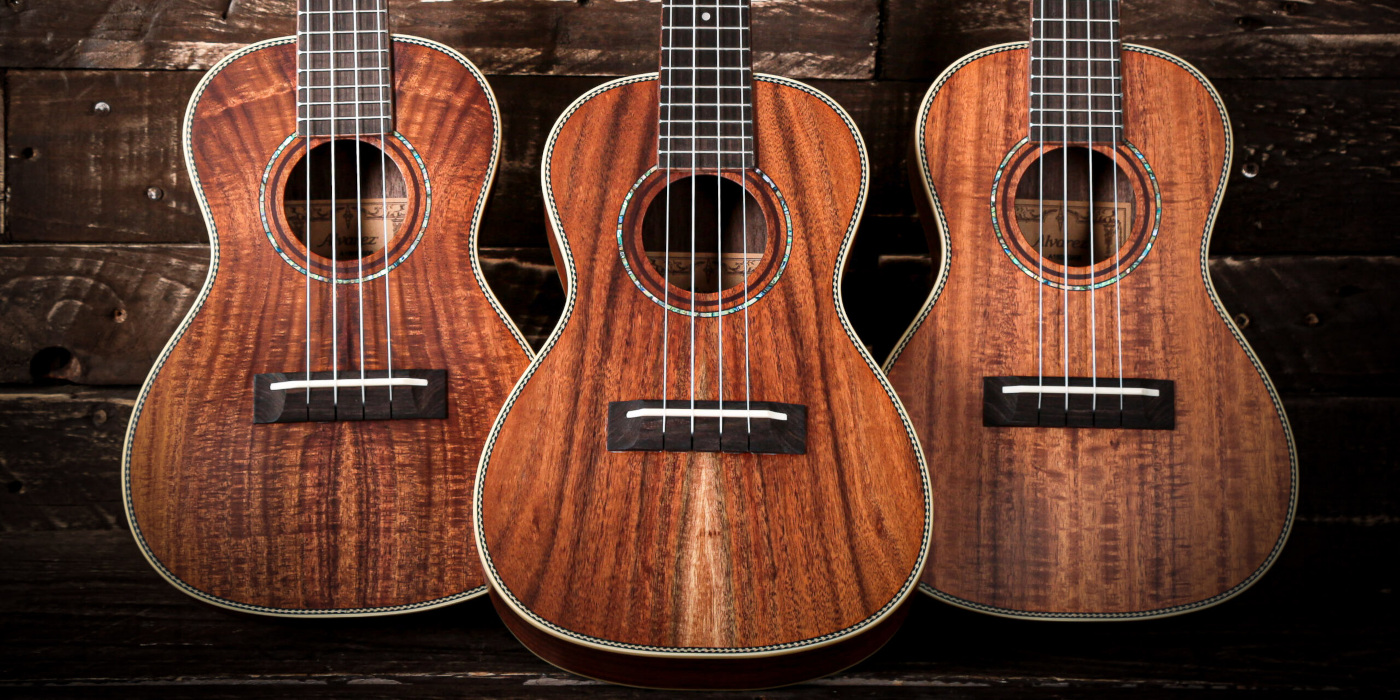
Before going into why you should get a ukulele, it’s probably worth mentioning that they traditionally come in four different sizes: soprano, concert, tenor and baritone. It’s a bit like the string family in an orchestra, where instruments such as the violin, viola, cello and double bass each occupy their own range of notes and octaves.
Fortunately, soprano, concert and tenor ukuleles are all tuned the same (G-C-E-A), which means that if you learn one, then you can actually play all three. A baritone ukulele is tuned D-G-B-E instead, and while different, the chord shapes and patterns remain the same. They just have a different name which you’ll have to learn (it’s all part of the fun!).
Here’s more on how they compare:
- Soprano: The classic ukulele shape. It’s the smallest of the ukulele family and has that traditional, sweet sound that put ukuleles on the map.
- Concert: Pretty much the same as a soprano, just a couple of inches bigger which results in a slightly bigger, fuller and richer sound. The increased size also makes it the perfect option for those with bigger hands.
- Tenor: These are even bigger still. They’re tuned the same as the previous two ukes, but the fourth string (G) is tuned an octave lower for a deeper sound.
- Baritone: The largest of the ukulele family and tuned lower than a soprano, concert and tenor. Its big sound is similar to what you’d expect from a guitar, making it ideal for those who want the benefits of a uke but ultimately want something that sounds a bit like a guitar.
It’s also worth mentioning the bass ukulele. While not technically part of the official ukulele family, this modern instrument is a sort of hybrid that blends the typical tuning and low pitch of a bass guitar with the portability and vibe of a ukulele. This makes it great for taking care of the low end in ukulele or acoustic instrument ensembles.
Watch Danish Pete and Sam Bell as they compare (and shred on) a bunch of different ukes!
1. They’re affordable
One of the most enticing aspects of ukuleles is their affordability. With starter ukuleles from reputable brands often costing less than £30, they’re a perfect way to start learning how to play music.
And the good news is that their low price point continues to appeal even as you move up the ladder to more intermediate and pro-level instruments. With solid top and electro acoustic ukuleles available for as little as £100, it’s one of the few instruments where moving up to the next level doesn’t necessarily mean that you have to break the bank.
2. Small, lightweight and portable
Learning any musical instrument can be overwhelming at first. In many ways, it’s comparable to grasping a whole new language, with the added challenge of developing the hand-eye coordination and dexterity needed to navigate the fingerboard.
But the ukulele’s dinky design takes away some of the stress of learning how to physically handle the instrument. It comfortably fits between the arms in a natural position and it’s light enough that it can effortlessly be held up while standing — even without a strap. Its small size also makes it handy for travelling between home, lessons, clubs and gigs.
3. Relatively easy to play
As mentioned above, learning an instrument is challenging. Especially if you’ve never played or tried playing one before. However, the ukulele is one of the easier ones to get something half musical sounding out of. It has a sweet and cheerful sound that leans on the more forgiving side of things, with no scratchy bow scrapes or majorly off-putting noises to worry about.
Low-tension nylon/synthetic ukulele strings feel relatively soft on the fingers too, which means that not as much effort is required compared to other stringed instruments like acoustic guitars and basses. Plus, its short scale length, four strings and easy-to-manage neck mean that getting your head around chord shapes and moving up and down the fingerboard feels much easier than some larger instruments.
4. The perfect gateway to guitar
Although an incredible instrument in its own right, the ukulele is also a great stepping stone to other instruments. Once you’ve built confidence with your right and left hands doing vastly different things and become comfortable with rhythms, chord shapes, scales and patterns, it’s actually quite easy to transfer those skills and developed musical theory knowledge onto other instruments — especially classical guitars and even electric guitars.
5. Great for being social
With the ukulele more popular than ever, picking one up is not only a cool thing to do for yourself but also a brilliant way to open up some extra social doors. Many towns, cities and even villages offer community ukulele clubs where people of all ages get together to learn songs and eventually build up a repertoire with the ambition of performing live.
It’s a nice way to meet new people and really take music back to what it’s for — bringing people together. Many schools also offer ukulele clubs, so your kids can get the opportunity to meet other children outside of their usual classes and friendship groups.
Final thoughts
Learning to play an instrument can be one of the most life-changing, rewarding and fulfilling things anyone can do at any age. It has so many physical and mental health benefits and is proven to help with memory and confidence. Plus, it can be one of the best ways to relax after a tough day at work!
We love the ukulele because it’s one of the simplest, most fun and affordable ways for people to take their first step into playing and making music. And with so many lessons and online tutorials available for free online — what’s stopping you?
Start strumming today!
Want to learn more?
If you love staying up to date with the latest kit chatter, our gear news page is one to bookmark. Or for full-on nerdy deep dives and practical how‑to guides, check out our learn section.
Responses & Questions