



- What is the Tone King Royce Preamp?
- What does the Tone King Royce Preamp sound like?
- Two channels, four AC sounds
- Built-in reverb, tremolo & power amp simulation
- IR tech, DI outputs & recording features
- How does it compare to other Vox-in-a-box pedals?
- Tone King Royce pedal: FAQs
The Royce Preamp is Tone King‘s latest amp-in-a-box pedal, joining the best-selling Imperial Preamp and Royalist Preamp to form a trio of portable, feature-packed tone machines. While the Imperial and Royalist preamp pedals distil the sounds of classic American and British amps respectively (namely Fender and Marshall), the Tone King Royce Preamp bottles the feel and tone of Vox AC-style amplifiers in a neat unit that can easily live on your pedalboard.
We’re talking the shimmering highs, rich overtones and touch-sensitive response that the likes of Brian May (Queen) and The Edge (U2) have used to create their signature sounds. But with so many Vox-style pedals on the market, what makes the Royce Preamp stand out? Let’s find out…
What is the Tone King Royce Preamp?
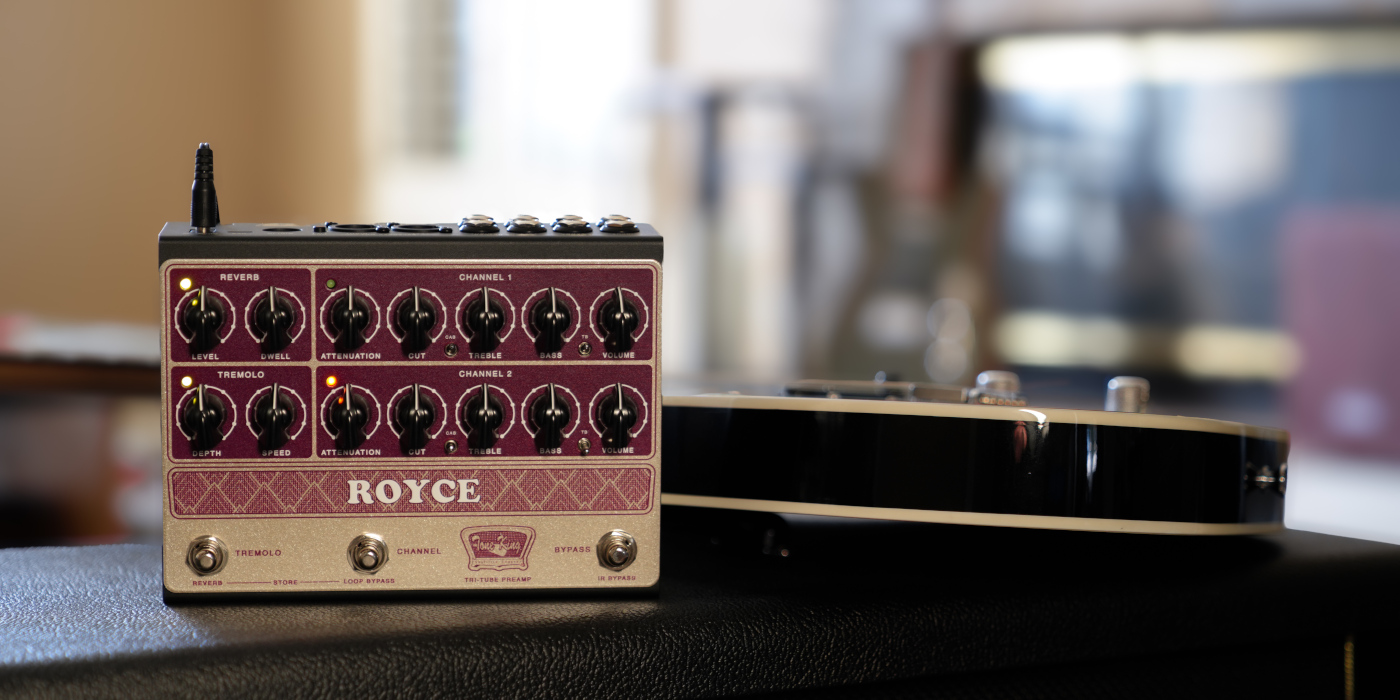
The Tone King Royce Preamp isn’t just another overdrive pedal voiced to sound like an iconic British amplifier (yeah, like we need any more of those). It’s a fully fledged, high-voltage valve preamp housing three genuine 12AX7 tubes. That means when you plug in, you get the dynamics and harmonic richness of a real valve amp, but in a far more portable package with a modern feature set to boot.
Like its Imperial and Royalist siblings, the Royce Preamp boasts two versatile channels, flexible EQ controls and onboard effects for spicing up your sound. You also get cabinet simulation for recording and going direct to front of house, plus plenty of connectivity options — including MIDI.
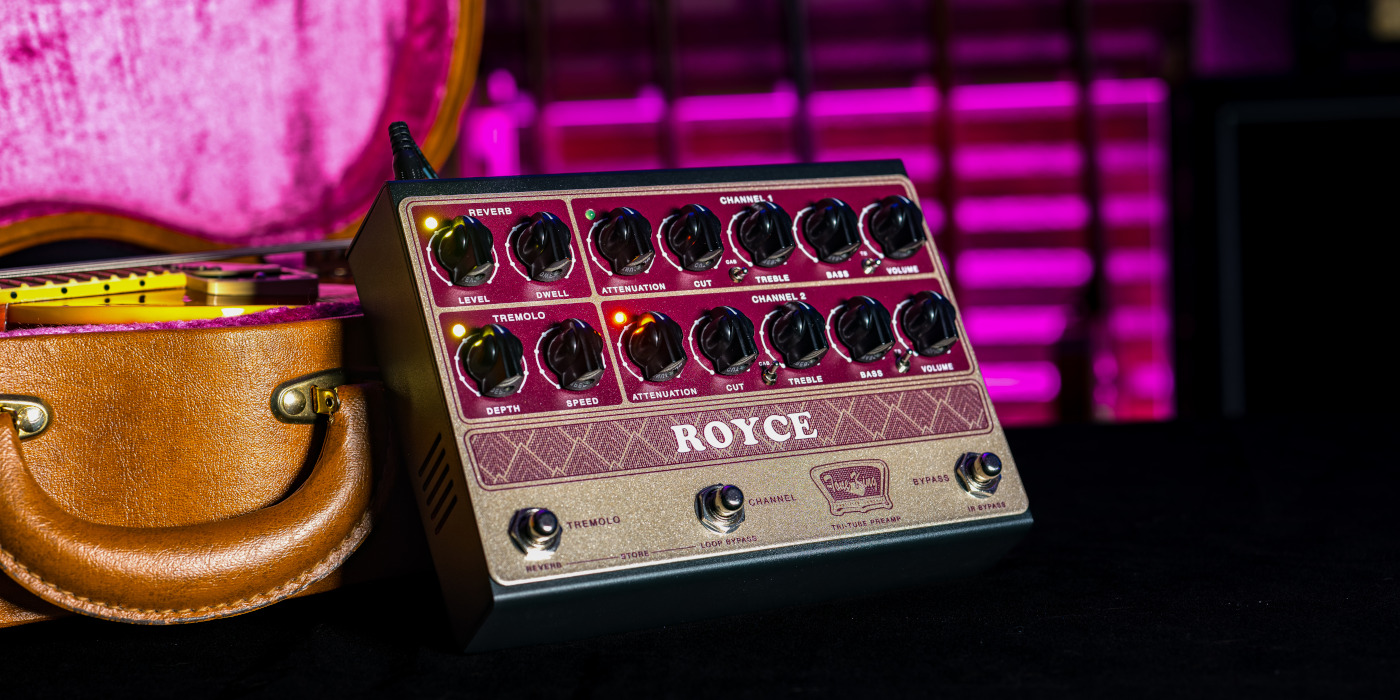
This makes it perfect for sticking on a pedalboard and building an ‘ampless rig’. It can replace your guitar amp altogether, giving you a more practical setup that’s a doddle to transport and takes up less space.
In other words, the compact Tone King Royce pedal could handle a substantial portion of your guitar setup. It’s one of the easiest ways to streamline your rig, especially if you go gigging. And it’ll save you a few trips to the chiropractor too!
What does the Tone King Royce Preamp sound like?
Vox AC30 guitar amps have remained popular for decades for good reason: their sound is unique and instantly recognisable. Jangly top-end frequencies, an open midrange and plenty of crunch when cranked. They’ve featured on countless legendary recordings, and you’d be hard-pressed to find a professional studio without one knocking about.
They’re the kind of amps that reward every nuance of your playing. And the Tone King Royce Preamp pedal captures that classic Vox AC sound remarkably well, thanks in large part to its three high-voltage 12AX7 valves.
That’s one of the key differences between this unit and many other Vox pedalboard amps. It’s not just a digital approximation of an old-school amp circuit. Tone King has gone to great lengths to recreate the feel and interaction of a traditional valve design. Roll back your guitar’s volume control and things clean up beautifully. Dig in harder with your picking attack and the circuit responds accordingly.
With a ‘TB’ switch on each channel too (emulating the Top Boost channel found on most Vox AC valve amps), you can dial up the gain and pile on the chime for cutting leads. So, rather than being limited to a single vintage-inspired voice, the Royce Preamp covers a broad range of tones associated with the AC amp family. More on those modes…
Two channels, four AC sounds
One of the Tone King Royce Preamp’s biggest selling points is its two independent channels, which you can easily flick between via a footswitch on the unit itself. Even better, both channels offer Normal and Top Boost modes, giving you four versatile tonal flavours to play with.
Here’s how they compare:
- Normal mode: Captures the character of an AC amp’s Normal channel. It serves up bold, punchy cleans with a thick low end and warm highs. It’s a great starting point if you want classic Vox tone.
- Top Boost mode: Adds more gain, more treble and plenty more Vox “chime”. It’s perfect for edge-of-breakup tones where chords start to crunch and pushing towards driven lead sounds.
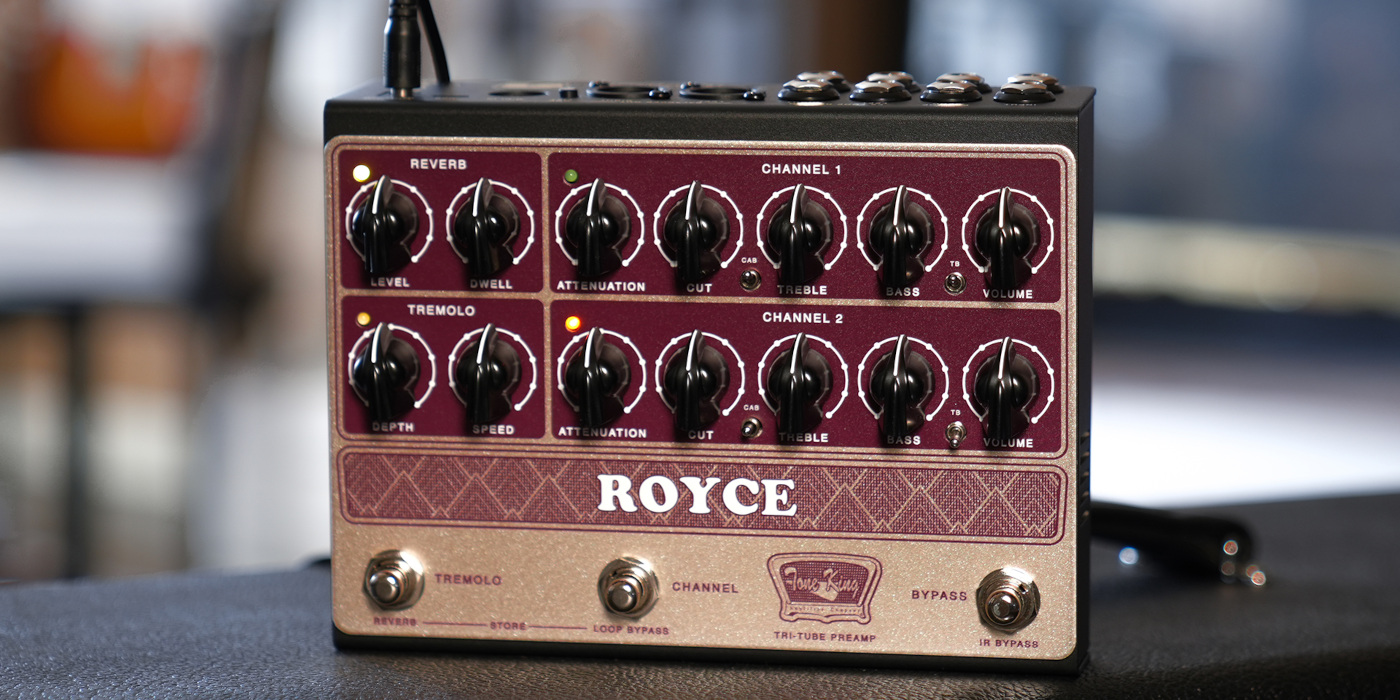
Both channels also have their own Attenuation, Cut, Treble, Bass, Middle and Volume controls, giving you lots of room to fine-tune your sound. And because they’re completely independent, you can set up a sparkling clean tone on one channel and a crunchier sound on the other without having to settle for shared, middle-ground EQ settings.
Built-in reverb, tremolo & power amp simulation
Here’s something you won’t find on every AC30-style pedal: onboard effects. The Tone King Royce Preamp packs in stereo reverb and stereo tremolo, putting two sounds synonymous with vintage amps right under your feet. If you’re looking to simplify your setup, that’s potentially a couple of guitar pedals you can leave off your board!
The effects aren’t an afterthought, either. The lush digital reverb ranges from subtle ambience to spacious, atmospheric textures, while the tremolo delivers that pulsing, old-school wobble that spruces up any clean part. Run them in stereo and things get even bigger.
But perhaps the most interesting feature is Tone King’s Zero-Watt Power Amp. It’s a genuine phase-inverter stage driven by one of the pedal’s three 12AX7 valves, recreating an important part of the interaction between a traditional preamp and power amp. The result is the compression and harmonic response you’d get from a cranked valve amp. In short, Tone King wants the Royce to feel like an amplifier, not just sound like one.
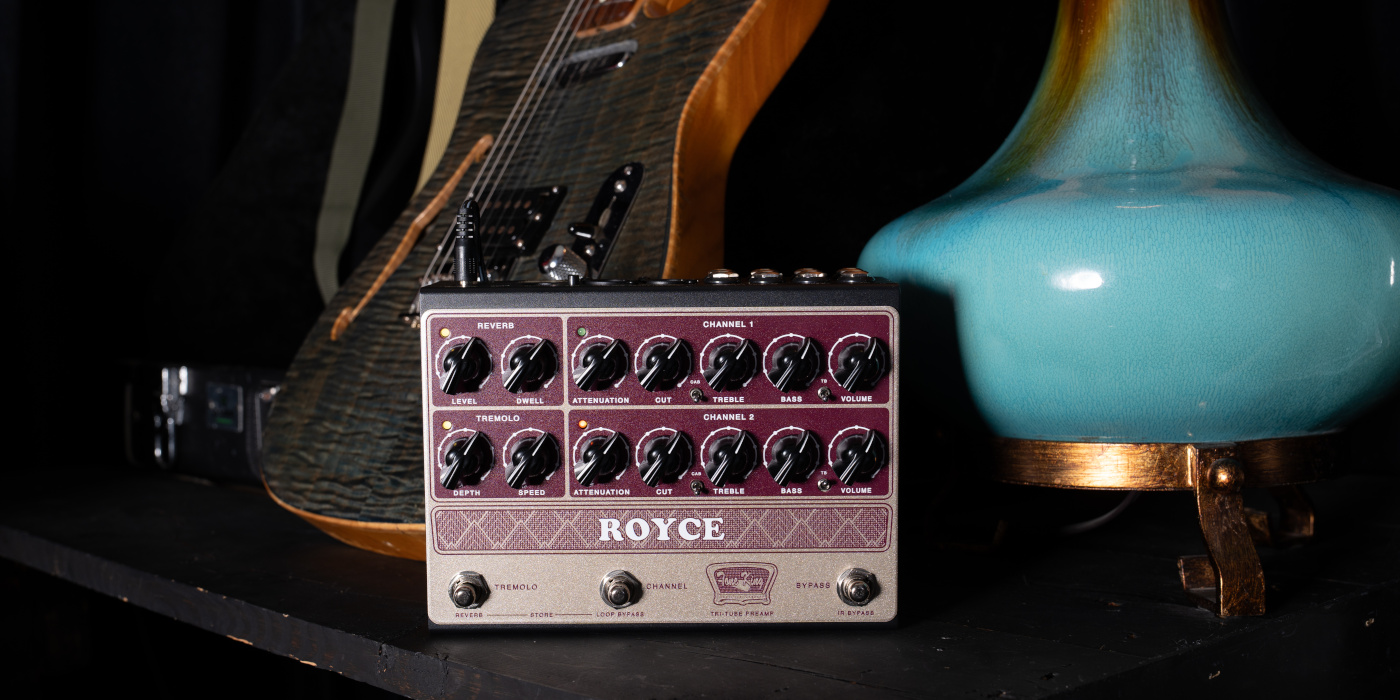
IR tech, DI outputs & recording features
Here’s where the Royce Preamp really starts to show its versatility. While its valve circuitry and vintage-inspired voicings will appeal to traditional amp lovers, its built-in impulse response (IR) technology makes it seriously effective in modern recording and live rigs.
The onboard IR loader provides access to six cabinet slots, with 20 OwnHammer IRs included via Tone King’s Synergy Editor software. Each channel gets its own three-position IR selector toggle, making it easy to switch cabinet sounds without diving into menus.
The supplied IRs include a Tone King Imperial 1×12”, a Vox AC30 2×12” loaded with Celestion Blue speakers and a classic 4×12” basketweave cabinet. Prefer your own IRs? You can load those too, thanks to the editor software.
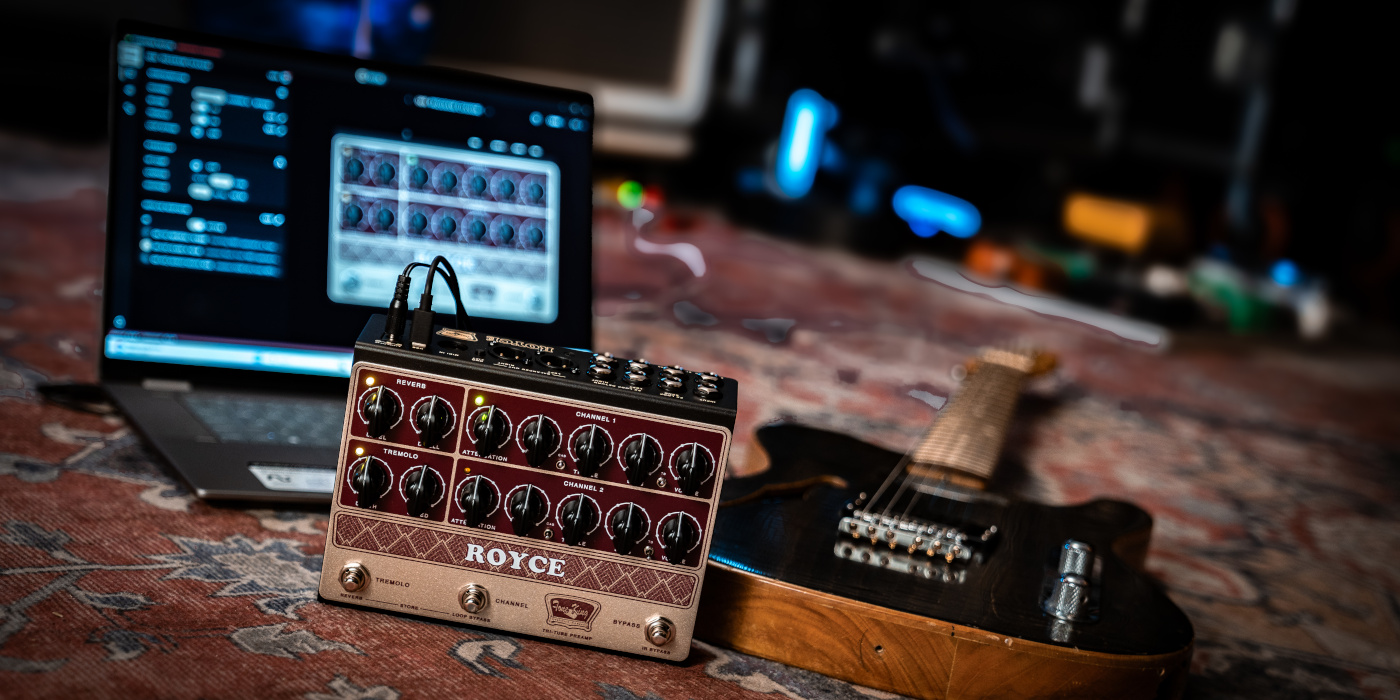
Connectivity is killer too. Dual balanced XLR outputs let you plug straight into a mixing desk or audio interface, while a dedicated headphone output makes silent practice and late-night recording a breeze. There’s also a stereo effects loop, MIDI and a USB-C port for hooking up to the Synergy Editor.
Use the Royce as part of a traditional amplifier setup, connect it directly to a PA system or build an entirely ampless rig around it. This British amp pedal is a super flexible bit of kit.
How does it compare to other Vox-in-a-box pedals?
Now for the big question: what makes the Royce different from the other Vox-inspired pedals out there? There are loads of stompboxes designed to recreate the sound of an AC30, from simple analogue overdrive pedals to sophisticated digital guitar amp simulators. And while many do a great job, the Royce takes a very different approach.
Its three-valve preamp architecture is what sets it apart. Rather than relying solely on transistor-based clipping or digital modelling, it uses genuine high-voltage 12AX7 valves to recreate the feel and response of a traditional amp circuit. The Zero-Watt Power Amp takes things a step further, adding a genuine phase-inverter stage into the equation.
Then there’s the feature set. With two independent channels, four voicing options, stereo effects, cabinet IRs, MIDI and extensive routing capabilities, the Royce offers far more than the typical amp-in-a-box pedal.
Of course, that comes with some trade-offs. It’s a larger and more involved unit than a straightforward overdrive. And players after a single AC-inspired sound might not need all its fancy bells and whistles. But if you’re looking for a portable valve preamp that can serve as the foundation of your entire rig (while nailing those classic AC tones), the Tone King Royce is pretty hard to beat.
Tone King Royce pedal: FAQs
When was the Tone King Royce Preamp released?
The Tone King Royce Preamp pedal officially launched on 12 November 2026. It was first revealed to the public just over a month earlier at Guitar Summit 2026.
Tone King Royce vs. Imperial vs. Royalist: which preamp pedal is best?
There’s no outright “best” Tone King preamp pedal. It really comes down to which classic amp flavour you’re chasing.
- Royce Preamp: Designed to capture the sound and feel of Vox AC-style amplifiers, with plenty of chime and edge-of-breakup character.
- Imperial Preamp: Inspired by Tone King’s own Imperial amplifier, delivering the sparkling cleans and smooth breakup American-style amps are known for.
- Royalist Preamp: Voiced around vintage British amp tones, serving up everything from punchy crunch to classic rock gain.
All three guitar amp pedals share a similar feature set, including a genuine three-valve architecture, two channels, onboard effects, cabinet simulation and extensive connectivity. So, your choice is less about specs and more about which amplifier voice you like most.
Want a deeper look at how the Imperial and Royalist compare? Check out our Tone King Royalist Preamp vs. Imperial Preamp blog.
Who is the Tone King Royce Preamp for?
With so much packed into its relatively small enclosure, the Royce valve preamp pedal is likely to appeal to a wide range of guitarists:
- Players chasing classic AC tones: If you’ve always loved the shimmering cleans, jangly chords and touch-sensitive breakup of vintage AC amps, the Royce Preamp puts that character right at your feet.
- Gigging musicians: Two independent channels, MIDI compatibility and balanced XLR outputs make it a solid option for players who want a versatile direct-to-PA setup.
- Home recordists: The onboard IR loader, headphone output and USB connectivity make direct recording and silent practice easy.
- Pedalboard enthusiasts: If you’re building a hybrid or ampless rig around a high-quality valve preamp, the Tone King Royce pedal offers lots of routing flexibility.
Want to learn more?
Want to stay in the loop with the latest product gossip from the world of guitars, pedals, amps and music tech? Stick our gear news page in your bookmarks. Or head over to our learn section for in-depth guides, buying advice and plenty more gear nerdiness.


Responses & Questions